Best 275 Watt Solar Panels Guide: Top Options for Off-Grid Power
Answering the common search: 275 watt solar panels are typically high-efficiency modules used for RVs, vans, boats, cabins, and off-grid systems. This guide highlights five strong choices closest to 275 watts, explaining who each is best for, key strengths, and potential limitations. Use this overview to compare size, efficiency, and installation suitability before buying. The products below are selected for compact living spaces, mobility needs, and reliable performance in varied climates.
| Product | Wattage | Best For | Why It Stands Out |
|---|---|---|---|
| Renogy Bifacial Solar Panel 250W N-Type | 250W | RV, Marine, Small Off-Grid | High efficiency (25%), rear-side power boost, strong temp performance |
| Xilanseek 300W Bifacial Solar Panel | 300W | Rooftop systems, Vans, Boats | 25% efficiency, IP65 waterproof, dual-sided generation |
| ACOPOWER 250W 12V Panel | 250W | Budget setups, Expandable systems | High efficiency cells, easy predrilled mounting, warranty coverage |
| Renogy 200W N-Type 16BB | 200W | Compact spaces, Class B vans | 25% efficiency, smaller and lighter for tight spots |
| Callsun N-Type 400W Bifacial (2×200W) | 400W (2×200W) | Larger off-grid rigs, Twin-module setups | Anti-shading, bifacial design for extra output |
Renogy Bifacial Solar Panel 250W N-Type

Best for: RVs, marine vessels, and off-grid battery banks where space is limited. This 250W bifacial panel uses A+ cells with 25% efficiency and a rear-side boost that can add roughly 14% more power under favorable conditions. Its higher bifaciality helps maximize production in sunny, reflective environments such as rooftops or desert landscapes. The low temperature coefficient (-0.29%/°C) minimizes losses on hot days, improving summer output. Caution: performance gains from the rear side depend on mounting angle and ground reflectivity, so real-world gains vary by installation.
Xilanseek 300W Bifacial Solar Panel

Best for: Higher-demand off-grid setups where space allows, such as RV roofs or home backup systems. The 300W bifacial design uses N-Type 16BB cells, delivering up to 25% efficiency and dual-sided generation for more consistent output. IP65 waterproofing and an all-weather frame support year-round use. A caution: larger panel requires more mounting space and potentially sturdier hardware in windy areas.
Callsun N-Type 200W (Two-Piece) Bifacial Panel Pair

Best for: Larger off-grid runs where a stacked or modular approach is preferred. This product combines two 200W bifacial modules in a parallel design, boosting shading tolerance and total energy capture. The N-Type 16BB cells minimize hot spots and micro-cracks, contributing to longer-term reliability. Limitation: two-panel configuration requires compatible mounting hardware and a larger roof footprint, which may not suit compact vans or small boats.
Renogy ShadowFlux 200W N-Type Panel

Best for: Small to mid-size off-grid builds needing shading resilience. ShadowFlux anti-shading technology helps maintain output in partial shade, a common issue for rooftop placements near trees or buildings. The 25% efficiency with N-Type 16BB cells reduces micro-cracks and hot spots, helping long-term durability. Caution: still requires adequate sunlight exposure; shading from adjacent objects can reduce gains significantly.
ACOPOWER 250W 12V Monocrystalline Panel
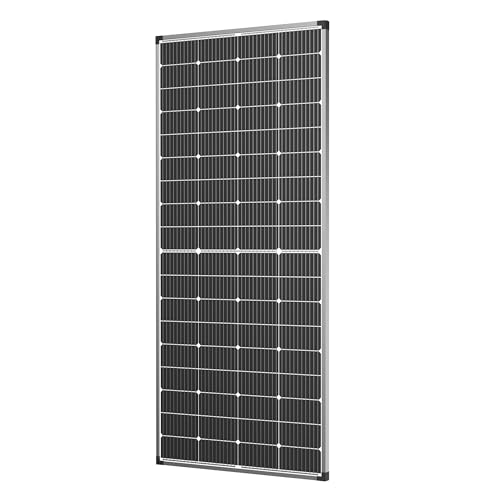
Best for: Expandable solar setups and budgeting-conscious buyers. This 250W panel uses high-efficiency 64-cell construction and bypass diodes to maintain performance in low light. It’s expandable to higher wattage systems via compatible adapters. Limitation: warranty and detailed performance claims are not specified here; verify compatibility with existing charge controllers and mounting hardware before purchase.
Buying Guide
- Power needs: Assess daily energy consumption and choose a panel wattage that covers daytime generation plus battery storage. If you routinely run high-draw devices, consider panels in the 300W range or modular setups.
- Type and efficiency: N-Type bifacial panels (with 16BB cells) tend to deliver higher efficiency and better shading tolerance, but may cost more. P-Type/PERC panels are common and reliable for budget-conscious installs.
- Mounting space: Taller or wider panels require roof space or mounting hardware suited to the vehicle or building. Bifacial designs demand exposure to reflected light for max gains.
- Temperature and climate: Panels with lower temperature coefficients perform better in hot climates. If you expect extreme heat, prioritize modules with -0.29% to -0.30%/°C coefficients.
- Durability and weather sealing: IP65/IP67 ratings and robust frames help in marine, RV, or outdoor deployments. Consider corrosion resistance for coastal uses.
- Installation complexity: Pre-drilled holes and compact footprints ease mounting in vans and boats. For RVs or cabins, weigh the benefit of modular or dual-panel configurations for future expansion.
- Warranty expectations: Look for clear workmanship and power output warranties. Short warranties may signal higher risk over time; longer coverage suggests durability, even if not stated here.
Buying Questions And Answers
- What wattage should I choose for a small camper van?
– A 200–300W panel is typically a good fit for compact vans, pairing with a suitable battery bank and charge controller. - Are bifacial panels worth it for RV use?
– They can add power from rear reflections, but gains depend on mounting and light conditions; for tight spaces, ensure adequate sun exposure. - Can I mix different panel brands in one system?
– Yes, but ensure compatible voltage and current, and account for varied performance under shade and heat. - Do I need special mounting hardware for larger panels?
– Larger panels often require sturdier mounting kits, rails, and seals to prevent water intrusion or wind uplift. - Which panel offers better shade tolerance?
– Panels with anti-shading technology or half-cut cells typically show better performance under partial shade. - Is warranty critical for off-grid use?
– Yes; a strong warranty provides protection against power output degradation and workmanship issues in remote locations.