Best 24V to 230V Inverter Solutions for Off-Grid Power
Facing a need to convert 24V DC to 230V AC reliably? This guide highlights top 24V to 230V inverters suited for off-grid, RV, truck, or home use. The selections emphasize pure sine-wave output, robust protection, and compatibility with common 24V battery systems. Ideal buyers include off-grid homeowners, frequent travelers, and those preparing emergency power kits. Below is a quick, concise comparison to help you decide which unit fits your needs.
| Product | DC Input | AC Output | Key Benefit | Best For |
|---|---|---|---|---|
| BAIYITONGDA 6000W Pure Sine Wave Inverter | 12V–72V, selectable | 110/120V, 220/230V | High power, solid protections | High-demand appliances, off-grid camps |
| Y&H 3200W Solar Hybrid Inverter | 24V | 230V | Built-in MPPT charger, multiple modes | Solar setups with hybrid charging |
| VEVOR Hybrid Solar Inverter 3500W | 24V | 220/230V | 100A MPPT, wide DC range | Small to mid-size off-grid systems |
| SUMRY Hybrid Solar Inverter 4000W | 24V | 120V/230V | Glass LCD, 140A MPPT | Battery-less or AGM lithium use |
| Aninerel 4200W Hybrid Inverter | 24V | 230V | WiFi, multiple output modes | Active monitoring and flexible operation |
BAIYITONGDA 6000W Pure Sine Wave Inverter

Features include pure sine-wave conversion with 3000W continuous and 6000W peak power, suitable for heavy loads. Supports 12V, 24V, 48V, 60V, and 72V DC inputs to 110/120V and 220V/230V AC outputs. Protection covers short circuits, voltage extremes, overloads, and temperature. Best for high-demand appliances or off-grid rigs. Limit: aluminum housing provides rugged protection, but weight and space should be considered for small vehicles.
Y&H 3200W Solar Hybrid Inverter

This 24V DC to 230V AC unit combines a pure sine-wave inverter with an 80A MPPT solar charger. It supports multiple charging modes (Only Solar, Mains First, Solar First, and Solar-Hybrid) and output modes to fit varied setups. Best for off-grid solar systems and users needing flexible charging. Limitation: outputs 230V single-phase; it cannot output 110V in standard 230V networks without transformer adjustments.
VEVOR Hybrid Solar Inverter 3500W
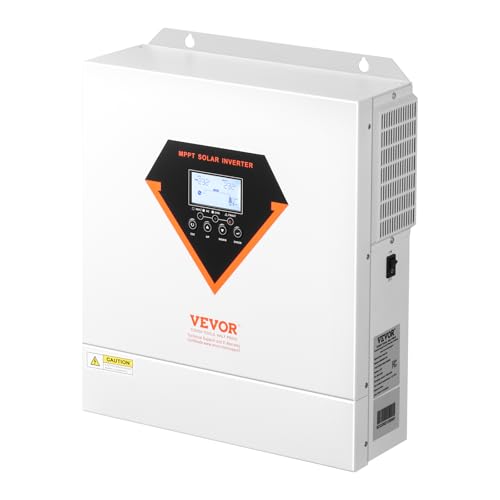
Offers a 2-in-1 design with built-in MPPT charger and pure sine-wave 220/230V output. Features up to 94% MPPT efficiency, 24V battery compatibility, and solid protection. Best for small homes or camper setups needing steady, grid-like power with solar charging. Caution: rated for 3500W, so simultaneous high-load devices should be planned to avoid peak overshoot.
SUMRY Hybrid Solar Inverter 4000W

Features a 4000W rating with 8000W peak, glass top LCD display, and a 140A MPPT charge controller supporting up to 5600W PV input. Suitable for battery-less or AGM lithium battery configurations. Best for users wanting a premium display and strong MPPT performance. Limitation: higher power requires ample PV and proper ventilation.
Aninerel 4200W Hybrid Inverter

A 4200W hybrid inverter with built-in 100A MPPT controller, WiFi connectivity, and versatile operation modes. Supports both battery-backed and battery-free use, with special lithium activation for optimized performance. Best for tech-savvy setups that require remote monitoring. Caution: battery-free operation requires appropriate PV voltage to run reliably.
Buying Guide: Key Considerations
What output voltage do you need? Most 24V to 230V inverters deliver 230V, but some offer 120V or dual options. Choose one that matches your local mains and any devices you plan to run.
Do you need MPPT charging? If solar charging is essential, prefer a model with a built-in MPPT controller and a high charging current to maximize energy capture.
What battery type will you use? Some inverters are optimized for lead-acid, AGM, or lithium batteries. Confirm compatibility and any activation settings required for lithium use.
Is Pure Sine Wave necessary? For sensitive electronics, a pure sine-wave output minimizes risk of damage and noise.
Protection features matter. Look for protections against overvoltage, undervoltage, short circuits, overloads, over-temperature, and a durable chassis.
Physical footprint and cooling. Higher-wattage units need space and adequate ventilation to prevent overheating. Aluminum or steel housings add ruggedness.
Monitoring and control features. Some models offer LCD displays or WiFi monitoring for real-time status, which helps in maintenance and troubleshooting.
FAQ
- What is a pure sine wave inverter, and why does it matter? A pure sine wave inverter produces smooth AC power suitable for sensitive electronics, reducing noise and potential damage.
- Can I run 230V devices from a 24V system? Yes, with a 24V to 230V inverter, but verify the continuous and peak wattage to cover your loads.
- Is MPPT charging necessary for off-grid setups? MPPT improves solar charging efficiency, especially in variable sunlight conditions, but not all systems require it.
- Should I buy a 3000W or 6000W inverter? Choose based on total load. A higher-watt unit handles more devices but requires more space and cooling.
- Can these inverters work without a battery? Some models support battery-less operation with solar input; check the datasheet for minimum PV requirements.
- What maintenance is needed? Regular inspection of cabling, vents, and connections; monitor for unusual heat and ensure protection features function.