Best 24V Grid Tie Inverter Options for Home Solar Setups
Start with a clear, practical choice: 24V grid tie inverters are designed to convert solar output into grid-compatible AC, suitable for people who want to feed solar energy back to the home or utility grid. These devices are best for DIY solar enthusiasts, off-grid hobbyists, and small-to-medium residential installations seeking safe, efficient power conversion. The following five models stand out for different use cases, from compact 24V systems to higher-efficiency MPPT designs with battery integration. Each option is suited to specific panel voltages, battery configurations, and installation preferences.
| Product | Brand | Best For |
|---|---|---|
| 1000W Grid Tie Inverter, 20-50V DC to 90V-140V AC Output MPPT Pure Sine Wave Inverter | YINZINR | 36V solar panels paired with 36V batteries, MPPT precision |
| Lumicasaler 1000W Solar Micro Inverter Grid Tie, IP65 Pure Sine Wave | Lumicasaler | Compact space, 18V panels or 24V batteries |
| Y&H 350W Grid Tie Micro Inverter MPPT Solar Input | Y&H | Smaller 24V/36V panel systems under 350W |
| 1000W Grid Tie Inverter, 10.8-30V DC Input | HIPUDNLM | Lower voltage 18V/24V panels, stackable setup |
| TINGEN 1000W Grid Tie Inverter with LCD Display | TINGEN | Versatile 26-45V input, 24V battery-ready |
1000W Grid Tie Inverter, 20-50V DC to 90V-140V AC Output MPPT Pure Sine Wave

The YINZINR model uses aluminum alloy housing and imported components for durability in hot or cold environments. It features an isolated high-frequency transformer and advanced MPPT with efficiency claimed over 99%, delivering stable maximum power point locking. Best for a 36V solar panel and 36V battery combination where precise MPPT tracking matters. Caution: verify panel and battery voltages stay within the listed 20-50V DC input range to avoid startup issues.
Lumicasaler 1000W Solar Micro Inverter Grid Tie, IP65 Pure Sine Wave

Lumicasaler emphasizes high efficiency above 99% with advanced MPPT and a pure sine wave output to protect sensitive electronics. Its compact form suits tight spaces and 18V panels or 24V battery configurations. A built-in cooling approach and IP65 protection make it better for outdoor or semi-exposed installations. Choose this when you want a small footprint with strong energy harvest. Limitation: micro inverters typically require each panel to operate near its own MPPT; shade on one panel can affect the system less predictably than centralized inverters.
Y&H 350W Grid Tie Micro Inverter MPPT Solar Input

Designed for smaller 24V or 36V panels, this micro inverter offers MPPT range within 24-42V and a practical cap of 350W. It’s best for compact setups or where panel voltages stay within its MPPT window. This model is suited for users who need straightforward installation and reliable performance without large equipment. Limitation: rated power may limit output for larger arrays or growth plans beyond 350W per unit.
1000W Grid Tie Inverter, 10.8-30V DC Input

HIPUDNLM emphasizes strong cooling with a high-speed fan and corrosion-resistant aluminum housing. Its MPPT design aims for high efficiency above 99% and supports 18V to 24V panels with a 90-140V AC output. Best for compact, stackable configurations where space and heat management are priorities. Caution: ensure the input voltage stays within the 10.8-30V range; using higher voltage panels could reduce efficiency or prevent startup.
Y&H 1000W Grid Tie Inverter Power Limiter DC25-60V
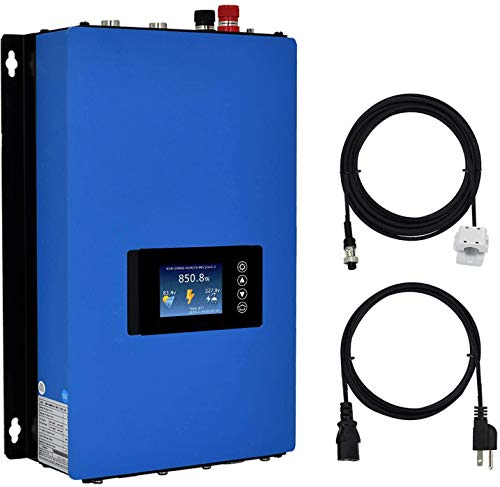
Y&H provides clear input requirements: DC input 22-60V and a 60V maximum Voc, suited for 36V or 48V battery pairing with grid-tied operation. MPPT claims up to 99% efficiency and a peak conversion rate around 80%. This model supports a regulated power approach with a limiter sensor to match load needs. Best for users who want a battery integration option with a controlled power output. Limitation: keep panel arrays within recommended Voc to avoid triggering the limiter or reduced performance.
TINGEN 1000W Grid Tie Inverter With LCD Display

TINGEN offers a versatile input range of 26-45V, suitable for 24V battery configurations. It provides an LCD display to easily monitor AC/DC input-output parameters and supports multiple operation modes including PV-focused and battery limiter options. Best for users who want visibility into system performance and multiple operating modes. Caution: ensure the grid-tied installation adheres to local electrical codes when integrating with a battery bank and grid feed.
Y&H 600W Solar Grid Tie Micro Inverter with IP65

This IP65-rated unit is designed for weather resistance and real-time power monitoring via a digital AC meter. It supports 24V and 36V solar panels and provides a clear data view including voltage, current, active power, and frequency. Best for outdoor installs where weather sealing is important. Limitation: IP65 protection does not guarantee protection from all mechanical impacts; handle installation with standard safety precautions.
1000W Grid Tie Inverter, 10.8-32V DC Input

QIUTMER highlights a compact footprint (about 10.6 by 6.5 by 2.1 inches) and high efficiency over 99% with MPPT. It’s designed for 18V or 24V panels with 90-140V AC output and stackable configurations. Best for space-constrained installations or multi-unit arrays. Caution: its output is optimized for certain panel voltages; verify compatibility with your existing PV array before purchasing.
Buying Guide: Key Points For Your 24V Grid Tie Inverter
What should you consider when choosing a 24V grid tie inverter?
- System voltage compatibility: Ensure the inverter’s DC input range matches your panel and battery voltage (e.g., 20-50V, 10.8-32V, 26-45V).
- Output voltage and frequency: Confirm it matches your grid requirements (commonly 90-140V and 50/60 Hz). Some models offer multi-range output for regional compatibility.
- MPPT and efficiency: A higher MPPT efficiency helps harvest more energy, especially in partially shaded or variable conditions.
- Cooling and protection: Look for built-in cooling (fans) and protective features like IP ratings, thermal protection, and LS/RS compliance.
- Size and installation: Consider footprint, wiring needs, and whether micro inverters or centralized units fit your layout.
- Battery integration: If you plan to combine with a battery bank, verify voltage compatibility (24V, 36V, 48V) and any required safety gear like circuit breakers.
Frequently Asked Questions
- What is a grid tie inverter used for? It converts PV DC into AC that can be fed into the home grid, often with MPPT tracking for efficient energy harvest.
- Do 24V grid tie inverters work with 36V batteries? Some models are designed for 36V battery integration, but verify the input/output specs for each unit.
- Are micro inverters better than string inverters for 24V systems? Micro inverters excel in modular setups and shading resilience, while string/integrated MPPT models can be more cost-effective for larger arrays.
- What happens if my panel voltage is outside the MPPT range? The inverter may reduce efficiency or fail to start; stay within the specified MPPT window for best results.
- Is weather protection important for outdoor installs? Yes; IP65 or higher protection helps withstand rain and dust for outdoor operation.
- Can I stack multiple grid tie inverters? Some models are designed to be stackable, but confirm safety and electrical codes for your configuration.