Best 240 Watt Solar Panels for Off-Grid Power
The best 240 watt solar panels offer high efficiency, portable design, and versatile compatibility for campers, RVers, boaters, and emergency prepists. This guide highlights five top options, explaining who each is best for and why it stands out. Each product is evaluated on efficiency, portability, durability, and ease of use. Use the buying table below to compare key details at a glance.
| Product | Best For | |
|---|---|---|
| 240W Portable Solar Panels for Power Station (Aonxi) | Backcountry campers seeking USB and DC outputs | Up to 23.5% efficiency; multiple adapters included |
| GRECELL 240W Portable Solar Panel | Compact, easy-to-carry setups with universal compatibility | 25%+ efficiency; lightweight foldable design |
| 240W Bifacial Solar Panel N-Type (Callsun) | RV, van, or rooftop systems needing extra power | Dual-side output; up to 30% more power |
| LensunSolar Flexible 240W | Curved surfaces or irregular mounting | ETFE, high efficiency; flexible bendable panel |
| OUPES Portable 240W | Lightweight, easy setup for generators | 23.4% efficiency; kickstands and long cable |
buyer types covered: outdoor enthusiasts; off-grid commuters; emergency prep fans; RV and van dwellers. The selections emphasize portability, high efficiency, and reliable charging options for common solar generators and power stations.
240W Portable Panels With USB and 20V Output

This Aonxi 240W folding panel uses highly efficient monocrystalline cells with up to 23.5% solar conversion, designed for versatility. It includes three USB ports and a DC 20V output, plus a 4.2-foot MC-4 cable and six DC adapters for broad compatibility. Best for compact setups needing multiple output options to charge smaller power stations or devices during camping or off-grid living. Limitation: ensure your power station supports the DC 20V input to maximize compatibility.
GRECELL 240W Portable Solar Panel

GRECELL offers 25%+ efficiency with high-efficiency monocrystalline cells. The foldable design weighs about 16.3 lbs and folds to a compact size, with an adjustable stand and reinforced grommets for multiple mounting options. It includes connectors such as XT60/Anderson/DC7909/DC8020 for compatibility with many portable power stations. Best for travelers who want a lighter, packable solar kit. Caution: check compatibility with your specific power station model to ensure all connectors are supported.
Callsun 240W Bifacial Solar Panel Kit
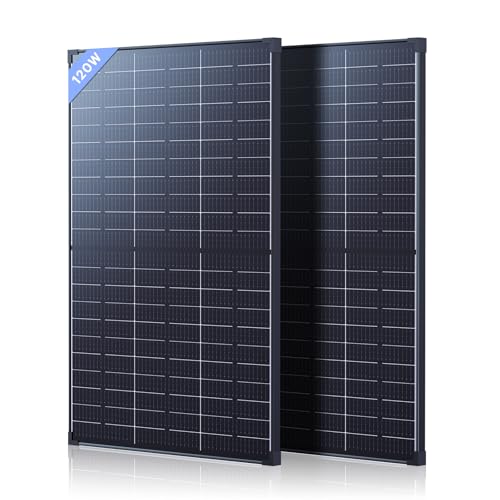
Callsun’s bifacial 240W kit uses dual-side output to capture reflected light, boosting total power by up to 30% under favorable conditions. It uses twin-cell parallel circuitry to improve shading tolerance and includes modules designed for RV, van, or rooftop installations. Best for spaces with reflective surfaces or light-colored roofs. Limitation: performance gains depend on mounting surface and sun exposure; shaded areas reduce benefits.
LENSUNSOLAR 240W Flexible Panel

LensunSolar combines flexible ETFE design with BC (Back Contact) cells for up to 25.8% efficiency. The absence of front metal gridlines reduces heat buildup and improves light capture, contributing to cooler operation and extended lifespan. Best for RVs, boats, or curved surfaces where rigid panels won’t fit. Caution: flexible panels may have lower impact resistance in rough environments; handle with care during transport.
OUPES Portable Solar Panel 240W

OUPES emphasizes easy setup with a lightweight design at about 18.5 lbs. It uses 23.4% efficiency with a durable build and a long 16.4 ft cable. Unfold and snap the kickstands to align for optimal sun exposure. Best for users who prioritize quick deployment and longer reach from their power station. Limitation: weather resistance notes suggest avoiding prolonged exposure to heavy rain without protection.
Buying Guide: 240W Solar Panels for Off-Grid Power
What should you look for when choosing a 240W solar panel?
- Output and efficiency: Higher efficiency means more power in the same space. Look for monocrystalline cells and check the stated efficiency percentage.
- Portability: Foldable or flexible panels are easier to transport. Consider weight, folded dimensions, and included stands or bags.
- Output options: USB ports, DC outputs, and compatibility with your power station ensure convenient charging on site.
- Durability: ETFE coating, IP ratings, and rugged construction improve longevity in outdoor use.
- Mounting flexibility: Reinforced grommets, kickstands, and adjustable angles help maximize sun exposure in variable environments.
- Connector compatibility: Check whether the included connectors (XT60, Anderson, DC adapters) fit your generator or battery system.
How to choose between foldable, bifacial, and flexible designs?
- Foldable panels are most portable and suitable for travelers with limited space.
- Bifacial panels can yield more power in sunny, reflective environments, ideal for rooftops or white surfaces.
- Flexible panels work well on curved surfaces or installations where rigid panels won’t fit.
What installation considerations matter?
- Sun exposure: Orient panels toward the sun in the early morning or late afternoon for best results.
- Cable length: Ensure cables reach your power station without excessive tension.
- Weather protection: Use IP-rated enclosures and avoid submerging panels in water during heavy rain.
Frequently Asked Questions
- Are 240W panels compatible with most power stations?
Most are compatible with common portable power stations via MC-4, XT60, or Anderson connectors; always verify your model’s input requirements. - Is bifacial solar energy worth it for portable setups?
Rather than always, bifacial designs shine in areas with reflective surfaces; in typical RV setups, gains may vary by site. - Do flexible solar panels last as long as rigid panels?
Flexible panels can be robust but may be more sensitive to sharp impacts; handle with care in rough environments. - Which panel is best for camping in shade?
Panels with higher shading tolerance and dual-cell or parallel circuitry maintain output better in intermittent sun. - What output should I expect from a 240W system?
Actual output depends on sun angle, temperature, and system losses; a well-placed 240W kit typically powers generators and small appliances reliably under good sun.