Best 240 Volt Portable Generator Options for Home Backup and RV Power
When selecting a 240 volt portable generator, Americans seek reliable dual fuel flexibility, safe operation, and enough wattage to power essential appliances. The models below cover popular uses—from home backup to RV camping—while offering 120V/240V output, electric start, and CO safety features. This guide highlights five strong contenders and includes a buying guide to help you compare capacity, runtime, and safety features across brands.
Summary of Selected Products
| Product | Watt Range (Gas/Propane) | Key Benefits | Fuel |
|---|---|---|---|
| WEN DF680iX | 6800 surge / 5100 running (gas); 6000 surge / 4500 running (propane) | 240V ready; CO watchdog; EV charging capable | Gas / Propane |
| WEN DF475T | 4750 surge / 3800 running (gas); 4350 surge / 3500 running (propane) | Mobile dual fuel; 120V/240V output | Gas / Propane |
| Westinghouse 13500 Peak | Gas: 13500 peak / 10500 running; Propane: 12500 peak / 9500 running | Remote start; transfer switch ready; multiple outlets | Gas / Propane |
| WEN TF1450X | 14500 surge / 11500 running (gas); 12500 surge / 10300 running (propane); 10500S/8750R natural gas | Tri-fuel; 120V/240V operation; CO watchdog | Gas / Propane / Natural Gas |
| Westinghouse 12500 EFI | Gas 9500 running / 12500 peak; Propane 8500 running / 11200 peak | Remote start; CO sensor; transfer switch readiness | Gas / Propane |
Best Overall: WEN DF680iX 240V Dual Fuel Inverter

The WEN DF680iX is a compact, dual-fuel inverter generator designed for RVs and small backup loads. It delivers 6800 surge watts on gasoline and 6000 surge on propane, with 5100 and 4500 running watts respectively. A bonded-neutral 240V configuration enables low-power Level 2 charging for battery and hybrid vehicles, expanding charging options during outages. The built-in CO watchdog sensor automatically shuts down the unit if dangerous carbon monoxide levels are detected, enhancing safety for family use. Electric start provides quick ignition for easy use in remote locations.
Key considerations include its portability, dual-fuel versatility, and 240V capability for 240V appliances. While not designed for heavy commercial loads, the DF680iX balances power and efficiency for home backup, small workshop tasks, and selective EV charging. Regular maintenance, proper ventilation, and adherence to manufacturer guidelines ensure reliable performance. With battery support and a CO monitoring system, this model suits users seeking a modern, safer 240V option in a portable package.
WEN DF475T: Compact Dual-Fuel Utility

The WEN DF475T provides a compact, affordable option with dual-fuel capability. It switches between gasoline (4750 surge / 3800 running watts) and propane (4350 surge / 3500 running) with a simple dial. The unit delivers 120V and 240V outputs, making it suitable for transfer switches and emergency backup. An electric start powers the 224cc four-stroke OHV engine, allowing quick operation without manual cranking. This model is well-suited for light emergency loads, small appliances, and RV setups that require a reliable 240V option without excessive footprint.
Considerations include its lighter wattage range compared with larger units, but it remains a practical choice for weekend trips and modest home backups. The 240V capability supports essential tools and a small HVAC unit if needed. Users should plan for longer runtimes on propane or larger fuel tanks for extended outages. Maintenance and fuel quality impact performance, so following the manufacturer’s service intervals is advisable.
Westinghouse 13500 Peak: High-Power 240V Backup

The Westinghouse 13500 Peak Watt Dual Fuel model provides substantial power for home backup and job sites. With 13500 peak watts and 10500 running watts on gasoline, or 12500 peak / 9500 running watts on propane, it powers sizable loads. Features include remote start via key fob, electric or recoil start, and a robust 500cc OHV engine. A 9.5-gallon fuel tank offers long runtimes, and multiple outlets include transfer switch-ready 120V L14-30R and RV-ready outlets. The unit also includes a digital hour meter for maintenance tracking and a CO sensor for safety. This is a strong option for larger houses, workshops, and remote job sites requiring reliable 240V power.
Users should assess whether the generator’s size and noise level fit their property’s constraints. The inclusion of a transfer switch-ready outlet eases integration with home electrical systems. Remote electric start enhances convenience for frequent outages or remote deployments, though the initial investment may be higher than smaller models. Proper storage and ventilation remain critical for peak performance and safety.
WEN TF1450X: Tri-Fuel Power Champion

The WEN TF1450X stands out for its tri-fuel design, offering gasoline (14500 surge / 11500 running), propane (12500 surge / 10300 running), and natural gas (10500 surge / 8750 running). It operates at 120V and 240V, making it a versatile choice for homes, RVs, and farms that require flexible fuel options. The built-in CO watchdog sensor adds safety by shutting down on harmful carbon monoxide levels. This model is designed for large backup loads and transfer-switch-ready configurations, enabling robust performance during outages or peak demand.
Consider the TF1450X if fuel availability varies or if you prioritize a single unit that can run on multiple fuels. The higher wattage supports bigger appliances and more critical loads. Gas consumption may be higher, and natural gas compatibility means a fixed gas supply is possible in some installations. Noise levels, weight, and transport ease should be weighed against the need for high power and fuel flexibility.
Westinghouse 12500 EFI: Fuel-Efficient Big Power
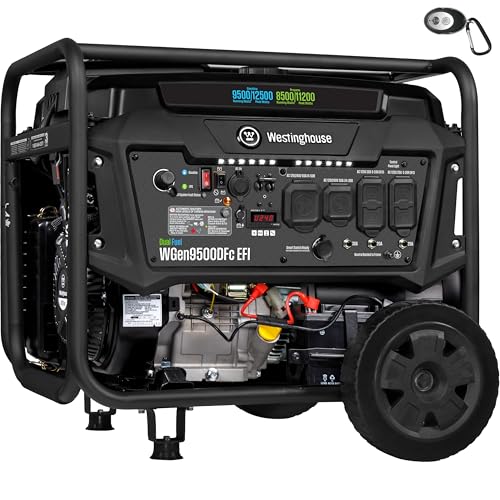
The Westinghouse 12500 EFI Dual Fuel generator emphasizes electronic fuel injection (EFI) with dual fuel capability. Output ranges include 9500 running watts (gas) and 11200 peak watts (propane), with 8500 running and 11200 peak in propane mode. It features a remote start key fob, electric and recoil start, and multiple outlets suitable for home or RV use. CO safety sensors and carb compliance add to its appeal for reliability and compliance. Ideal for larger homes, workshops, and RV sites that demand consistent 240V power with efficient fuel use.
When selecting this model, consider fuel availability and the benefits of EFI for smoother operation and better fuel efficiency. The range of outlets supports diverse loads from essential circuits to full-home backup. Regular maintenance, including oil changes and spark plug checks, will help sustain performance and safety over longer runtimes.
Buying Guide: Key Purchase Considerations
When comparing 240V portable generators, buyers should weigh power needs against portability and cost. Here are essential factors to consider:
- Power capacity: Match surge and running watts to your expected loads, including appliances, HVAC, and essential tools. Higher wattage supports more devices but increases size and weight.
- Fuel type and availability: Dual-fuel options provide flexibility during outages. Consider fuel shelf-life, storage space, and refill logistics.
- Output configuration: Ensure the unit offers 120V/240V operation and transfer-switch-ready outlets if you plan to connect to a home panel.
- Safety features: Look for CO sensors or watchdog shutdown systems to reduce risk in enclosed spaces. A rubber outlet cover, low-oil shutdown, and proper ventilation are important.
- Starting method: Electric start simplifies operation, especially in adverse conditions. A recoil start backup is a valuable fail-safe.
- Run time and tank size: Longer runtimes reduce refueling needs during outages. Tank capacity and fuel efficiency influence total endurance.
- Portability and noise: Wheel kits, handles, and noise levels affect suitability for camping or residential use. Check local noise ordinances if applicable.
- Maintenance and support: Availability of replacement parts, service intervals, and warranty terms impact total cost of ownership.
Consider the environment: a larger, louder unit may be appropriate for a workshop or rural property, while a compact inverter with CO safety is often better for an apartment-adjacent backup or RV travel. Always place generators on a level surface with adequate ventilation, away from doors and windows, and follow local laws regarding exhaust placement and permitted emissions.