Best 240 Volt Generator Cords for Home Backup Power
Find the right 240-volt generator cord for safe and reliable power transfer. This guide highlights five high‑quality options, ideal for emergency power, transfer switches, and outdoor use. Choose by length, weather resistance, and locking mechanism to fit your setup and climate needs. Best for homeowners needing dependable, code‑compliant extension and transfer‑switch cords; best for rural properties, garages, and RV setups.
Summary of selected products:
| Product | Length | Key Strength | Best For |
|---|---|---|---|
| Houseables 10 ft Generator Cord (B06Y1F6BNK) | 10 ft | Flexible 10‑ga, all rubber, weather resistant | Short runs, indoor/outdoor use |
| PlugSaf 50 ft Generator Extension Cord (B0C23VLKPH) | 50 ft | Weatherproof, IP65, twist lock | Long runs, outdoor installations |
| Houseables 25 ft Generator Cord (B077J7P7TR) | 25 ft | All‑weather, pliable, 10‑ga | Mid‑range length, emergency use |
| RVGUARD 25 ft Generator Extension Cord (B085HC6JKM) | 25 ft | All‑weather SJTW, twist lock | Weather extremes, reliable grip |
| CircleCord 15 ft Generator Cord with Inlet Box (B08RBN16DR) | 15 ft | Inlet box included, ETL listed | Plug‑in ready with transfer box |
Houseables 10 ft Generator Cord — L14-30P to L14-30R

Best for: Individuals needing a compact 10‑foot cord to bridge a generator to a transfer switch or wall outlet in tight spaces. This 10‑gauge, 4‑conductor, all‑rubber cord supports up to 30A at 125/250V with a locking L14‑30P to L14‑30R configuration. It offers good pliability and weather resistance for year‑round use. Caution: stiffer in very cold weather, which may affect maneuverability indoors or in storage compartments.
PlugSaf 50 ft 30 Amp Generator Extension Cord

Best for: Users needing a long run from a portable generator to a transfer switch or outdoor service panel. Features include 50 feet of 10‑ga copper conductors, STW 125/250V, and a twist‑lock L14‑30P to L14‑30R. It’s weatherproof, heat‑resistant, and suitable for harsh conditions. Limitation: longer cords can introduce more voltage drop on smaller generators under heavy loads.
Houseables 25 ft Generator Cord — L14-30P to L14-30R
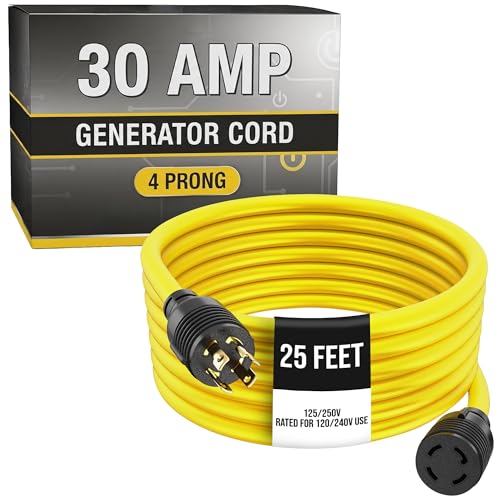
Best for: Medium‑range connections between a generator and a transfer switch or receptacle. This 25‑foot cord uses 10‑gauge conductors with a 4‑prong locking configuration. It provides all‑weather flexibility and remains pliable in cool conditions. Choose this if you need a balance of length and stiffness for easier handling. Caution: slightly less flexible than shorter options in very cold weather.
RVGUARD 25 ft 30 Amp Generator Cord

Best for: Outdoor setups where weather resistance is critical. This 25‑foot SJTW cord supports up to 7500W at 125/250V with a twist‑lock L14‑30P to L14‑30R. It’s ETL listed and engineered to withstand wide temperature ranges. Limitation: the included cord organizer is a nice feature but may add bulk in compact spaces.
CircleCord 15 ft Gen Cord With Inlet Box

Best for: Quick, safe hookup to a power inlet box and manual transfer switch. The 15‑foot, 10‑ga SJTW cord uses NEMA L14‑30P to L14‑30R with locking ends and an included inlet box for a clean installation. It’s ETL listed and designed for emergency readiness. Limitation: shorter length may require closer generator placement or additional extension if the transfer switch is farther away.
Buying Guide
What length do you actually need? Short cords are easier to manage but require closer generator placement. Longer cords extend convenience at the risk of voltage drop and heavier weight. Choose 10‑ga conductors for 30A loads to minimize resistance losses. Look for locking (twist‑lock) ends to prevent accidental disconnections in windy or rainy conditions. Weather resistance and ETL/UL listing improve safe outdoor use. If you’re pairing with a transfer switch, ensure the cord ends match the switch requirements and that the cord length fits between the generator and panel without taut wires.
What about weather and temperature? All‑weather or SJTW jackets help the cord stay flexible in cold climates. Some cords advertise subzero pliability, which is beneficial for winter storage and outdoor installations. For heaviest outdoor exposure, consider IP‑rated and flame‑retardant constructions for additional safety margins.
Which features matter most? If you need outdoor reliability with frequent handling, prioritize twist‑lock ends, robust insulation, and an inlet box (when a box is included, as with CircleCord) for neat, protected connections. If you’re mainly using the cord for short, indoor/outdoor power needs, a shorter, more pliable cord from Houseables is often sufficient.
FAQ
- What does 125/250V mean for these cords? It indicates the cord supports both common residential 120V circuits and higher‑voltage 240V loads used by generators and transfer switches.
- Why choose a twist‑lock cord? Twist‑lock plugs reduce the risk of accidental disconnections in adverse weather or heavy movement.
- Is a longer cord always better? Not necessarily. Longer cords can cause voltage drop under high loads and are harder to manage. Match length to your setup.
- What does ETL listed mean? ETL listing indicates the product meets safety standards and has undergone third‑party testing.
- Can these cords be used indoors? Yes, most are rated for indoor/outdoor use, but outdoor conditions favor weather‑resistant jackets and locking connectors.
- Do I need a power inlet box? An inlet box (as with CircleCord) provides a secure, weather‑protected connection point to a transfer switch or panel.