Best 240V Single-Phase to 3-Phase Converters for Home and Shop
If you need 240V single-phase input to drive a 3-phase motor, this guide helps you pick reliable digital phase shifters. The top picks are suitable for small to mid-size machines, workshops, and hobbyist setups. Each choice is evaluated for ease of use, space needs, motor compatibility, and practical limits. This article highlights five converters that balance simplicity, safety, and performance for typical 1–15 HP applications. Buyers should match motor power and phase requirements to ensure proper operation and longevity.
| Product | Motor Range | Input/Output | Notes |
|---|---|---|---|
| American DPS 2 HP (0.75 kW) | 1 HP max motor | 200V-240V to 200V-240V | Compact, easy setup; best for small machines |
| American DPS 15 HP (7.5 kW) | 10 HP max motor | 200V-240V to 200V-240V | Higher capacity; fits larger workspaces |
| American DPS 10 HP (5.5 kW) | 7.5 HP max motor | 200V-240V to 200V-240V | Balanced for mid-sized tools |
| American DPS 7.5 HP (3.7 kW) | 5 HP max motor | 200V-240V to 200V-240V | Compact, versatile for small to medium tasks |
| American DPS 5 HP (2.2 kW) | 3 HP max motor | 200V-240V to 200V-240V | Very compact; good for limited spaces |
American DPS 2HP Single-Phase To 3-Phase Converter

Features: Single phase 200V-240V to 3 phase 200V-240V; extremely easy to set up and use; compact and light enough to fit in any workspace and home.
Best for: hobbyists and small-shop owners running a single low-power 3-phase motor. It’s a straightforward plug-and-play option when you need to convert a 240V supply for a small machine.
Limitations: Designed for up to 1 HP motors; not suitable for larger equipment without upgrading.
American DPS 15HP Single-Phase To 3-Phase Converter

Features: Single phase 200V-240V to 3 phase 200V-240V; extremely easy to set up and use; compact and light enough to fit in any workspace and home.
Best for: mid-to-large workshop setups needing a higher-capacity converter to run a 10 HP (7.5 kW) motor. Suitable for equipment like machine tools and pumps with moderate power draws.
Limitations: Higher power units may require adequate space and proper electrical protection; ensure motor rating matches the device you connect.
American DPS 10HP Single-Phase To 3-Phase Converter

Features: Single phase 200V-240V to 3 phase 200V-240V; extremely easy to set up and use; compact and light enough to fit in any workspace and home.
Best for: users needing reliable conversion for mid-sized tools like milling machines or lathes that run around 7.5 HP. It provides a good balance of power and footprint.
Limitations: Ensure your load does not exceed motor rating; oversizing or misalignment can impact performance.
American DPS 7.5HP Single-Phase To 3-Phase Converter
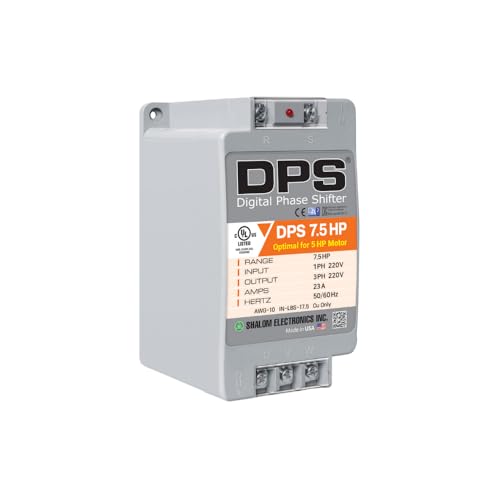
Features: Single phase 200V-240V to 3 phase 200V-240V; extremely easy to set up and use; compact and light enough to fit in any workspace and home.
Best for: small to mid-tier workshop tools requiring a modest 5 HP to 7.5 HP range. Good choice when space is a constraint but more power is needed than the 2 HP unit.
Limitations: May require careful motor matching to avoid under or overloading the phase shifter.
American DPS 5HP Single-Phase To 3-Phase Converter

Features: Single phase 200V-240V to 3 phase 200V-240V; extremely easy to set up and use; compact and light enough to fit in any workspace and home.
Best for: compact workshops with smaller CNC machines or drill presses needing up to 3 HP to 5 HP. A practical option where space is at a premium.
Limitations: Best used for lighter loads; heavier motors may require a higher-capacity unit for stable operation.
Buying Guide
How to choose the right 240V to 3-phase converter
- Motor horsepower compatibility: Match the converter’s supported motor range to your primary motor’s horsepower to prevent overloads.
- Input voltage stability: Confirm your shop’s supply is consistently within 200–240V to avoid performance drops.
- Space and installation needs: Consider the footprint and how the unit will be mounted or stored in your workspace.
- Ease of use: Look for digital phase shifters with clear setup procedures and reliable protection features.
- Protection and safety: Check UL-Listed status and any required fusing or electrical protections for your circuits.
- Motor type and load profile: For intermittent vs. continuous operation, choose a unit with appropriate current handling.
Comparison tips
- Choose this if you need minimal footprint and simple operation for small tools (2–5 HP range).
- Better for workshops that run multiple mid-range machines and require a robust 7.5–10 HP option.
- Avoid this if your motor exceeds the converter’s rated horsepower or if continuous heavy loads are planned beyond the unit’s limits.
Installation and safety reminders
- Always follow local electrical codes and manufacturer guidelines for installation.
- Use proper wiring gauges and secure connections to prevent heat buildup and arcing.
- Test the setup with load banks or progressively ramped loads to verify stable 3-phase output.
FAQ
- What does a single-phase to 3-phase converter do?
It converts a 240V single-phase supply into a 3-phase output to run 3-phase motors.
- Can I run a large motor with a small converter?
No. Use a converter rated for the motor’s horsepower to avoid overheating and unstable operation.
- Is UL-Listing important?
Yes. UL-Listed products meet safety standards and may be required by some installations.
- Do these units require a dedicated circuit?
Often, yes. A dedicated circuit helps ensure voltage stability and protects other devices.
- Can I upgrade later if I add a larger motor?
It’s usually more practical to select a higher-capacity converter at the outset to support future needs.
- Are these converters easy to relocate?
Yes, most are compact and portable, but always disconnect power before moving and re-check connections after relocation.