Best 220 to 440 Transformer Options for Safe Voltage Conversion
If you need a transformer that converts 220–440 V primary to a stable 110–120 V secondary, these models are prime options. This guide targets buyers seeking compact industrial or residential step-down transformers for 50/60 Hz systems. The selections favor versatility, durability, and clear suitability for specific needs like small equipment, hobby projects, or light industrial use. Below is a quick buying table of the top five choices to help compare core specs at a glance.
| Product | Brand | VA Rating | Primary Voltage Range |
|---|---|---|---|
| Siemens MT0075A Industrial Power Transformer | SIEMENS | 75 VA | 220/230/240 V to 110/115/120 V |
| TRADEPRO TP-75VA-MULTI | TradePro | 75 VA | 120/208/240/480 V to 24 V |
| Industrial Power Transformer, 100 VA | SIEMENS | 100 VA | 240/230/220 V to 110/115/120 V |
| Industrial Power Transformer, 500 VA | SIEMENS | 500 VA | 240/230/220 V to 120/115/110 V |
| 10KW Transformer 3-Phase 220V to 380V | WTTTOOLS | 10 kW (not directly comparable VA) | 3-phase 220 V to 380 V |
Siemens MT0075A Industrial Power Transformer

Best for compact, low-power needs in small workshops or control circuits. The MT0075A reduces 240 x 480, 230 x 460, or 220 x 440 V to 120/115/110 V, with a 75 VA rating. Its silicon steel-laminated core and copper windings improve efficiency for steady voltage output. This model suits equipment that requires a stable 110–120 V supply from a higher voltage source. A potential limitation is the relatively low VA rating, which limits the number and type of devices it can power simultaneously.
TRADEPRO TP-75VA-MULTI Transformer

Better for industrial or commercial settings needing multiple primary options. The TRADEPRO TP-75VA-MULTI supports 120–208–240–480 V with a 75 VA capacity and includes a chassis-mount design for straightforward installation. It’s suitable for devices that require a reliable step-down in a compact footprint. A caveat is that it may not cover high-current needs beyond its 75 VA rating, so plan loads accordingly.
Siemens Industrial Power Transformer, 100 VA

Best for moderate-power applications requiring a stable 110–120 V output from higher mains. This 100 VA transformer provides effective copper windings and a silicon steel core for efficiency. It’s a practical pick for small controls, hobby devices, or test equipment. Limitations include a fixed 100 VA rating, which may constrain power-hungry tools or multiple devices running simultaneously.
Siemens 500 VA Industrial Power Transformer
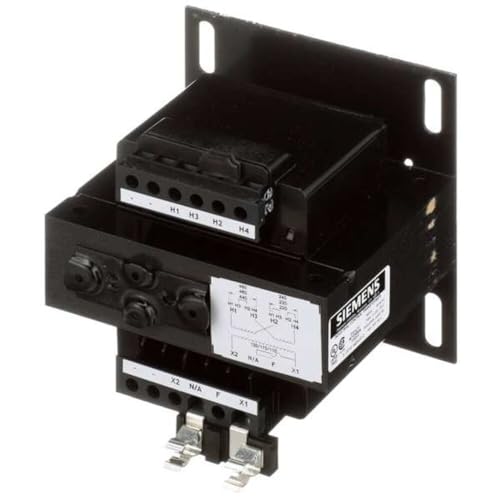
Choose this when higher power is needed while still requiring a 220–440 V primary to 110–120 V secondary. The 500 VA rating supports more demanding loads or multiple devices. It’s best for light industrial setups or larger hobby projects. A potential drawback is its larger size and higher installation complexity compared to smaller units.
10KW Transformer 3-Phase AC 220V to 380V

Best for industrial-scale needs involving 3-phase systems and higher power. This model converts 220 V to 380 V with 3-phase input, supporting heavy equipment and commercial environments. It is not ideal for small projects due to its 10 kW scale and complexity. Consider space, wiring, and cooling needs before selecting this option.
Buying Guide
What should you look for in a 220 to 440 transformer?
- Power rating (VA or kW): Ensure the transformer can handle your total load without approaching its limit.
- Voltage compatibility: Confirm primary voltages (220–240 V) and desired secondary (110–120 V) match your equipment requirements.
- Phase: Choose between 1-phase and 3-phase models based on your system architecture.
- Mounting style: Chassis-mount units are easier to install in panels; wall-mount options save space.
- Efficiency and core construction: Silicon steel cores and copper windings improve voltage stability and heat performance.
- Size and enclosure: Consider space, airflow, and environmental protection needs.
Practical considerations for buyers include future load planning, ambient temperature, and the potential need for snubber circuits or fusing. For hobby projects, smaller VA ratings with simple wiring are typically sufficient. For light industrial or workshop applications, prioritize units with higher VA ratings and robust mounting.
FAQ
- What is VA, and how do I choose the right rating? – VA indicates apparent power. Match the VA to your total load plus a safety margin to avoid overheating.
- Can I run multiple devices from a 75 VA transformer? – Only if the combined load stays well below 75 VA; otherwise, use a higher-rated model.
- Is three-phase progress beneficial for this application? – Three-phase transformers suit large, balanced loads but are more complex to install and wire.
- Are these transformers suitable for sensitive electronics? – They provide stepped-down voltage but may require additional filtering for noise-sensitive gear.
- Do these units operate at 50 Hz and 60 Hz? – Most listed models support both 50 Hz and 60 Hz systems, but verify specs for your exact use case.
- Can I install these transformers in a DIY enclosure? – Yes, with proper mounting and ventilation; follow electrical safety guidelines.