Best 215-Watt Solar Panel Guide for RVs, Off-Grid Power
Find the right 215-watt solar panel for reliable off-grid energy. This guide highlights the best options for RVs, boats, camping, and small power stations. The top picks emphasize anti-shading design, bifacial technology, and compatibility with 12V and 24V systems. Suitable buyers include full-time RVers, boaters, van lifers, and campers seeking steady power in shaded or partial-sun environments. Below is a quick overview of five strong choices to compare side-by-side.
| Product | Type | Key Benefit | Best For |
|---|---|---|---|
| Callsun 215W Anti-Shading Bifacial | Bifacial, 4-zone | Maintains power in partial shade; higher overall output | RV and marine setups with intermittent shade |
| Callsun 430W Anti-Shading (2x215W) | Dual 215W modules, anti-shade | Higher combined wattage in limited spaces | Compact installations needing more energy |
| Nature Power 215W 12V Solar Panel | Single 215W with controller | Plug-and-play with included controller | Simple setups for off-grid cabins or RVs |
| Renogy 200W N-Type (200W) | N-Type cells, 25% efficiency | Compact, flexible installation; strong efficiency | Smaller vans or tight roof spaces |
| HQST N-Type 200W Bifacial | Bifacial, N-Type cells | Potential up to 30% more power | Rooftops with reflective surfaces, RVs, marine |
Callsun 215W Anti-Shading Bifacial Panel
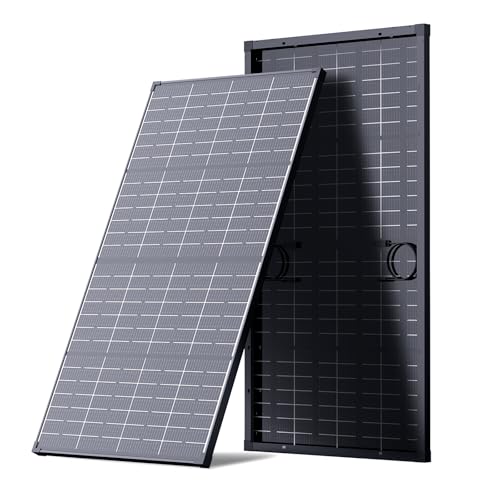
Features: 4 independent power zones; black-box design supports sustained voltage when sections shade. Bifacial technology captures light on the back to boost daily energy by 7-30%. Best for RVs, marine use, and shaded campsites. Limitations include potential gains varying with reflected surface and installation height. Best for buyers needing reliable power despite partial shading.
Callsun 430W Anti-Shading Solar Panel (Two 215W Modules)

Features: Two 215W modules in one frame with independent shading zones; maintains voltage when one half is shaded and can deliver up to 75% more power than standard panels under partial shade. Better for setups needing higher power density on small rooftops. Caution: overall weight and width are greater, requiring sturdy mounting and space planning.
Nature Power 215W 12V Solar Panel

Features: Includes 13 Amp charge controller, cables, and mounting brackets for quick setup. Plug-and-play connections suitable for RVs and off-grid cabins. Best for buyers who want an all-in-one kit; limitation is the fixed controller capacity which may limit peak charging in very high-load scenarios.
Callsun N-Type 120W Bifacial Panel

Features: 25% efficiency with bifacial design; dual-module parallel anti-shade design offering up to 30% extra dual-sided output. Best for compact installations where space is at a premium and shade conditions vary. Limitations include lower single-panel wattage compared to 215W models, which may require more panels for the same total output.
Renogy 200W N-Type Solar Panel

Features: 200W panel with 25% efficiency using 16BB N-Type cells; lighter and smaller than older designs. Best for Class B vans and tight roof spaces. Limitation: slightly less wattage than a true 215W panel, which could matter for larger off-grid loads or rapid charging needs.
Renogy 200W Portable Foldable Panel

Features: 25% efficiency with 16BB N-Type cells; foldable design with magnetic closure for easy storage. Best for travelers needing a compact, portable option with MC4 output to charge power stations or 12V batteries. Limitation: portable form factor means some mounting stability may be required when used as a rooftop panel on vehicles.
Buying Guide
What should I consider when choosing a 215-watt panel?
Key factors include panel type (bifacial vs. mono crystalline), shading resilience, mounting space, and compatibility with your battery system (12V vs 24V). Bifacial designs can increase energy yield when you have reflective surfaces or light-colored roofs, but gains vary by installation conditions.
Is bifacial technology worth it for RVs or boats?
Yes, in many cases. Bifacial panels can deliver extra energy by capturing light from both sides, which is beneficial on reflective decks or snow surroundings. However, ensure you have a clear mounting plan and adequate backside exposure for best results.
What about anti-shading features?
Anti-shading designs use multiple independent zones to prevent a shading region from cutting off power. They are particularly advantageous for RVs and boats where partial shade is common under trees or masts.
What installation considerations matter?
Weight, size, and mounting options influence where you can install. For tight spaces, compact 200W or 215W modules may fit better. If you need higher total output in a small footprint, look at dual-module (430W) configurations, keeping weight and cable management in mind.
How to assess efficiency ratings?
Efficiency figures (up to 25% for many 200W–215W panels) reflect how effectively a panel converts sunlight. Higher efficiency is beneficial in shaded or limited-space setups, as it yields more power from a given area.
What’s the role of a charge controller?
Some kits include a controller (as with Nature Power). Controllers regulate charging to protect batteries. If your system lacks a controller, you may need to add one compatible with your battery chemistry and voltage.
Frequently Asked Questions
- Q: Can a 215W panel run a typical RV fridge? A: It can support small loads and charging cycles, but total daily energy depends on sunlight and battery capacity. Pair with a suitable controller and battery bank.
- Q: Do I need multiple panels for full-day charging? A: In shaded or limited-sun conditions, multiple panels improve total daily output, especially with anti-shading designs.
- Q: Are 200W panels compatible with 24V systems?
- A: Yes, many 200W panels are designed for 12V or 24V systems; check product specs for compatibility and wiring.
- Q: Do bifacial panels require special mounting?
- A: They benefit from reflective backgrounds and proper tilt; ensure the backside area can receive light and is unobstructed.
- Q: How should I store a portable solar panel when not in use?
- A: Use the foldable design, keep cables organized, and store in a dry place to prevent corrosion.