Best 2000 Watt DC to AC Power Inverters for Travel and Off-Grid Power
Answering common buyer questions: choose a 2000W DC to AC inverter to reliably power laptops, TVs, CPAP machines, and small appliances from a 12V battery or vehicle system. This guide highlights five top models suited for RVs, trucks, camping, and off-grid setups. Best for heavy-duty portable power users, best for sensitive electronics, and best for multi-outlet convenience.
Summary table of selected products:
| Product | Continuous Power | Peak Power | Outlets / USB | Best For |
|---|---|---|---|---|
| BELTTT 2000W Pure Sine Wave Inverter | 2000W | 4000W | 2 AC, 1 USB, remote port | General RV, outdoor use with sensitive loads |
| Vansdon 2000W Pure Sine Wave Inverter | 2000W | 4000W | 3 AC outlets, USB-C, USB | RV and home off-grid setups needing multiple outlets |
| Ampeak Pure Sine Wave Inverter | 2000W | 6000W | 2 AC, 1 USB, remote | High-startup appliances and outdoor use |
| EGSCATEE 2000W Inverter | 2000W | 4000W | 2 AC outlets, 3.1A USB | Vehicle and van life power systems |
| EFFORTWAY 2000W Inverter | 2000W | 4000W | 2 AC outlets, 2 USB | Camping, travel, off-grid power |
BELTTT 2000W Pure Sine Wave Inverter

The BELTTT model delivers 2000W of continuous DC12V to AC 110-120V power with up to 4000W peak surge. It uses a pure sine wave output suitable for TVs, home theaters, and other sensitive equipment. Features include an intelligent LCD display showing input/output voltages, battery status, and load, with adjustable output voltage on the screen. This inverter also provides dual AC outlets, a 5V USB charging port, a hardwire port, and a remote controller option for remote operation. Best for campers and RV users who need smooth, grid-like power for delicate electronics and a clear real-time readout of system status. A limitation to note: efficiency and cooling depend on load and ambient conditions; ensure adequate ventilation during high-demand use.
Best for: RV setups and outdoor enthusiasts who want a reliable, pure sine wave with a straightforward LCD readout and remote control capability.
2000 Watt Inverter 12V To 110/120V, Yinleader
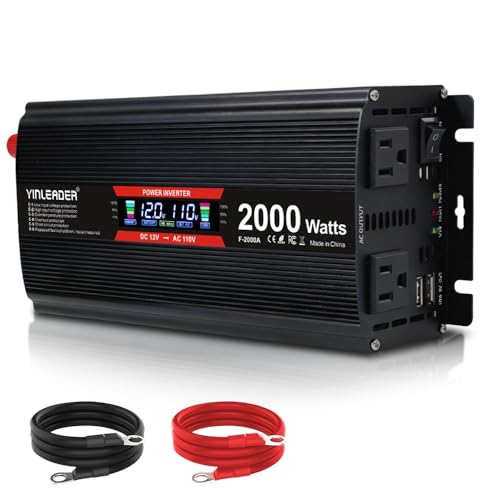
The Yinleader unit provides 2000W continuous output with up to 4000W peak, converting 12V DC to standard 110-120V AC. It includes an intelligent LCD that displays input/output voltages, battery status, and load. The device emphasizes built-in protection against overload, short circuit, overheat, reverse polarity, and under/over voltage, offering a robust safety profile. It is particularly suitable for high-demand electronics and tools on the road. A potential drawback is that the data emphasizes heavy-duty use, so users should monitor battery health when running near peak power for extended periods.
Best for: Vehicle-based power users who require clear fault codes and strong protection features for long trips or remote work sites.
EFFORTWAY 2000W Power Inverter

EFFORTWAY offers a 2000W continuous output with a 4000W peak, converting DC 12V to AC 110-120V. It features two AC outlets and two USB ports, coupled with an LCD display that shows input/output voltage, battery capacity, load, and error codes for troubleshooting. The product emphasizes overcurrent, overheating, and short-circuit protections, as well as a durable aluminum housing and low-noise operation. This model is well-suited for campers and off-grid travelers who need multiple charging options. A limitation is the need to ensure adequate cooling and ventilation, especially when running near peak power continuously.
Best for: Campers and van dwellers who want straightforward dual outlets plus USB charging and clear status reporting.
Vansdon 2000W Pure Sine Wave Inverter

The Vansdon inverter delivers 2000W continuous power and 4000W peak, with a pure sine wave output to protect sensitive electronics. It offers a three-outlet AC configuration and a USB port, along with an LCD display and remote control compatibility. It is positioned for RVs, off-grid homes, and solar-powered setups where multiple AC outlets are useful. One caveat is the need to consider its heat dissipation in hot environments, as prolonged high-load periods can require additional cooling or placement considerations.
Best for: RV users who need three AC outlets and a USB option, with a focus on stable, grid-like AC power for delicate devices.
Buying Guide
- Continuous vs. peak power: Look for an inverter with continuous power at or above your typical load, plus a peak rating that handles startup surges of devices like refrigerators or power tools.
- Pure sine wave vs. modified sine wave: Pure sine wave inverters are safer for sensitive electronics and motors; choose this if you power TVs, CPAPs, computers, or audio systems.
- Outlets and charging options: Ensure there are enough AC outlets and USB ports for your devices. Some units include USB-C or remote control compatibility for convenience.
- Protection features: Overload, short circuit, overheat, reverse polarity, and undervoltage/overvoltage protections help safeguard equipment and batteries.
- Efficiency and heat management: Higher efficiency reduces battery drain. Check for built-in fans or sturdy aluminum casings to handle heat in mobile setups.
- Battery compatibility: Most 12V inverters work with common lead-acid, AGM, and LiFePO4 batteries. Verify compatibility with your battery type and capacity.
- Remote operation: Remote controls are useful when the inverter is installed in a cabinet or an away-from-reach location.
Frequently Asked Questions
- What can a 2000W DC to AC inverter power? It can power laptops, TVs, small appliances, and mid-range power tools, with peak surges up to 4000W for startup.
- Is pure sine wave necessary for RV use? For most sensitive electronics and motors, yes. It reduces noise, flicker, and potential damage.
- Do I need ventilation for an inverter? Yes. Inverters generate heat, especially at high loads; ensure proper airflow and avoid enclosure with limited airflow.
- Can I run an inverter directly from a car battery? Yes, but follow safety guidelines and consider a dedicated battery or dedicated inverter installation for long-term use.
- What maintenance is required? Regularly inspect cables, connections, and cooling components; keep the unit dry and clean, and monitor battery health to prevent deep discharge.
- How do I choose between the models? Consider your outlet needs, load patterns, required surge handling, and whether you prefer remote control, LCD diagnostics, or extra USB ports.