Best 200-Watt Wind Turbine Options for Home Off-Grid Power
Answer: These compact wind turbines are designed to deliver reliable off-grid or hybrid power in calm to moderate wind areas. They’re best suited for small cabins, boats, RVs, gardens, or backup power setups where space or budget constraints exist. The top picks focus on 200W-class or configurable kits that scale to around 200W in common wind conditions, with some models offering higher wattage options in the same family.
| Product | Nominal Power | Best For |
|---|---|---|
| Pikasola Wind Turbine 200W | 200W (up to 220W) | Small homes, boats, solar-wind hybrids |
| UORDBY Wind Turbine Generator 300W | 200W / 300W / 400W / 500W options | Hybrid systems needing scalable options |
| Vikye 200W 3- Blade Kit | 200W | Compact off-grid setups, RVs, sheds |
| ATO Wind Turbine Kit 200W | 200W | Entry-level off-grid projects |
| OLONETO 500W Small Wind Turbine | 500W | Expanded small-scale off-grid or backup power |
Note: All products listed here include a controller and are designed for 12V or configurable voltage systems. The table reflects the best-fit context for 200W-class use, with several models offering scalable wattage for larger needs.
Pikasola 200W Vertical Wind Turbine Kit

Features: 5-leaf double-axis vertical blades fixed inside with a flange for safety; reinforced fiber nylon blades designed for wind resilience; optimized aerodynamic shape for high energy capture; no yaw system required. The design promotes stable operation with reduced vibration and quieter performance than typical horizontal setups.
Best for: Small off-grid installations where space is limited and noise needs minimizing. Ideal for cabins, boats, and garden setups that benefit from a compact vertical-axis design.
Why selected: It combines a compact 5-blade vertical silhouette with a simple safety mechanism and wind-tolerant design, making it a practical starter option for 200W-level output in light to moderate wind zones.
Caution: The kit relies on modest wind to start; in very calm sites, expect slower charge onset compared with higher-wind locations.
UORDBY 3-Phase 200W–500W Wind Turbine Kit
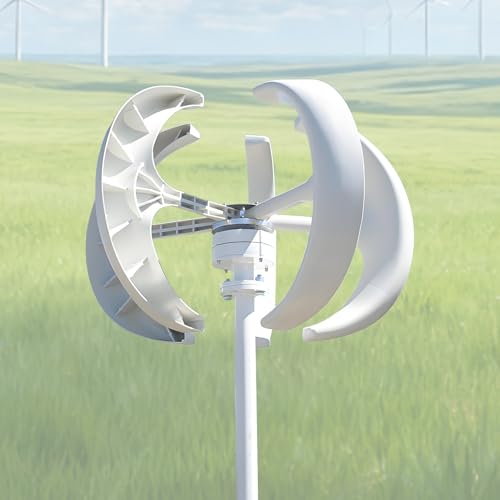
Features: Nylon PA66 blades with lantern-shaped aerodynamic design; fixed blades secured with internal ties for safety and reduced risk of blade detachment; external finish provides corrosion and water resistance; three-phase NdFeB permanent magnet generator; compact, weather-resistant enclosure.
Best for: Hybrid systems needing a scalable range from 200W to 500W, suitable for homes, small farms, and mariner installations where wind varies but space is limited.
Why selected: The kit’s scalability and robust blade design support a range of wind regimes, making it a flexible fit for folks who want a single platform across multiple power needs.
Caution: Ensure proper mounting and weatherproofing; surface treatments help resist harsh conditions but require correct installation for longevity.
Vikye 200W 3-Blade Aerogenerator

Features: High-temperature resistance and efficient current regulation; three-phase AC permanent magnet generator; designed for smooth operation with relatively low noise and a long service life.
Best for: Small-footprint off-grid projects where steady wind energy capture and durability in adverse temperatures are priorities—great for cabins, sheds, or boats.
Why selected: The combination of durable construction and efficient power conversion makes it a practical 200W option for limited-space environments.
Caution: Performance depends on local wind profiles; lower wind areas may experience slower charging compared with higher-wind sites.
ATO 200W Wind Turbine Kit

Features: Options for 100W–1000W with 12V, 24V, or 48V ratings; common 3- or 5-blade configurations; aluminum alloy body with dual-bearing rotation for stability, corrosion resistance, and long service life.
Best for: Off-grid projects where you may need to scale up from 12V systems to higher voltages or larger arrays over time.
Why selected: The flexible voltage and blade-count choices allow tailoring to wind conditions and energy needs, making it a solid modernization path if expansion is anticipated.
Caution: Check whether the chosen configuration aligns with local charging equipment and storage capacity to avoid mismatches.
OLONETO 100–500W Small Wind Turbine
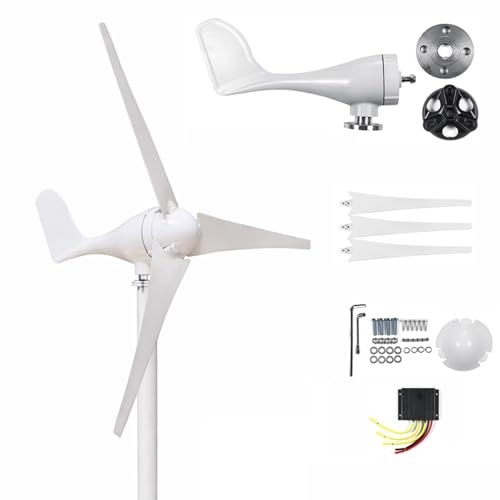
Features: Multi-power options from 100W to 500W; supports 12V or 24V systems; three-blade nylon fiber turbine design for stable rotation and durable operation; permanent magnet generator configuration for efficient energy conversion.
Best for: Buyers looking for a scalable, affordable wind generator for small homes, farms, or RV setups with plans to upgrade as wind or power demands grow.
Why selected: The broad wattage range helps future-proof a compact system, enabling a stepwise increase in capacity without changing the core platform.
Caution: The kit’s overall performance is wind-dependent; verify the site’s average wind speeds and consider a suitable storage solution for variability.
Buying Guide: Key Considerations For 200W-Class Wind Turbines
What wind is needed for meaningful output?
Most 200W-class turbines begin generating reliably around low to moderate wind speeds, often between 2.5 m/s and 6 m/s. In steady breezes, these units can contribute meaningful charging to batteries or hybrid systems. Assess local average wind speeds and seasonal patterns before selecting a model.
What system voltage should I choose?
Common options are 12V and 24V systems. Some kits offer 48V configurations or multi-voltage options. Align the turbine’s voltage with your battery bank and charge controller to maximize efficiency and avoid electrical mismatches.
What blade design matters?
Vertical-axis and three- or five-blade configurations each have tradeoffs. Vertical designs often run quieter and can be less sensitive to wind direction, while multi-blade designs can capture wind energy more aggressively. Consider noise tolerance, space, and mounting height when choosing.
What about mounting and maintenance?
Proper mounting is crucial for stability and safety. Look for corrosion-resistant housings, seals, and bearings designed for outdoor use. Regular inspection of blades, mounting flange, and electrical connections extends lifespan and performance.
How scalable should the system be?
If you anticipate expanding, choose a platform that supports higher-wattage configurations without replacing the core generator. Some brands offer modular blade counts or voltage steps to grow capacity over time.
What about integration with solar or storage?
Consider how the wind turbine will integrate with existing solar panels, MPPT controllers, and battery storage. An MPPT controller helps optimize power extraction across wind and solar inputs, contributing to more stable charging profiles.
FAQ
Can I install a 200W turbine on a small cabin roof? Yes, but ensure the mount and structure can support the turbine’s weight and wind loads. Follow the manufacturer’s mounting guidelines and local codes.
Do 200W turbines require a charge controller? Yes. A controller manages charging to batteries and protects equipment from overcharging or voltage spikes.
Is a taller tower always better? Taller towers expose the turbine to steadier, stronger winds, improving output. Check local regulations and structural limits for mounting height.
Are vertical-axis turbines quieter than horizontal-axis models? Often, yes. Vertical designs can operate with less vibration and noise, but performance varies by model and wind conditions.
What maintenance is needed? Regularly inspect blades for damage, tighten fasteners, and verify electrical connections. Keep blades clean from debris to maintain efficiency.