Best 20,000 Watt Generators for Home Backup and More
When power outages threaten your daily routine, a high-wattage generator can be a crucial ally. This guide highlights top 20,000+ watt options designed for home backup, job sites, and emergency preparedness. You’ll find tri-fuel versatility, durable builds, and features like remote start, CO sensors, and transfer switch readiness. Compare peak and running watts, fuel flexibility, and run times to choose the right generator for your needs and comfort level.
| Product | Fuel Type | Peak Watts | Running Watts | Key Feature |
|---|---|---|---|---|
| Westinghouse 28000 Peak Watt Tri-Fuel | Gas/Propane/Natural Gas | 28,000 | 20,000 | Remote start, transfer switch ready |
| Westinghouse 18000 Peak Watt Tri-Fuel | Gas/Propane/Natural Gas | 18,000 | 14,500 | CO sensor, low THD |
| Generac 22,500 Starting Watt | Gasoline | 22,500 | Unknown | COsense protection, TruePower<5% THD |
| Westinghouse 18000 Peak Watt Dual Fuel | Gas/Propane | 18,000 | 14,500 | CO sensor, low THD |
| Generac Guardian 22kW Standby | Natural Gas/Propane | 22,000 | Depends on load | WiFi monitoring, 200A transfer switch |
Note: The table above highlights five models that balance high wattage, fuel options, and reliability. Each product section below provides deeper specs and practical considerations to help you decide which unit best fits your home or job-site power needs.
Westinghouse 28000 Peak Watt Tri-Fuel

The Westinghouse 28000 Peak Watt Tri-Fuel is designed for serious backup power with three fuel options: gasoline, propane, and natural gas. It delivers up to 28,000 peak watts and 20,000 running watts on gasoline, 25,200 peak/18,000 running watts on propane, and 22,400 peak/16,000 running watts on natural gas. A 17.2-gallon tank supports lengthy runtimes, and the engine is a heavy-duty 999 cc V-Twin OHV with a cast-iron sleeve.
Key features include automatic low-oil shutdown, a digital readout for lifetime hours, volts, and frequency, and multiple outlets (including 50A and 30A configurations) with rubber outlet covers. It’s transfer switch ready and comes with essential accessories like oil and a setup guide. The design emphasizes rugged portability with reinforced steel handles and quick-release pins.
Potential considerations: Tri-fuel versatility offers flexibility during emergencies, but tri-fuel systems can add initial cost and maintenance checks. Noise levels and weight are typical for large portable units, so plan for storage and ventilation. Ensure your transfer switch kit and wiring meet local code requirements.
Westinghouse 18000 Peak Watt Tri-Fuel

This tri-fuel model centers on reliable tri-fuel performance with CO sensors and a focus on cleaner power. It delivers 18,000 peak watts and 14,500 running watts on gasoline, with 16,000/13,000 on propane, and 14,400/11,600 on natural gas. A 10.5-gallon tank supports operational duration, and a 713cc V-Twin OHV engine provides steady output. The unit includes automatic low-oil shutdown and a VFT data center to monitor voltage, frequency, and hours.
Additional strengths include low idle mode to improve fuel economy, and a THD profile that remains suitable for sensitive electronics when used with proper loads. The CO sensor adds a safety layer for indoor or semi-enclosed use in emergencies. Consider the fuel availability and storage needs when planning long outages.
Generac 22,500 Starting Watt Portable
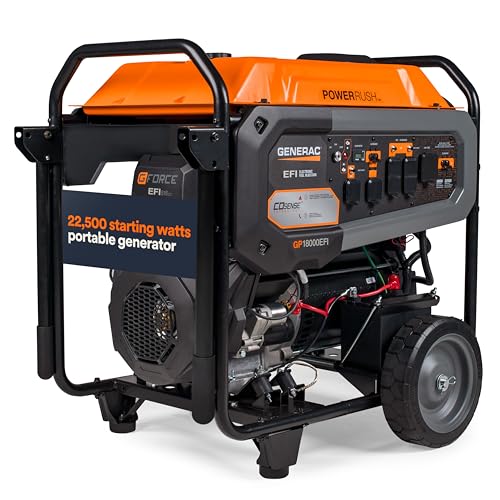
Generac’s 22,500 starting watt portable generator emphasizes robust power delivery with an EFI engine option that supports peak performance and efficiency. It features COsense Technology for carbon monoxide protection and TruePower technology with less than 5% THD to safeguard sensitive electronics, making it a strong choice for home backup and light industrial use.
Practical notes include easy starting options and a reliable electrical system designed to support essential household circuits. While powerful, users should verify that the generator’s weight and fuel supply align with the intended deployment location. Regular maintenance and safe operation practices are essential to maximize lifespan.
Westinghouse 18000 Peak Watt Dual Fuel

This dual-fuel Westinghouse model provides 18,000 peak watts and 14,500 running watts on gasoline, with 16,000 peak and 13,000 running watts on propane. It’s designed with a 713cc V-Twin OHV engine, low oil shutdown, and low idle mode to maximize efficiency. It also emphasizes low THD, facilitating safer operation of electronics and appliances.
Key considerations include the balance of run-time versus energy needs on different fuels and ensuring you have access to a safe fuel storage option. Dual-fuel capability offers flexibility during fuel shortages, but require regular maintenance checks to keep performance consistent across fuel types.
Westinghouse 12500 Watt Dual Fuel

This 12,500-watt unit acts as a practical backup for mid-sized homes or RV setups, with dual-fuel capabilities (gasoline and propane). It supports 12,000–13,500 watts depending on fuel type, and runs up to 19 hours on a 9.5-gallon tank with a built-in gauge. Options include multiple receptacles and a transfer switch-ready configuration, aided by a 457cc Westinghouse engine with a cast-iron sleeve and digital hour meter.
Users weigh the higher output needs against fuel flexibility and runtime. The unit is well-suited for weekend homes or temporary power during outages but may require a broader fuel strategy for full home coverage during prolonged outages.
Buying Guide: Key Purchase Considerations
- Power needs: Detail your essential circuits and total wattage. Choose peak watts to cover startup surges and running watts for continuous load.
- Fuel flexibility: Tri-fuel and dual-fuel models offer versatility when fuel availability is uncertain, but consider storage, safety, and emissions associated with each fuel type.
- Transfer switch readiness: A generator that is transfer-switch ready simplifies connection to your home’s electrical system, reducing the risk of backfeeding and providing safer, code-compliant installation.
- Safety features: Look for CO sensors, automatic low-oil shutoff, and low-THD outputs to protect electronics and prevent hazardous situations in enclosed spaces.
- Run time and tank size: Larger tanks extend runtimes but add weight and footprint. Balance run time with space and portability needs for your environment.
- Electrical outlets and accessibility: Check outlet variety (50A, 30A, RV, and standard 20A) and outlet protection (rubber covers) for safe operation in adverse conditions.
- Ease of operation: Remote electric start, digital displays, and maintenance indicators help manage performance and readiness during outages.
- Maintenance and warranty: Investigate engine type, fuel system longevity, and warranty coverage to assess long-term value and serviceability.
In choosing your generator, consider whether you prioritize peak power for startup demands, or steady running watts for continuous use. Tri-fuel options increase flexibility but may require more proactive maintenance and fuel management. Standby generators, like the 22kW model, provide automatic operation and are designed for whole-house coverage with integrated transfer switches, but come with different installation requirements and costs compared to portable models.