Best 2 Ton AC Unit BTU Solutions for Home Cooling
Answer: If you need roughly 24,000 BTU (2 tons) to cool spaces up to about 1,500 square feet, these options pair high efficiency with inverter technology to save energy and maintain comfortable temperatures. This guide highlights models suited for homes and light commercial spaces, with notes on why each is a strong pick and where to watch for limitations.
Overview table of selected products:
| Product | |||
|---|---|---|---|
| Senville 2 Ton Central Air Conditioner Heat Pump Split System | 24,000 BTU | Central / Ductless Split | Homes needing central-like cooling with inverter efficiency |
| ROVSUN 2 Ton 24000 BTU Ducted Central Air Conditioner | 24,000 BTU | Ducted Mini Split | Flexible installation, whole-home comfort |
| DELLA Vario Series 24000 BTU Mini Split | 24,000 BTU | Ductless Mini Split | Smart control and energy efficiency |
| COSTWAY 36k Dual 2 Zone Mini Split | 36,000 BTU (18000+18000) | Dual Zone Mini Split | Two rooms with independent zones |
| Mitsubishi 24,000 BTU SEER 18 Mini-Split | 24,000 BTU | Ductless Mini Split | Reliable performance and inverter efficiency |
Senville 2 Ton Central Air Conditioner Heat Pump Split System

The Senville unit combines a central air approach with a variable-speed inverter compressor. It is designed to transform an existing central system into a more efficient setup, reducing energy use while maintaining cooling capacity up to 1,500 square feet. Best for homeowners seeking central-like cooling with inverter efficiency and reliable heating in cold weather. Data highlights include 24,000 BTU and heat pump capability down to -22F/-30C. A potential limitation is that installation complexity may require professional assistance for best results.
ROVSUN 2 Ton 24000 BTU Ducted Central Air Conditioner
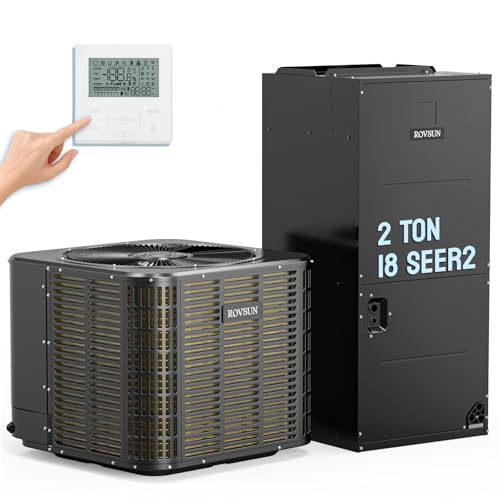
This 24,000 BTU ducted system uses inverter-driven multi-speed technology to deliver steady comfortable cooling and heating. It is well-suited for whole-home comfort with a flexible indoor unit orientation, including vertical or horizontal layouts. It includes pre-charged components and is designed to reduce energy use versus older fixed-speed units, with SEER2 18 and HSPF2 9 ratings. Best for new installations or retrofits wanting minimal ductwork changes and eco-friendly refrigerant. Caution: ensure correct duct design and refrigerant charge during setup.
DELLA Vario Series 24000 BTU Mini Split

The Della Vario offers 24,000 BTU with a 21 SEER2 rating and DC inverter heat pump. It supports smart control features and Alexa compatibility, including a thermostat remote for room sensing. It is best for spaces up to 1,500 square feet and for buyers who want integrated smart control. Note: professional installation is advised, and system tuning may be required if the line set exceeds 25 feet.
COSTWAY 36k Dual Zone Mini Split

This system provides 36,000 BTU split into two zones (18,000 BTU each). It uses inverter technology to deliver energy savings and supports multiple modes (cool, heat, dry, auto, fan, sleep) with six operating modes and five wind speeds. Best for homes with two rooms needing independent climate control, or where zone-specific comfort matters. Limitation: larger outdoor unit and more complex installation may increase upfront effort and cost.
Mitsubishi 24,000 BTU SEER 18 Mini-Split

The Mitsubishi 24,000 BTU system is a proven inverter-driven mini-split that maintains precise temperatures with a variable-capacity compressor. It’s suitable for room sizes up to 1,000 square feet and includes corrosion-resistant features for harsh environments. Best for buyers seeking a reputable brand known for reliability and long-term efficiency. Caution: installation alignment and proper line set length affect performance and efficiency.
Buying Guide
Key purchase considerations to help you compare options easily:
- BTU sizing: For spaces up to 1,500 sq ft, 24,000 BTU is common; larger or multi-room spaces may benefit from dual-zone or higher-capacity units (36,000 BTU total in some models).
- Inverter technology: Look for DC inverter compressors for smoother operation and energy savings vs. fixed-speed units.
- Ducted vs. ductless: Ducted (central) systems can be simpler to retrofit in some homes; ductless mini-splits offer flexible installation with individual zone control.
- Seasonal performance: SEER and HSPF ratings indicate cooling and heating efficiency; higher numbers generally mean lower operating costs.
- Installation requirements: Some systems require professional installation, refrigerant charge adjustments, or ductwork considerations; verify local codes and warranty terms.
- Smart features: Alexa or app-based control can enhance convenience and scheduling for energy savings.
- Environment: Refrigerant choices (R32, R454B, etc.) affect global warming potential and future-proofing.
Frequently Asked Questions
- What does 2 ton mean in air conditioning?
- How many BTUs do I need for my room?
- Are inverter mini-splits worth it?
- Do I need professional installation for a 2-ton mini-split?
- What’s the difference between ducted and ductless systems?
- What refrigerants should I look for?
Answers
- 2 tons equals roughly 24,000 BTU, suitable for larger living spaces or open-concept layouts up to about 1,200–1,500 sq ft depending on climate and insulation.
- Room size, insulation, sun exposure, and ceiling height determine BTU needs. A professional load calculation helps ensure proper sizing.
- Yes. Inverter systems adjust output to maintain set temperatures more efficiently and reduce peak power use.
- Professional installation is often recommended for optimal refrigerant charging, electrical connections, and warranty validity.
- Ducted systems distribute conditioned air through existing ducts; ductless mini-splits provide zone-based cooling without ducts, offering flexible placement.
- Look for refrigerants with low global warming potential (GWP) like R32 or newer blends; these are often more eco-friendly and future-ready.