Best Electric Boat Motors for 2 HP Equivalent Power and Beyond
Answering buyers seeking efficient, low-noise electric propulsion for small boats, kayaks, or inflatables: these five motors deliver reliable thrust, corrosion resistance, and easy maintenance. They suit lightweight craft, saltwater or freshwater use, and budget-conscious paddlers who want more length of day on the water without gasoline hassle. The top picks include compact trolling motors for transom mounting and a higher-capacity electric outboard option for longer trips.
Buying quick view:
| Product | Best For | Key Benefit |
|---|---|---|
| Newport NV-Series 36lb Thrust | Lightweight craft; kayak, canoe | Quiet, efficient at 12V/24V |
| Newport NV-Series 46lb Thrust | Small boats needing more control | Stronger push with same compact form |
| VEVOR Electric Trolling Motor | All-around saltwater/freshwater | 8 speeds; 55lb thrust; adjustable |
| Newport NT300 Electric Outboard | Extended range trips | 3HP equivalent; brushless; long runtime |
| FXEIPOL 9 HP Outboard (Gas) | Non-electric alternative | High power for larger vessels |
Newport NV-Series 36lb Thrust Trolling Motor

Brand: Newport Vessels
Power and range: 36lb thrust, 12V or 24V operation. Designed for small crafts such as kayaks, canoes, inflatables, and light boats. Emits smooth, quiet propulsion to keep noise low on the water. The two-speed compatibility and lightweight design help maximize battery efficiency for longer trips.
Best for: Buyers with compact vessels who prioritize quiet operation and battery economy. Choose this if you want dependable saltwater-capable performance without overpowering a small craft.
Limitations: Optimized for lighter loads; not ideal for larger boats or strong currents.
Newport NV-Series 46lb Thrust Trolling Motor
Brand: Newport Vessels
Power and control: 46lb thrust with options for 12V or 24V, featuring a 3-blade propeller for better thrust in wind or light currents. Saltwater and freshwater durable components ensure long-term reliability.
Best for: Slightly larger small boats or inflatables needing more aggressive propulsion and better maneuverability. Choose this if you anticipate stronger headwinds or heavier loads.
Limitations: Higher thrust can draw more battery power, so plan battery capacity accordingly.
VEVOR Electric Trolling Motor 55lbs Thrust

Brand: VEVOR
Performance and versatility: 12V motor delivering 55lbs of thrust. Eight speeds (five forward, three reverse) and a 30-inch shaft with an adjustable transom mount maximize maneuverability. A battery indicator helps manage power for all-day use in various water conditions.
Best for: Anglers and recreational boaters who want strong, reliable electric propulsion with flexible speed control for different water conditions. Best for sit-on-top kayaks and small to mid-size craft.
Limitations: Actual speed and thrust can vary with boat design, load, and wind, so test in safe conditions first.
Newport NT300 Electric Outboard Motor

Brand: Newport Vessels
Efficiency and range: The NT300 is a 3HP equivalent electric outboard (1300W, 36V) with 110lb thrust. It offers a long-range solution (up to 66 miles per charge) and a compact, quiet drive suitable for saltwater and freshwater use. Features include a digital throttle, LCD display, and 9.8-inch two-blade propeller with multiple trim/tilt angles.
Best for: Pioneers seeking extended trips and consistent power for mid-sized small boats, inflatables, or fishing craft. Choose this when you want longer runtime without sacrificing electric efficiency.
Limitations: Heavier than transom-mount trolling motors and requires appropriate battery capacity and charging setup for best performance.
FXEIPOL 9 HP Outboard Motor (Gas) as a Comparison
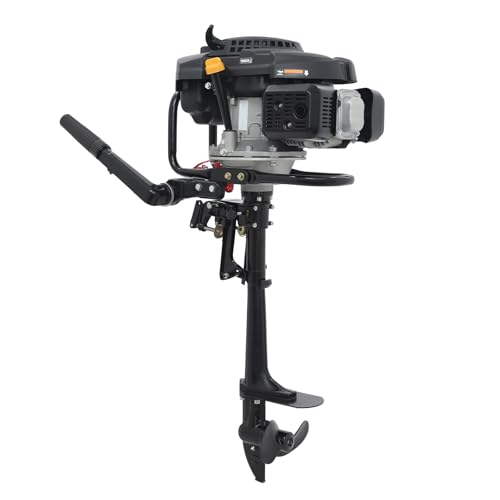
Brand: FXEIPOL
Power and design: A 9HP four-stroke outboard engineered for canoes, inflatable boats, and small fishing vessels. It uses air cooling and a CDI ignition for reliable starts. This option is gas-powered and intended for buyers who want higher horsepower beyond electric options.
Best for: Users needing substantial power for larger boats or water conditions that demand more thrust than typical electric motors can provide. Choose this if you don’t require electric propulsion.
Limitations: Gas motors require fuel, maintenance, and have emissions and noise considerations compared with electric options.
Buying Guide: Key Considerations For 2 HP Equivalent Electric Boat Motors
Power needs: Electric motors labeled by thrust (lbs) or horsepower equivalent can guide your choice. For kayaks and inflatables, 36–46 lbs typically suffices; larger small boats may benefit from 55 lbs or higher. Consider load, wind, current, and planned cruising speed.
Power source and runtime: Look at battery type, voltage, and capacity. Higher thrust models usually demand more power. Check if the battery indicator helps manage runtime and plan charging needs for longer trips.
Mounting type: Transom-mount trolling motors are common for small craft. Outboard-style electric motors like the NT300 provide different mounting and thrust characteristics suitable for longer runs or deeper water conditions.
Durability: Saltwater readiness is essential for corrosion resistance. Durable housings, seals, and propellers matter for longevity, especially if you frequently fish in brackish or coastal environments.
Controls and features: Digital throttles, tilt/trim, and adjustable shafts improve ergonomics and water handling. An LCD display and easy-to-use controls help with precise speed adjustments on varying water conditions.
Budget and maintenance: Electric motors generally require less maintenance than gas engines but consider the total cost of battery systems and potential replacements over time. Review weight and portability if you transport your craft often.
Frequently Asked Questions
- What is the best electric motor for a small kayak? A 36–46 lb thrust trolling motor on a 12V system is typically ideal for most kayaks, offering quiet operation and efficient battery use.
- Can I use a higher-thrust motor on a light boat? Yes, but you may reduce battery life and performance if the boat’s weight and hull design don’t benefit from the extra thrust. Balance thrust with expected runtime.
- Do electric outboards require special batteries? Yes, choose compatible batteries with sufficient voltage and capacity. Consider a solar charge option for extended trips in remote areas.
- Is a 3HP electric motor enough for a small inflatable? For small inflatables with light loads, a 3HP-equivalent electric motor like the NT300 provides solid propulsion and longer runtime.
- What maintenance is needed for electric motors? Rinse after use in saltwater, inspect propellers, and keep battery connections clean and dry. Regular checks prevent corrosion and ensure smooth operation.
- Are electric motors louder than gas engines? Generally, electric motors run much quieter with lower vibration and no exhaust, making them ideal for stealthier approach or wildlife viewing.