Best 190,000 BTU Tankless Water Heaters for Whole-Home Comfort
Choosing a high-capacity tankless water heater can unlock reliable hot water for multiple outlets, even in larger homes. This guide highlights five top 190,000 BTU or close-to-that propane tankless models, covering performance, smart control, and outdoor suitability. Each option is evaluated on flow rate, eco features, and installation practicality to help you select a model that fits your needs and your home’s plumbing.
| Product | BTU | GPM | Installation |
|---|---|---|---|
| APUS 190,000 BTU Outdoor Tankless Water Heater | 190,000 | 8.1 | Outdoor |
| APUS 140,000 BTU Indoor Tankless Water Heater | 140,000 | 6.8 | Indoor |
| FOGATTI 180,000 BTU Outdoor Tankless Water Heater | 180,000 | 8.1 | Outdoor |
| Westinghouse 180,000 BTU Outdoor Tankless Water Heater | 180,000 | 8.1 | Outdoor |
| Rinnai RX199iN Condensing Tankless Water Heater | 199,000 | Up to 11.1 | Indoor/Outdoor |
APUS 190,000 BTU Outdoor Tankless Water Heater

This high-efficiency propane unit delivers 190,000 BTU and 8.1 GPM, suitable for whole-house hot water needs. It can supply 3 showers and 2 faucets simultaneously, even with low water pressure due to its 0.79 GPM minimum flow. It supports remote operation via Tuya app or a wired controller, with precise temperature control from 95°F to 149°F and ±1°F accuracy. The outdoor-friendly dimensions keep indoor space uncluttered, and standard 3/4″ connections simplify installation.
APUS Tankless Water Heater Propane, 140,000 BTU Indoor
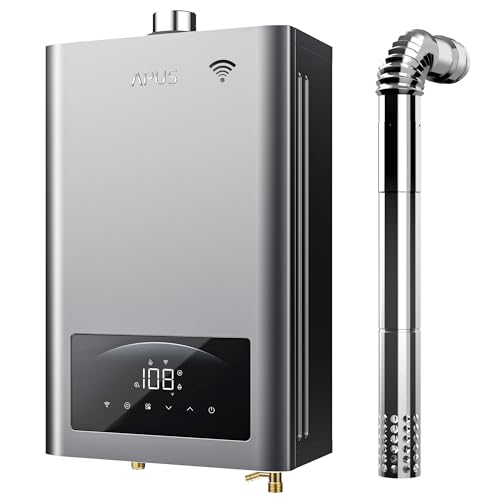
APUS’s 140,000 BTU indoor model focuses on rapid hot water delivery with a copper heat exchanger. It features APUS exclusive single-circulation technology to minimize cold-water delays and a 24/7 ECO smart cycle that conserves energy by up to 40% compared with traditional units. A built-in booster pump can increase flow up to 6.8 GPM, handling two showers and two sinks without temperature swings and ensuring continuous on-demand hot water for the whole home.
FOGATTI Natural Gas Tankless Water Heater Outdoor

FOGATTI’s outdoor unit furnishes up to 180,000 BTU and 8.1 GPM, making it suitable for multiple outlets. The design includes a bottom-mounted fan and a remote control panel for indoor operation, enhancing safety and durability in varied climates. Temperature is stabilized with a four-stage combustion system and sensors that maintain ±1°F accuracy. This model is built for outdoor reliability, supporting continuous hot water across showers, sinks, and appliances without noticeable delays.
Westinghouse Natural Gas Tankless Water Heater Outdoor

Westinghouse combines 180,000 BTU capacity with up to 8.1 GPM output to support multiple fixtures. The system features a remote control LED panel for monitoring temperature and status, plus a smart temp-control setup that keeps fluctuations within ±1°F. Its outdoor-ready design and robust flow make it a solid choice for whole-home use where simultaneous hot water is required for showers and sinks alike.
Rinnai RX199iN Condensing Tankless Water Heater

Rinnai RX199iN is a condensing tankless heater rated for up to 11.1 GPM with a 199,000 BTU input, designed for indoor or outdoor installation thanks to Versa Vent and a Smart Sense gas control system. It delivers a compact footprint with high efficiency (UEF 0.98) and a Quick Flush feature for maintenance. WiFi control is available through the Controlr module (not included), enabling smart monitoring and scheduling across multiple outlets for steady hot water supply.
Buying Guide
Key considerations when selecting a 190,000 BTU tankless heater include installation location, climate, and household hot-water demand. Outdoor models are ideal for spaces with poor indoor clearance, but require weatherproofing and venting compliance. Indoor units demand proper venting and space planning but can be closer to primary water outlets.
- Flow Rate (GPM): Evaluate peak simultaneous usage (showers, sinks, appliances). Choose models offering 6–8 GPM for multi-outlet performance, or 10+ GPM if you run several fixtures at once.
- Ventilation and Gas Type: Confirm propane or natural gas compatibility and venting requirements. Condensing units tend to be more efficient but may need more complex venting.
- Temperature Control: Look for ±1°F stability or better. Smart controls (Wi-Fi or app) add convenience for scheduling and remote monitoring.
- Durability and Climate: Outdoor units should resist weather exposure; consider corrosion-resistant materials and protective housings for harsh climates.
- Maintenance Features: Quick flush, filter access, and serviceability affect long-term reliability and operating costs.
- Shopability and Support: Availability of replacement parts, local service options, and warranty terms influence total cost of ownership.
When choosing among these options, align capacity with your home’s layout, typical hot-water patterns, and whether you prioritize remote control features or maximum simultaneous-flow capacity. For homes with high concurrent demand, units closer to 180,000–199,000 BTU with 8–11 GPM are strong candidates, especially when outdoor installation is permissible. For indoor setups, consider space constraints and venting needs alongside flow requirements to avoid temperature swings during peak use.