Best 180 Degree Tankless Water Heater Options for Instant Hot Water
When choosing a 180 degree capable tankless water heater, homeowners look for rapid, reliable hot water on demand, energy efficiency, and compact installation. This guide highlights five leading models that are well-suited for American homes, spanning electric and gas configurations. Each product includes built-in temperature control, high efficiency, and convenient installation notes to help you compare options at a glance.
Overview of chosen products:
| Brand | Model | Key Point |
|---|---|---|
| Titan | SCR4 N-180 | High amperage for fast recovery |
| Orbek | 14kW Electric Tankless | 240V; compact for small spaces |
| Rheem | 18kW 240V Electric | Self-modulating with LED display |
| NOVIEEX | On Demand Natural Gas 4.3 GPM | High BTU for multiple fixtures |
| EcoSmart | ECO 11 | Self-modulating, space-saving design |
Titan SCR4 N-180 Titan Tankless Water Heater
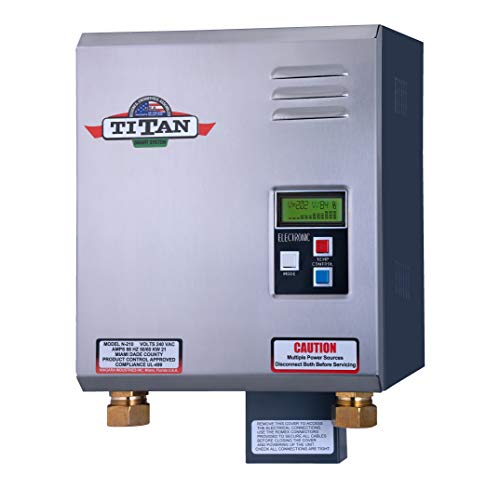
Titan’s SCR4 N-180 targets high-demand households with 77 amps and 18 kW, designed for rapid hot-water recovery. The stainless steel cover helps resist corrosion, and plumbing is simplified by water inlet and outlet positioning from below. This model is suited for installations where a robust electric output is needed to meet multiple fixtures with minimal lag time.
ORBEK 14kW Electric Tankless Water Heater

Orbek’s 14 kW unit provides on-demand hot water at up to 3.38 GPM and is designed for indoor installation in 240V systems. The model emphasizes energy efficiency through a two-pole 240V circuit and features the manufacturer’s guidelines for wiring and water connections. It’s suitable for small to mid-size homes or apartments with limited space.
Rheem 18kW 240V Tankless Electric Water Heater
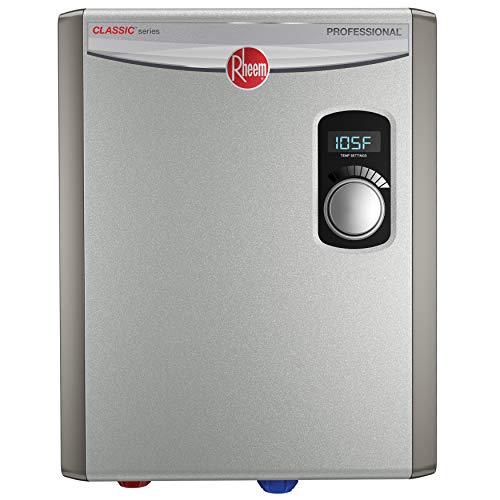
Rheem’s 18kW model features an external digital thermostatic control with LED display and advanced self-modulation to match hot-water demand. Copper immersion heating elements offer durability, and the unit is field-serviceable. It supports flow up to about 4.4 GPM, making it a strong choice for households with multiple simultaneous uses.
NoviEx On Demand Gas Water Heater 4.3 GPM

This natural gas unit delivers up to 4.3 GPM with a 100,000 BTU rating for strong performance across family bathrooms and kitchens. A wide adjustable temperature range (95°F–149°F) paired with a built-in digital thermostat provides precise control, and the unit is intended for indoor installation with multiple point-use options.
EcoSmart ECO 11 Electric Tankless Water Heater

EcoSmart’s ECO 11 uses patented self-modulating technology for on-demand hot water with efficiency focused on 13 kW at 240 volts. It’s notably compact, about the size of a small suitcase, and claims 90% space savings versus traditional tanks. Installation can be wall-mounted, and the unit aims for consistent temperature with minimal standby heat loss.
Buying Guide: Key Purchase Considerations
- Power source and capacity: Electric models rely on amperage and breaker ratings (often 15–60A). Gas units depend on BTU ratings and venting requirements. Match the unit’s maximum flow (GPM) to your household needs and hot-water demand pattern.
- Water temperature control: Look for models with precise digital thermostats and self-modulating technology to minimize temperature fluctuations during concurrent uses.
- Installation space and clearances: Tankless systems are compact but may require appropriate ventilation for gas models and dedicated circuits for electric units.
- Durability and maintenance: Copper heating elements and stainless-steel casings improve longevity. Field serviceability and accessible parts help reduce upkeep costs.
- Energy efficiency: Self-modulating units save energy by adjusting power to the actual demand. Compare efficiency ratings and estimated energy savings based on your usage.
- Safety features: Look for leakage protection, overheat protection, dry-fire protections, and IP ratings for water resistance in smaller units mounted in garages or basements.
- Indoor vs outdoor installation: Most models are intended for indoor use; ensure proper venting and weather protection if you plan to locate near-dwelling structures or in climate zones with significant temperature swings.
- Compatibility with existing plumbing: Confirm inlet/outlet sizing (NPT) and ensure compatibility with your current piping to avoid extra adapters and installation costs.
- Cost of ownership: While price is a factor, assess total cost of ownership—installation, maintenance, and potential compatibility with existing home wiring or gas lines.
- Warranty and support: Check manufacturer warranties and the availability of local service providers for quick replacement parts if needed.
All five models listed are designed to deliver instant hot water with minimal lag, yet their suitability depends on your home’s layout, water usage patterns, and electrical or gas readiness. When selecting, consider peak-flow needs, whether the unit will serve one or multiple fixtures simultaneously, and what kind of installation constraints exist in your space.