Best Outdoor 150 Amp Main Breaker Panels for 2026: Durable, Safe, and Ready for Expansion
When selecting an outdoor 150 amp main breaker panel, you want reliability, ease of wiring, and room to grow. This guide highlights five top outdoor main breaker load centers that are best suited for residential or small commercial applications. The selections prioritize plug-on-neutral capability, ample space, and robust enclosures to withstand outdoor elements. Ideal buyers include homeowners upgrading an exterior power system, licensed electricians seeking flexible layouts, and property managers needing durable outdoor panels with clear expansion paths.
| Product | Spaces / Circuits | Main Rating | Best For |
|---|---|---|---|
| Square D Homeline 150A Outdoor (8-Space, 16-Circuit) PLUG-ON NEUTRAL | 8 / 16 | 150A | Smaller homes or additions requiring compact outdoor paneling |
| Leviton LR215-BDD 20-Space Outdoor Load Center with 150A Main | 20 / 20 | 150A | Wiring ease at rough-in; organized wiring with notches for ties |
| Square D Homeline 150A Outdoor (30-Space, 60-Circuit) | 30 / 60 | 150A | Expansion-ready for larger homes or future circuits |
| Square D QO 150A Outdoor (8-Space, 16-Circuit, Feed-Thru) | 8 / 16 | 150A | Feed-thru capabilities; upgrade paths for feeder configurations |
| ABB 200A Mobile Home Outdoor Load Center | 16 Circuits | 200A | Mobile home setups with 200A capability; rugged outdoor enclosure |
Square D Homeline 150A Outdoor 8-Space Panel

Product features include a fully distributed neutral bar and compatibility with Homeline Plug-on Neutral combination arc fault breakers on any space. Each pole space accepts full-size, tandem, or quad breakers. Ground and neutral bars accommodate up to three #10-14 equipment grounds. Best for buyers seeking plug-on-neutral readiness and a balanced outdoor enclosure. Caution: limited space per panel for future expansion beyond 16 circuits without replacing the enclosure.
Leviton LR215-BDD Outdoor Load Center, 150A Main
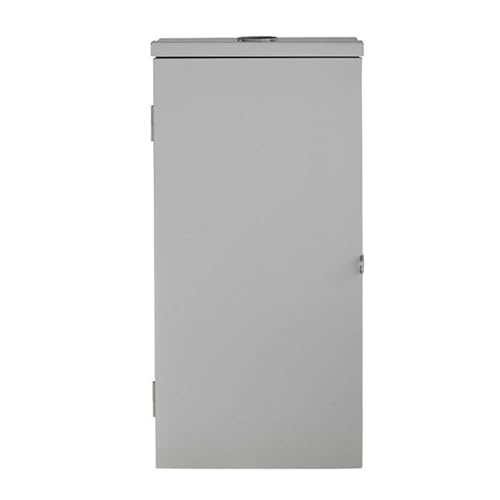
Best for rough-in installs, Leviton’s LR215-BDD ships without circuit breakers to allow wiring before breakers are installed. It features tin-plated copper busing for superior conductivity and notches stamped into the enclosure to promote secure, neat wiring. This model excels for electricians who plan to pre-wire a new outdoor panel. Limitation: needing to install breakers after rough-in can extend project timelines if stock is delayed.
Square D Homeline 150A Outdoor 30-Space

This 150A Homeline panel offers 30 spaces and 60 circuits with a plug-on neutral. It includes a distributed neutral bar and supports tandem or quad breakers in each pole. Best for homeowners planning substantial future circuit expansion while maintaining outdoor protection. Caution: may require additional enclosure footprint for optimal outdoor placement.
Square D QO 150A Outdoor 8-Space (Feed-Thru Lug)

Best for configurations needing feed-thru lugs and a QO series main breaker. This outdoor load center supports an entry point from the top and can accommodate a secondary surge arrestor. Device rotation is not available. Choose this if you want a robust QO panel with top-entry feeders and feed-thru capability for future expansion. Limitation: rotation of the device is not supported, which may impact certain installation orientations.
Square D QOM2150VH Main Breaker (QO/Homeline Compatible)

The QOM2150VH is a QOM2 frame size main breaker that fits QO and Homeline load centers, providing a field-installable option for 150 A to 225 A main protection. It helps safeguard panels and extends service life by offering a strong, compatible main breaker for various configurations. Best for technicians planning to swap or upgrade main breakers in existing panels. Caution: requires a compatible frame size and proper electrical clearance for safe replacement.
Homeline 100A Outdoor Main Box (HOM1224M100PRB)

Best for small outdoor installations needing a 100A main, with plug-on neutral and a 12-space, 24-circuit layout. It is outdoor-rated (NEMA 3R) with tin-plated aluminum bus bars and a welded sheet steel enclosure for durability. Not ideal for users needing 150A main, but suitable for smaller service upgrades adjacent to existing outdoor systems. Limitation: lower main rating requires alternative panels for 150A service if expansion is planned.
Buying Guide: Key Considerations For Outdoor 150 Amp Panels
- Main rating and future expansion: Look for 150A main with space to add more circuits or a switch to a larger panel if your load grows.
- Enclosure rating and location: Choose NEMA 3R or equivalent for outdoor environments with weather exposure and temperature swings.
- Neutral and grounding: Panels with distributed neutral bars and plug-on neutral options simplify wiring and improve fault protection.
- Bus and conductor quality: Tin-plated copper bus bars help conductivity and reduce corrosion in outdoor settings.
- Wiring sequence and entry direction: Consider whether top-entry feeders or side-entry options match your service layout and building constraints.
- Compatibility and accessories: Confirm compatibility with plug-on neutral breakers, surge arrestors, and feed-thru lugs for the intended configuration.
- Installation ease: Rough-in wiring capability and notches for cable ties can speed up installation and improve organization.
Frequently Asked Questions
- What is the advantage of a plug-on neutral panel? A plug-on neutral simplifies wiring and reduces miswiring risk by providing a direct, secure neutral connection for compatible breakers.
- Can I expand a smaller outdoor panel later? Yes, but plan for space and enclosure size to accommodate future circuits or a higher-capacity main.
- What does feed-through lug mean? Feed-through lugs allow you to feed a downstream panel or devices from the main panel without a separate sub-panel.
- Is a 150A main adequate for most homes? For many single-family homes, 150A is common, but peak loads and future expansions should be considered.
- What is NEMA 3R, and why does it matter? NEMA 3R enclosures provide weather protection suitable for outdoor installations, increasing durability in different climates.
- What should electricians verify before replacement? Confirm frame compatibility (QO vs Homeline), enclosure size, and the main breaker type required for your system.