Best 12v Grid Tie Inverter Solutions for Small Solar Setups
Looking for a reliable 12V grid-tie inverter to convert solar DC into usable AC for home or off-grid use? This guide highlights five top options designed for 12V solar panels, with MPPT for efficient power harvest and pure sine wave output. Each pick targets different buyer needs—from compact micro inverters to stackable on-grid models—so you can choose based on system size, ventilation, and how you plan to connect to the grid. The buyers below are best for small to mid-size solar projects, apartment setups, or backup power with grid-triendility in mind.
Summary table of selected products:
| Product | MPPT Range | Input Voltage | Output | Best For |
|---|---|---|---|---|
| YINZINR 1000W Grid Tie Inverter | MPPT features, high efficiency | 10.8-32V | 110V AC | Medium 12V solar arrays needing robust MPPT |
| Y&H 500W Grid Tie Inverter | MPPT Range 11-21V | DC16-28V | AC110V | Compact 12V systems, battery-aware |
| HIPUDNLM 1000W Grid Tie Inverter | Stackable MPPT design | 10.8-30V | AC90-140V | Moderate-large 12V panels with stacking options |
| Y&H 1000W Grid Tie Inverter (Stackable) | MPPT Range 15.5-23V | DC15-28V | AC90-140V | Stackable setups for higher power |
| Diydeg 180W MPPT Grid Tie Micro Inverter | MPPT 15. – 26V range | DC16-26V | AC110V | Small, quiet micro-grid tie needs |
YINZINR 1000W Grid Tie Inverter

Best for mid-size 12V solar arrays needing robust MPPT performance. The inverter is built with aluminum alloy for durability and corrosion resistance, and it uses imported industrial electronic components for longevity. It claims efficiency above 99% with a dedicated MPPT design and an isolated high-frequency transformer, supporting stable maximum power point locking. Best for users seeking a higher-power, on-grid-ready 12V solution with strong thermal handling and a compact form factor.
Caution: Ensure correct DC input polarity during installation. The data emphasizes a wide input range (10.8-32V), but wiring mistakes can prevent the unit from starting up.
Y&H 500W Grid Tie Inverter

Ideal for compact, 12V solar setups with battery awareness. This model supports an MPPT range of 11-21V and is described as compatible with 12V battery micro grids. It offers adjustable output between 80W and 250W in 12V battery mode and includes low-voltage battery shutdown to protect the battery’s life. Best for small systems that prioritize battery protection and a simple setup.
Caution: Efficiency can drop as the DC voltage nears the lower end of the MPPT window (around 11V). Ensure the panel voltage stays within the MPPT range for optimal performance.
HIPUDNLM 1000W Grid Tie Inverter

Choose this for a higher-wantry grid tie option with strong cooling. It features a high-speed cooling fan that activates when temperatures exceed 45°C, helping to prevent overheating in warm environments. The aluminum alloy construction and imported components emphasize durability and long life. Best for users needing a robust on-grid inverter with reliable thermal management.
Caution: The unit remains on-grid, so ensure proper electrical connections to the grid and ventilated, cool installation conditions to maintain performance.
Y&H 1000W Stackable Grid Tie Inverter
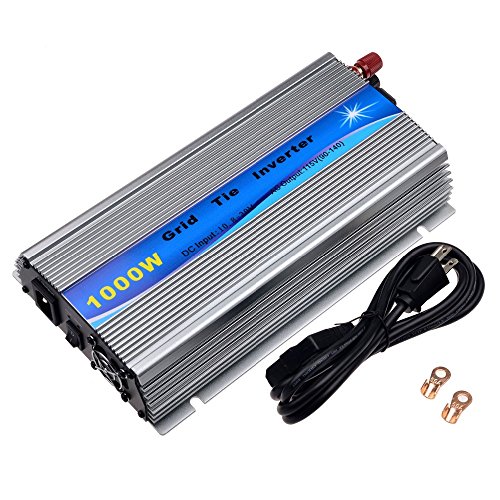
Best for expanding 12V solar systems, this 1000W model supports stackable configurations with MPPT in the 15.5-23V range. It is designed for grid-tie use, requiring that the AC output be connected to the grid. It’s suitable for users who plan to scale their system by adding more inverters without replacing existing hardware. A noted limitation: improper DC polarity can prevent the LED indicator from lighting up, so careful wiring is essential.
Diydeg 180W MPPT Grid Tie Micro Inverter

Best for very small solar setups or battery-free micro-grid tie needs. Although compact, this Diydeg unit uses MPPT to maximize conversion efficiency within its 180W limit and is suitable for 12V panels in dry, ventilated spaces. It is designed for home use with multiple safety notes about wiring and panel voltage. Best for users seeking a low-cost, space-saving solution for micro-grid tie projects.
Caution: This model requires careful attention to panel wiring polarity and voltage limits (PV voltage should not exceed the inverter’s maximum input).
Buying Guide: 12V Grid Tie Inverter Essentials
- System size and future expansion: If you plan to scale, prefer stackable models (like the 1000W stackable unit) to avoid replacing equipment later.
- MPPT range alignment: Match the MPPT window to your solar panel’s Vmp and Voc. Inverters with too narrow or mismatched MPPT ranges reduce efficiency, especially at higher or lower sunlight conditions.
- Thermal management: Inverters in warm environments benefit from active cooling or robust heat dissipation. Look for units with cooling fans or heat-dissipating aluminum housings.
- Grid connection considerations: On-grid outputs require proper safety and electrical code compliance. Ensure the unit is rated for grid-tie use and follow installation guidelines to connect to the AC mains.
- Battery interaction: Some models offer battery-aware modes or protection features. If you plan to integrate a battery, verify compatibility and the intended operating mode (grid-tollow versus standalone).
- Installation environment: Place in ventilated, dry, and cool locations away from direct sunlight or rain exposure. Avoid dusty or humid areas that can degrade electronics over time.
Frequently Asked Questions
- What does a grid tie inverter do for a 12V solar panel setup?
It converts DC from solar panels into AC electricity suitable for home circuits and can synchronize with the grid to feed surplus power back.
- Why is MPPT important in a grid tie inverter?
MPPT optimizes the match between panel voltage and inverter input to maximize power harvest across varying light conditions.
- Can I connect multiple inverters to the same 12V solar panel array?
Yes, especially with stackable units, but ensure proper wiring, load sharing, and grid safety compliance.
- Do these inverters require batteries?
Some models are battery-aware or designed to work with 12V batteries, while others are mains-connected grid-tie only. Check the product features for details.
- What is a common limitation to watch for?
Incorrect wiring polarity and exceeding MPPT ranges can prevent the inverter from starting or reduce efficiency.
- Is cooling necessary for all grid tie inverters?
Not all require active cooling, but many benefit from ventilation or fans in hot environments to prevent overheating.