Best 12V Deep Cell Battery Options for RVs, Solar and Off-Grid Power
Whether you are powering an RV, boat, solar setup, or off-grid cabin, choosing a reliable 12V deep cycle battery is essential. This guide highlights five top 12V deep cycle options, spanning AGM and LiFePO4 chemistries, with a focus on longevity, cycle life, safety, and compatibility. Each product section links to its Amazon listing for easy comparison, and a concise buying guide follows to help you weigh capacity, weight, temperature tolerance, and maintenance needs.
Summary of selected products:
- WEIZE Deep Cycle AGM 12V 100Ah Battery — AGM, maintenance-free, high discharge capability
- SUPER EMPOWER 12V 100Ah LiFePO4 Battery — long lifespan, high cycle count, built-in BMS
- Renogy Deep Cycle AGM 12V 100Ah Battery — trusted AGM with safe chemistry
- Newport Vessels Newport 12V 50Ah Deep Cycle AGM — lightweight marine AGM
- MARSENERGY 12V 100Ah LiFePO4 Battery — high efficiency LiFePO4 with smart BMS
WEIZE 12V 100Ah AGM Battery
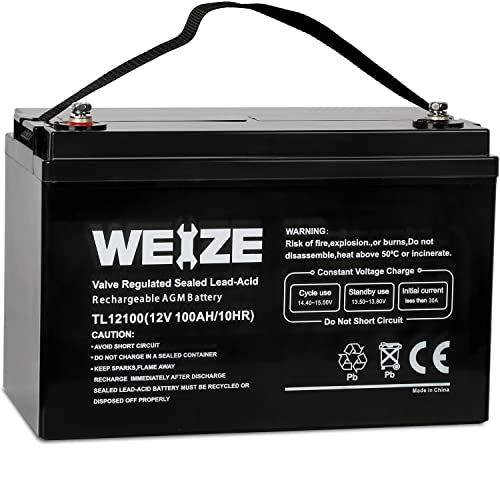
The WEIZE Deep Cycle AGM battery is a maintenance-free 12V unit built with AGM tech to minimize acid leaks and reduce upkeep. Its dimensions (approximately 12.99 x 6.73 x 8.43 inches) fit many battery boxes, while the design supports a robust 1150A max discharge current, making it suitable for RVs, solar, trolling motors, and off-grid systems. Operating temperature covers charging between 14℉ to 122℉, with discharging down to -15℃, and a best performance around 25℃. Its low self-discharge rate (about 1-3% per month) supports longer storage between recharges.
Key considerations: maintenance-free design is a benefit for remote installations; ensure proper ventilation and temperature control to maximize life; compatibility with your existing battery setup should be verified, especially if you rely on high peak discharge.
SUPER EMPOWER 12V 100Ah LiFePO4 Battery

This 12V 100Ah LiFePO4 battery from SUPER EMPOWER emphasizes long life with a claimed 5000+ cycles at 100% DOD and up to 15000 cycles at 60% DOD. It includes a built-in BMS and offers low self-discharge (about 1–2% per month). Its dimensions (roughly 10.2” x 5.2” x 9.0”) fit standard group 24 boxes, making it a drop-in alternative to lead-acid chemistries for RVs, marine applications, trolling motors, and solar setups. It is UL, FCC, and UN38.3 certified for safety and reliability.
Key considerations: LiFePO4 chemistries deliver longer cycle life and lighter weight, but higher upfront cost. A built-in BMS helps protect against overcharge, overdischarge, and shorts, boosting overall system safety.
Renogy 12V 100Ah AGM Deep Cycle Battery

Renogy’s Deep Cycle AGM battery is a renowned option in the AGM family, offering safe chemistry and predictable performance. The listing notes capacity for series and parallel configurations, with explicit emphasis on safety and reliability. The product aligns with standard 12V systems in RVs, cabins, and marine setups, and Renogy’s reputation adds assurance for long-term use in off-grid scenarios. The model supports safe charging and simple maintenance relative to flooded options.
Key considerations: consider the battery bank configuration (series/parallel) to reach your desired voltage and capacity. AGM chemistry trades some energy density for safety and maintenance ease, particularly in portable or remote installations.
Newport 12V 50Ah AGM Marine Battery

The Newport Vessels 12V50Ah deep cycle AGM battery emphasizes light weight and sealed construction ideal for marine use. With a 32 lb weight, it provides a portable option for trolling motors and small watercraft. The AGM design minimizes spills and maintenance, delivering reliable power in a sealed package. Its compatibility with trolling motors makes it a practical choice for anglers and boaters seeking straightforward installation and steady performance on the water.
Key considerations: marine environments demand robust sealing and vibration resistance. A smaller capacity like 50Ah may require more frequent recharges or battery swaps, depending on power needs and usage patterns.
Interstate 12V 35Ah SLA AGM Battery

This Interstate Batteries model is a smaller 12V 35Ah sealed lead-acid AGM battery designed for mobility devices like electric wheelchairs and scooters, but it also serves as a reference point for deep-cycle applications requiring compact size. The listed features emphasize deep-cycle reliability, maintenance-free design, and compatibility with a range of devices, including mobility aids and certain low-demand systems. It provides a benchmark for size-to-capacity trade-offs within the 12V space.
Key considerations: for high-demand RV or solar setups, a 35Ah lead-acid unit will require more frequent charging. AGM SLA chemistry offers reliable performance with modest weight compared to flooded options, but capacity and cycle life are typically lower than LiFePO4 alternatives.
MARSENERGY 12V 100Ah LiFePO4 Battery

The MARSENERGY LiFePO4 12V 100Ah battery offers a high-power, long-life option with a built-in 100A smart BMS. It is designed for RVs, trolling motors, boats, solar installations, and off-grid energy storage. The battery emphasizes a long lifespan, with claims of thousands of deep cycles and strong resilience across extreme temperatures and environments. It is compact and light for its capacity, and supports standard BCI Group 24 sizing for straightforward box compatibility.
Key considerations: LiFePO4 chemistry delivers superior cycle life and safety, but upfront cost is higher. Ensure the BMS is configured for your system’s charging profile and that the battery fits your existing battery box and connectors.
Buying Guide: Key Purchase Considerations
Battery chemistry: AGM is maintenance-free and robust for varied climates, with solid safety profiles and lower upfront cost. LiFePO4 offers the most cycles, lower weight, and stable voltage, but at a higher price. For long-term off-grid use, LiFePO4 often proves cost-effective over time.
Capacity and weight: match Ah rating to your load profile and space. Heavier batteries may require reinforced mounting in vehicles or boats; lighter LiFePO4 units improve handling and efficiency but can strain battery boxes not sized for them.
Discharge rate and cycle life: high maximum discharge currents are beneficial for peak power needs, while cycle life determines long-term performance. For remote installations, aim for batteries with 1000+ cycles at suitable DOD (depth of discharge).
Temperature tolerance: charging temperatures and discharge ranges affect performance. Some models specify optimal operating ranges, and aging can accelerate capacity loss in extreme environments.
BMS and safety features: a reliable BMS protects against overcharge, overdischarge, short circuits, and temperature anomalies. Built-in protections reduce maintenance and risk in unattended setups.
Physical fit and compatibility: verify dimensions, terminal types, and whether the battery fits common boxes like BCI Group 24. Check that connectors and mounting hardware align with your system.
Maintenance needs: consider whether a maintenance-free design suits your installation. AGM and LiFePO4 both minimize fluid handling, but LiFePO4 still benefits from battery management awareness and appropriate charging strategies.
Price and total cost of ownership: initial cost is higher for LiFePO4, but longer cycle life and lower weight often offset this over time. For temporary or light-use applications, AGM may offer a more budget-friendly path.
Application fit: match battery chemistry to the primary use—RV life, marine applications, solar storage, or off-grid energy—ensuring that both performance and safety profiles align with your setup.