Best 12V DC to AC Inverters for Vehicles
When you’re on the road, at a campsite, or in a truck, reliable 12V DC to AC inverters power laptops, cameras, and other electronics. The following selections highlight popular models, focusing on continuous wattage, peak power, USB charging, and safety features. This guide helps you compare options that fit different travel styles—from compact car trips to heavy-duty off-grid setups.
Summary of chosen products:
- BESTEK Power Inverter DC 12V to AC 110V – 300W: Dual AC outlets and dual USB ports; aluminum housing; compact for travel.
- Pro Chaser 400W Power Inverter – 12V to 110V: 400W continuous, 800W peak; dual AC outlets; fast USB charging; portable 30-inch cord.
- PiSFAU 200W Car Power Inverter – 12V to 110V: 2 AC outlets; multiple USB ports (including USB-C); compact design.
- OLTEANP 1000W Inverter – 12V to 110V: LCD display; 2 AC outlets; USB-C and USB-A ports; robust cooling features.
- EPANEE 400W Inverter – 12V to 110V: Dual 110V outlets; PD 65W USB-C and QC 18W USB ports; efficient cooling.
BESTEK 300W Inverter With Dual USB and Aluminum Design
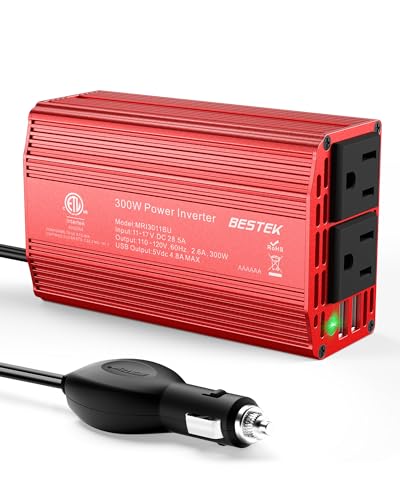
The BESTEK inverter delivers 300 watts of continuous power with a peak surge capability, suitable for laptops, tablets, and other essential devices on road trips. It includes two 110V outlets and two USB ports, supporting fast charging for USB devices. The compact aluminum housing helps with heat dissipation and portability, making it a dependable choice for compact vehicles and camping setups. Its design also emphasizes compatibility with a wide range of vehicles in the 11–17V range, expanding usability for different car systems.
Pro Chaser 400W Inverter With Dual Sockets and USB Ports
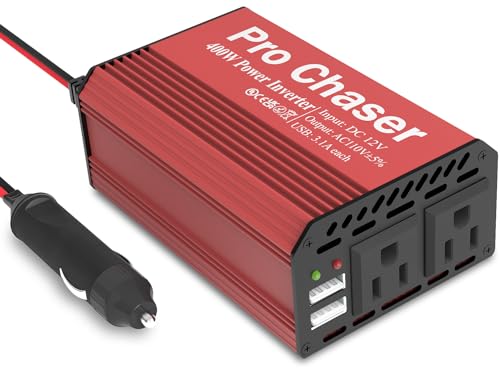
The Pro Chaser model provides 400 watts of continuous DC-to-AC power, with a peak output up to 800 watts. It includes two 110V outlets and two USB ports capable of 3.1A each for rapid charging of phones, tablets, cameras, and more. A 30-inch cord adds flexibility for versatile placement in vehicles, campers, or trucks. It’s designed to support devices like laptops and portable appliances during travel, making it a practical option for families and professionals on the go.
PiSFAU 200W Car Power Inverter With USB-C / USB-A Ports

The PiSFAU 200W inverter converts 12V DC to 110V AC and provides two standard outlets plus a generous set of USB ports, including a USB-C option. The design concentrates on compact portability and quiet operation, with efficient heat dissipation to minimize energy waste. The device supports common travel needs—laptops, small coffee makers, tablets, and other USB-powered gear—making it a good pick for minimal setups or shorter trips.
OLTEANP 1000W Inverter With LCD and Dual Outlets

The OLTEANP 1000W inverter stands out with a 1000W continuous rating and a 2000W peak surge, suited for power-hungry devices during emergencies or long trips. It features an intelligent LCD that shows input and output voltages, battery status, and error codes for troubleshooting. Two AC outlets, plus 18W USB-C and standard USB ports, support charging of laptops, tablets, phones, and other gear. A built-in cooling system helps maintain performance during extended use, contributing to stable operation on demanding journeys.
EPANEE 400W Inverter With Dual Sockets and USB-C/USB-A Ports

The EPANEE inverter provides 400W continuous power with two AC outlets and a PD 65W USB-C port alongside a QC 18W USB-A port. This combination supports fast charging for modern devices while running mid-size appliances. The unit includes a robust cooling mechanism to keep temperatures in check, which is important for longer trips or when powering devices that draw more current. It’s a balanced option for campers and road travelers who need reliable USB charging plus basic AC power.
Buying Guide: Key Purchase Considerations
- Continuous wattage vs. peak surge: Most devices require a steady power rating (continuous wattage). If you plan to run laptops, CPAP machines, or small appliances, aim for at least 300–1000W continuous power, with 2x that as a peak surge for startup spikes.
- Number and type of outlets: Decide how many AC outlets you need and whether USB-C PD or fast-charge USB ports are essential. USB-C can power newer laptops and devices more efficiently.
- Portability and cord length: A compact footprint helps in tight vehicle spaces. Longer cords (like 30 inches or more) provide flexible placement near the vehicle’s power source.
- Cooling and noise: Inverters with built-in cooling fans reduce thermal stress but may generate noise. Look for models with efficient cooling systems for extended use.
- Safety features: Built-in fuses, over-voltage and under-voltage protection, short-circuit protection, and auto shut-off protect both the inverter and connected devices.
- LCD and status indicators: An LCD screen or indicator lights can simplify troubleshooting by showing voltage, load, and fault codes.
- Durability and design: Aluminum housings tend to dissipate heat better and resist road exposure. Consider units with rugged build for camping or off-road use.
- Compatibility with vehicles: Some models advertise compatibility with a wide voltage range (11–17V). If you drive different vehicles or have older electrical systems, confirm compatibility before purchasing.
- Portability vs. high power: Heavier, higher-wattage inverters offer more capability but less portability. Choose based on your primary use-case—daily commuting, travel, or off-grid living.