Best 12V DC to 120V AC Converters and Alternatives
The following guide reviews five popular power conversion options commonly used to power 12V DC devices from household AC sources. Each entry summarizes the main specs, notable features, and practical considerations. While these listings primarily convert AC to DC, many users also explore true DC-AC inverters for 12V to 120V applications. This article highlights what you can expect from these AC-to-DC modules and suggests buying considerations for choosing the right solution.
| Product | Brand | Output | Type |
|---|---|---|---|
| New Version 110V to 12V DC Converter, 600W | IMAYCC | DC 12V, up to 50A peak | AC to DC Converter |
| AC to DC Converter 180W | RoyPow | DC 12V, up to 15A typical (200W max) | AC to DC Converter |
| EAGWELL 1000W Power Supply | EAGWELL | DC 12V, up to 66.7A (800W continuous, 1000W peak) | AC to DC Converter |
| ALITOVE 110V to 12V 30A 360W | ALITOVE | DC 12V, 30A | AC to DC Converter |
| AstroAI | DC 12V, 10A | AC to DC Converter |
Note: The primary function of these devices is to convert alternating current (AC) from household outlets to direct current (DC) suitable for 12V devices. For true 12V DC to 120V AC power, you would typically use a DC-AC inverter. Always verify peak power requirements and device compatibility, especially for motors and resistive loads.
IMAYCC Adjustable 600W AC to DC Converter

The IMAYCC converter accepts 110V or 220V AC input (85-145V / 185-265V) with adjustable output. It provides a DC 12V output capable of varying current, with a maximum peak current listed at 50A and peak power up to 600W. It includes two copper clamps and wiring for straightforward connection to 12V devices such as pumps and heaters. An on/off switch enhances safety and control. Aluminum housing aids heat dissipation, and nickel-plated terminals improve conductivity.
Key considerations:
– Peak capabilities: designed for resistive loads up to about 480W continuous, higher surges may be allowed for short durations.
– Installation: includes mounting-friendly hardware and non-slip feet for stability.
– Safety: copper terminals and switch add convenience, but ensure appropriate wiring and ventilation for sustained use.
RoyPow 180W AC To DC Power Supply

The RoyPow unit converts 100–120V AC to 11–14V DC, with a practical 12V output for most automotive electronics. It includes a built-in cigarette-lighter-style plug and a wall-plug design, making it suitable for powering car accessories at home or in a workshop. The device emphasizes compatibility with typical 12V devices such as inflators, refrigerators, and small appliances, with a safety-friendly packaging including a robust housing and connection options.
Key considerations:
– Output range: suitable for many light to mid-load 12V devices; check peak requirements for motorized tools.
– Convenience: dual plug approaches enable flexible placement and use in different environments.
– Safety: ensure the device’s protection features align with your load profile to avoid overheating or voltage drift.
EAGWELL 1000W Power Supply

EAGWELL presents a high-capacity AC-to-DC converter with auto-adjusting dual-voltage input (110V/220V) and a broad output range, delivering up to 66.7A at 12V (800W continuous, 1000W peak). It features a three-in-one connection approach (direct wire, terminal block, plug-in) for versatile installations. The kit includes a UL-listed power cord, lugs, and mounting hardware. It also offers an integrated on/off switch and a wall-mount bracket for easy, professional-looking setups.
Key considerations:
– Power headroom: useful for higher-demand 12V devices in RVs or workshops.
– Installation options: multiple connection methods reduce the need for adapters and wire splices.
– Safety and compliance: UL-listed components support safer long-term use, but proper cooling remains important for sustained loads.
ALITOVE 110V to 12V 30A 360W
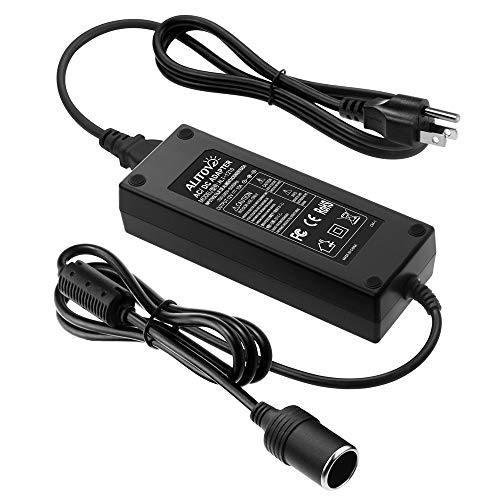
ALITOVE’s 110V to 12V converter provides a solid 12V DC output with up to 30A (360W max). It ships with an 11-foot power cord for broader reach. Built-in safety protections guard against overload, overvoltage, overheating, and short circuits. It’s compatible with a wide array of 12V automotive electronics such as refrigerators, air compressors, and dash cameras, making it a versatile option for cars, boats, and off-grid cabins that rely on home outlets to run 12V devices.
Key considerations:
– Continuous vs peak load: staying under 360W for long-term life is advised.
– Cord length: long reach helps with flexible placement away from heat sources.
– Protection features: essential for preventing component damage with fluctuating loads.
AstroAI 110V-240V To 12V Converter

AstroAI offers a universal 7.78-foot cable with an AC-to-DC conversion that yields 12V at up to 10A (120W). It is designed to power a range of car accessories from a household outlet, enabling use of 12V devices without a vehicle. The product emphasizes built-in safety features against overcharging, short circuits, and overheating, making it a practical option for temporary setups or travel.
Key considerations:
– Distance and reach: long cord supports flexible placement.
– Load limits: 120W maximum; suitable for smaller 12V devices.
– Safety: comprehensive protections are beneficial for mixed-use environments.
ALITOVE 110V to 12V 30A Pro Max
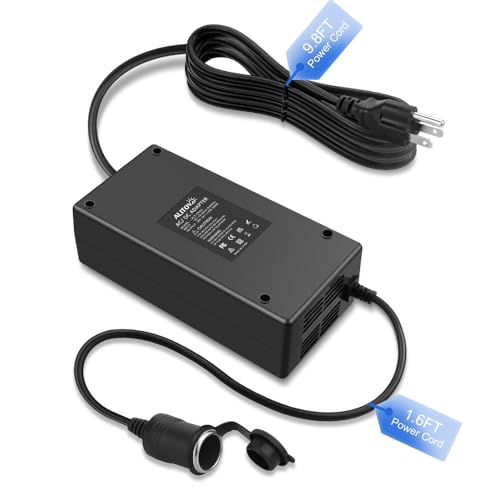
This high-capacity ALITOVE unit supports 110V input and delivers 12V at up to 30A (360W). It features automatic overload protection, over-voltage, over-temperature safeguards, and a short-circuit cutoff. A long 11-foot cord adds flexibility for garage, workshop, or vehicle-trunk setups. It is compatible with many 12V devices including air pumps, refrigerators, and car accessories, while warning users not to exceed the indicated power for extended periods to preserve longevity.
Key considerations:
– Continuous operation: plan for adequate airflow and cooling with heavier loads.
– Safety features: ensure the device matches your load profile to prevent nuisance shutdowns.
– Compatibility: verify device wattage and startup surge when motors or compressors engage.
Buying Guide: Key Purchase Considerations And Comparisons
-
<liPower and headroom: Decide between continuous wattage and peak power. Motors and compressors typically require higher startup surges, so a model with a higher peak rating is beneficial for short bursts. For resistive loads (lights, heaters), continuous rating matters more.
<liInput voltage tolerance: If you’ll use mixed mains supplies (110V/120V and 220V/230V), choose a model with automatic dual-voltage input and an adjustable range that covers your region.
<liOutput stability: Look for units with voltage regulation and protection circuits (overvoltage, overcurrent, overtemperature, short-circuit). This reduces risk to connected devices.
<liConnection options: Direct wire, terminal blocks, and cigarette-lighter plugs offer different installation freedoms. For DIY projects, direct wiring plus terminal blocks may be preferable.
<liSafety and certifications: UL-listed or equivalent certifications indicate compliance with safety standards. Ensure adequate cooling and ventilation for sustained operation, especially in enclosed spaces.
<liPortability vs. capacity: High-wattage models provide more headroom but can be bulkier. Choose based on whether you need a portable setup for travel or a fixed installation for a workshop or RV.
<liTrue DC-AC needs: If your goal is 12V to 120V AC, consider a dedicated DC-AC inverter rather than an AC-to-DC converter. Inverters convert DC (from a battery) to AC and are designed for AC-powered appliances, whereas AC-to-DC converters provide DC output from household AC for 12V devices.
<liDevice compatibility: Some adapters are optimized for specific devices (refrigerators, inflators, dash cams). Verify startup current, running current, and any minimum load requirements.
In sum, these AC-to-DC converters can power a variety of 12V devices from standard outlets, but if your primary goal is 12V to 120V power for general appliances, an inverter is typically the more direct solution. When evaluating options, compare peak vs continuous current, voltage stability, connectivity, safety protections, and installation complexity to find the best match for your use case.