Best 12V AGM Deep Cycle Batteries for RVs, Solar, and Off-Grid Power
Answer: For dependable 12V AGM deep cycle power, these five models stand out for RV, marine, solar, and off-grid setups. They balance long shelf life, maintenance-free operation, and solid discharge capability. This guide helps buyers choose the right size and features based on endurance, temperature tolerance, and storage needs. Each product is suited to a specific use case, from lightweight camping setups to high-demand trolling motors and cabin power.
| Product | Best For | Key Benefit |
|---|---|---|
| Weize 12V 100Ah AGM Battery | RV, Solar, Off-Grid | Low self-discharge, maintenance-free |
| Renogy 12V 100Ah AGM Battery | RV, Cabin, Marine | High safety, versatile parallel/series options |
| Renogy 12V 200Ah AGM Battery | Large off-grid installs | Higher capacity, strong discharge |
| Newport 12V 50Ah AGM Marine Battery | Trolling motors, small boats | Lightweight, sealed, marine-rated |
| Interstate Batteries Marine Deep Cycle 12V 100Ah | Heavy-duty marine use | Thick plates, extended life potential |
Weize Deep Cycle AGM 12V 100Ah Battery

The Weize 12V 100Ah sealed lead-acid battery uses AGM technology to reduce the risk of acid leakage and minimize maintenance. It features a compact footprint (12.99 x 6.73 x 8.43 inches) and a maintenance-free design, making it suitable for RVs, solar storage, trolling motors, and off-grid systems. The cell chemistry offers a low self-discharge rate, aiding longer storage between charges. Best for buyers who prioritize a compact, all-purpose power unit with straightforward installation. A potential limitation is that high-current bursts should stay within the 1100A max discharge rating for short durations.
Best for: small to medium RV setups, solar-powered cabins, and portable off-grid accessories where space is limited.
Renogy 12V 100Ah AGM Battery

Renogy’s 100Ah AGM battery emphasizes safety and durability, with a sealed design that reduces troubleshooting compared to other chemistries. It supports series connections (no limitation) and parallel connections up to four packs, making it flexible for larger off-grid systems or RV configurations. The packed design and stability also serve marine use where vibration resistance matters. Caution: the data notes broad usage claims; ensure compatibility with your specific charger and mounting space.
Best for: RV power systems, cabins, or boats needing a safe, scalable 12V pack with easy maintenance.
Renogy Deep Cycle AGM Battery 12V 200Ah

This 200Ah Renogy AGM battery delivers higher capacity in the same form factor, making it a strong choice for larger off-grid systems or RVs with substantial energy needs. The battery uses thick plates and special grids to support high discharge currents and robust shelf life. It maintains low self-discharge at ambient temperatures, helping long-term storage between charges. Limitation: higher capacity comes with greater weight and cost, requiring a capable mounting setup and compatible charging hardware.
Best for: High-demand off-grid installations, cabin power, and larger trolling motor setups where extra Ah matter.
Newport 12V 50Ah Deep Cycle Marine Battery

The Newport 50Ah AGM marine battery is lightweight and sealed, designed for trolling motors and compact vessel power. Its 32 lb weight makes it easy to install on small boats, with a focus on reliability and minimal maintenance. The trade-off is lower total energy capacity, so it’s best for smaller boats or auxiliary power rather than full-system propulsion. Choose this if you need portable, marine-rated power without added weight.
Interstate Batteries Marine Deep Cycle 12V 100Ah
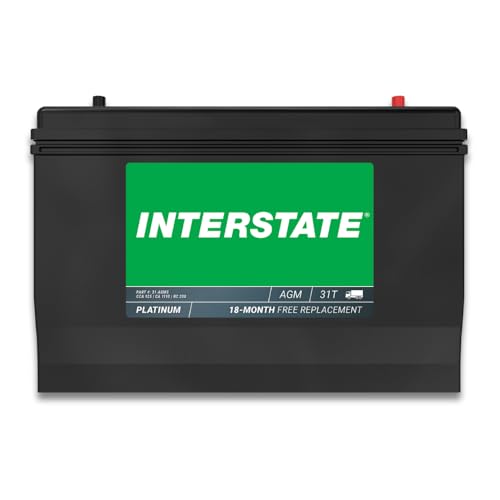
Interstate’s 100Ah AGM marine battery focuses on heavy-duty cycle life with thick plates designed to support repeated discharges. It targets serious marine use, powering a boat’s motor and accessories over extended periods. The advantage is extended life relative to some standard AGM packs, though real-world performance depends on charge practices and application. Best for: demanding marine environments where reliability and long cycle life are priorities.
Buying Guide
How to choose the right 12V AGM deep cycle battery? Start with capacity needs. If you run appliances or a trolling motor for several hours daily, higher Ah (100–200Ah) delivers longer runtimes between charges. For RVs and small boats, 100Ah often suffices, while larger off-grid cabins may benefit from 200Ah. Battery system design matters: series connections increase voltage, parallel connections increase capacity. Ensure your charger, inverter, and wiring are rated for the maximum discharge current of your pack.
What about self-discharge and temperature? Look for a low self-discharge rate (often around 1–3% per month) to ease long-term storage. Temperature tolerance matters for outdoor use; many AGM chemistries perform best around room temperatures, with some data indicating usable range from roughly -4 to 140°F for discharge performance.
Maintenance and installation considerations: AGM batteries are generally maintenance-free, but proper venting and secure mounting are essential. Check terminal layout (left positive, right negative for some models) and ensure appropriate space for heat dissipation. Weight matters for mobile installations; plan mounting hardware accordingly.
FAQ
- Q: Do AGM batteries require maintenance?
- A: No routine watering is needed; they are sealed and maintenance-free in typical use.
- Q: Can these batteries be used in parallel or series?
- A: Many models support series and parallel configurations; follow manufacturer guidance for safe connections.
- Q: What is “self-discharge rate” and why does it matter?
- A: It’s the percentage of capacity lost monthly when stored; lower rates improve storage stability.
- Q: Are these batteries suitable for high-current starts?
- A: They are designed for deep-cycle use, not starting power; check max discharge ratings and ensure compatibility with your application.