Best 12V 50Ah Rechargeable Battery Options for RVs, Marine, and Off-Grid Power
Looking for a reliable 12V 50Ah rechargeable battery? This guide highlights five top choices that balance long life, safety, and practical use for RVs, boats, solar setups, and camping gear. Each selection is explained for who benefits most and why it stands out. A quick buyer’s table follows to help you compare at a glance.
Top picks are grouped for common needs: sealed lead-acid (SLA) vs. lithium iron phosphate (LiFePO4). SLA options tend to be maintenance-free and durable in varied temperatures, while LiFePO4 models offer lighter weight, longer cycle life, and faster charging. Use this overview to decide between best-for-general-purpose, best-for-lightweight setups, and best-for longevity.
| Product | Type | Best For | Key Benefit |
|---|---|---|---|
| Mighty Max ML50-12 | SLA / AGM | Budget-minded users needing maintenance-free SLA | Reliable 12V 50Ah with deep-discharge recovery |
| HRBEENERGY 12V 50Ah LiFePO4 | LiFePO4 | Off-grid and long-life needs | 5000+ cycles, fast charging, strong temp protection |
| Power Queen 12V 50Ah LiFePO4 | LiFePO4 | Lightweight and portable power | Ultra-light, long runtime, robust BMS |
| LGECOLFP 12V 50Ah LiFePO4 | LiFePO4 | High-cycle durability and safety | 2000+ cycles at 100%, 5000+ at 50% depth |
| ECO-WORTHY 12V 50Ah LiFePO4 | LiFePO4 | Smart monitoring and camping use | Bluetooth monitoring, XT60 interface, low-temp protection |
Mighty Max ML50-12: Strong SLA Value

The Mighty Max ML50-12 is a 12V 50Ah sealed lead-acid (SLA) rechargeable battery with NB terminals. It is UL Certified and maintenance-free, designed for long service life and deep-discharge recovery. Best for buyers who need a dependable, affordable power source for basic lighting, small appliances, or backup power in RVs or boats. A caution: wiring harness and mounting accessories are not included, so plan accordingly for installation. Choose this if you want a cost-effective, no-fuss SLA option.
HRBEENERGY 12V 50Ah LiFePO4: Long-Life Power
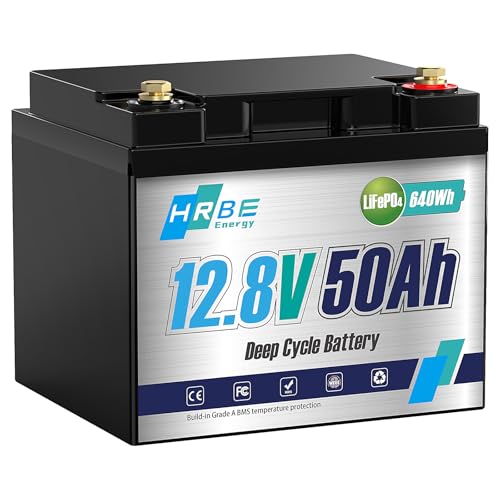
HRBEENERGY’s LiFePO4 12V 50Ah battery emphasizes ultra-long lifespan and safety. It claims 5000+ charge-discharge cycles with a lifespan up to 10 years, plus faster charging from solar panels and other chargers. Built-in sensors monitor temperature to prevent overheating and freezing, ensuring stable performance in varied climates. Best for off-grid setups, campers, and users prioritizing longevity and rapid recharging. A caveat: performance claims assume proper charging sources and temperatures; verify compatibility with your solar array and inverter.
Power Queen 12V 50Ah LiFePO4: Light and Reliable

Power Queen offers a very light 12V 50Ah LiFePO4 battery at about 11.6 lb, making it ideal for portable RV or marine setups where weight matters. It features 100% deep discharge compatibility and a durable BMS that guards against overcharge and over-discharge. Best for users needing easy handling, longer runtimes, and consistent power. Limitations include the need to respect the BMS’s protection limits and avoiding use in extremely high-temperature environments without appropriate cooling.
LGECOLFP 12V 50Ah LiFePO4: Durable Marine Power

LGECOLFP’s LiFePO4 12V 50Ah is noted for lightweight design (about 13 lb) with an easy-carry handle, making it practical for boats and travel trailers. It emphasizes long life, with more than 2,000 cycles at 100% and 5,000+ cycles at 50% DoD. The built-in 50A BMS protects against overcharge and discharging while guarding against extreme temperatures. Best for: durable marine or outdoor power where weight savings and longevity matter. A limitation: not recommended for golf carts or high-vibration applications without verification.
ECO-WORTHY 12V 50Ah LiFePO4: Smart Camping Power

ECO-WORTHY’s battery combines LiFePO4 chemistry with Bluetooth 5.1 real-time monitoring, XT60 interface for easy connections, and low-temperature protection. It supports camping, road trips, trolling motors, and solar integration. Best for users who want on-the-go monitoring and a convenient interface. A caution: XT60 is rated for up to 30A, so avoid overloading the setup beyond safe limits.
Buying Guide: Practical Considerations for 12V 50Ah Batteries
What type should you choose? LiFePO4 offers lighter weight, longer cycles, and faster charging, suitable for frequent use and portable setups. SLA is often more budget-friendly and robust for basic backup power but heavier and with shorter cycle life.
How to size and install? Confirm inverter and charger compatibility, connector types (NB vs. standard terminals), and mounting space. Consider weight for mounting and transport, especially on boats or RVs. Ensure proper ventilation for SLA models and secure mounting for any lithium pack.
What features matter? A robust BMS is essential for LiFePO4 to protect against overcharge, over-discharge, and temperature extremes. Look for low-temperature protection if you operate in cold climates, and consider Bluetooth monitoring if you want real-time status from your phone.
How to compare lifecycle costs? Lithium variants often cost more upfront but offer thousands of cycles and lighter weight, reducing replacement frequency and improving overall efficiency. SLA options may lower upfront cost but require replacement sooner in demanding cycles.
Frequently Asked Questions
- What is the difference between SLA and LiFePO4 for 12V 50Ah batteries? SLA is typically heavier and shorter-lived but cheaper upfront; LiFePO4 is lighter, longer-lasting, and supports deeper discharges with better thermal stability.
- Can I use a 12V 50Ah battery for trolling motors or RV appliances? Yes, many of these options are designed for those uses, but check the specific motor load and inverter compatibility.
- Do LiFePO4 batteries require special charging equipment? They can use appropriate LiFePO4 chargers and solar controllers; some models include BMS protections to simplify charging safety.
- Is Bluetooth monitoring necessary? It’s convenient for real-time status, but not required if you prefer manual voltage checks and simple indicators.
- Are these batteries safe for marine use? Many are designed for marine and outdoor environments; verify IP ratings and proper ventilation for your installation.
- What maintenance is needed for SLA vs LiFePO4? SLA is maintenance-free in most cases but requires proper charging; LiFePO4 is also maintenance-free but benefits from a good BMS and temperature management.