Best 12V 50Ah Batteries for Marine, RV and Trolling Motors
The top picks shown here are 12V 50Ah batteries designed to power trolling motors, campers, boats, and off‑grid setups. This guide highlights five options with different chemistries and strengths. Use this to choose a light, long‑lasting 12V 50Ah battery that matches your gear and climate.
| Product | Chemistry | Best For | Weight (approx.) | Key Benefit |
|---|---|---|---|---|
| Newport 12V50Ah Deep Cycle AGM | AGM Lead-Acid | Lightweight marine setups and trolling motors | 32 lbs | Sealed, leak-proof performance |
| Mighty Max ML50-12 | Sealed Lead Acid (SLA) AGM | General boat and trolling motor use | Varies by build | Maintenance-free, UL Certified |
| Dumfume 12.8V 50Ah LiFePO4 | LiFePO4 | Portable RV, camping, off‑grid storage | 11.5 lbs | Long life and fast charging |
| Power Queen 12V 50Ah LiFePO4 | LiFePO4 | RV, trolling motors, solar storage | 11.57 lbs | Low weight, long runtime |
| LiTime 12V 50Ah LiFePO4 | LiFePO4 | Marine, trolling motor, RV and fishing gear | 11.27 lbs | High discharge support with protective BMS |
Note: This article references product features available in the listed product pages. Availability and specifications may change; verify details on the Amazon listing before purchase.
Newport 12V50Ah AGM Battery

The Newport Vessels 12V50Ah Deep Cycle AGM battery is designed for trolling motors and marine use. It emphasizes lightweight handling at about 32 pounds, making it easier to transport and install on a boat. The sealed AGM lead‑acid construction provides leak‑proof operation for marine environments. Best for boat owners who need a compact, reliable power source for trolling motors without added bulk. A potential limitation is that AGM batteries generally have lower energy density than lithium alternatives, which may affect runtime for high‑demand systems.
Mighty Max ML50-12 50Ah AGM Battery

The Mighty Max ML50-12 is a sealed lead‑acid AGM battery with a 12V 50Ah rating. It is maintenance free and UL certified. This option is suited for anglers and boaters who want a straightforward, no‑hassle power source. Best for those who prioritize established AGM technology and simple replacement. A caution: the listing notes no included wire harness or mounting accessories, so you may need additional components for installation.
Dumfume 12.8V 50Ah LiFePO4 Battery
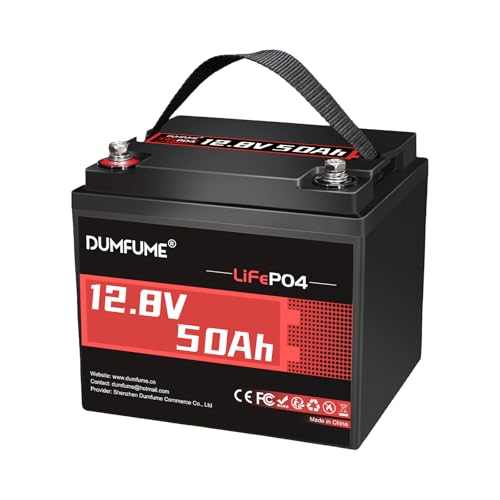
The Dumfume LiFePO4 battery offers a compact 12.8V, 50Ah pack with a built‑in 50A BMS and 640Wh capacity. It is lightweight at about 11.5 pounds and claims 4000+ cycles, making it suitable for RV, camping, solar, and off‑grid energy storage. Best for users needing portable power and high cycle life. Limitation: low temperature performance and charging conditions require attention to ensure compatibility with cold environments.
Power Queen 12V 50Ah LiFePO4 Battery Upgrade

The Power Queen battery is a lightweight LiFePO4 option with a 50A BMS. It emphasizes a long runtime and high cycle life, with a claimed 15000 cycles in ideal conditions. This makes it attractive for RVs, trolling motors, and solar storage. Best for users who want extreme longevity and a very low weight. Caution: real‑world cycles depend on depth of discharge and temperature; under heavy use, lifespan may vary from the quoted figures.
LiTime 12V 50Ah LiFePO4 Battery

LiTime’s 12V 50Ah LiFePO4 battery supports high discharge rates and includes a 50A BMS with low‑temperature protection. Its light weight (~11.27 lbs) makes handling and placement easier in marine or RV setups. Best for users needing robust protection and reliable cold‑weather performance. Limitation: some users may need external peripherals for full integration with trolling motors or solar systems.
Buying Guide
What chemistry should you choose? AGM batteries are proven, maintenance‑free, and widely available. LiFePO4 offers lighter weight, longer life, faster charging, and deeper energy storage, but at a higher upfront cost. Choose LiFePO4 if you prioritize weight savings and longevity; choose AGM if you want a budget‑friendly, ready‑to‑go option with broad compatibility.
Is weight important for you? For portable setups (camping, RVs, smaller boats), the lighter LiFePO4 options (about 11–12 lbs) reduce handling effort and mounting strain. If weight is less critical and you need a proven marine staple, AGM might be sufficient.
How do temperatures affect performance? LiFePO4 generally performs well across a wide temperature range but may require protection in very cold environments to avoid charging issues. AGM/lead‑acid solutions are more tolerant of varied temperatures but may degrade faster under deep cycling.
How to size and install? Ensure the battery fits your compartment dimensions and that your charger or BMS supports the chosen chemistry. For LiFePO4, verify a compatible BMS (50A or higher is common) and that charging sources are matched to your battery’s chemistry. For AGM, check polarity, venting, and mounting orientation per the manufacturer’s guidelines.
FAQ
- What is the difference between AGM and LiFePO4 for 12V 50Ah? AGM is heavier and typically cheaper, with shorter life, while LiFePO4 is lighter, longer‑lasting, and often requires a compatible BMS and charger.
- Can I use a 12V 50Ah battery for trolling motors? Yes, all listed options are suitable for trolling motors, with LiFePO4 models offering better weight-to-capacity ratios.
- Do LiFePO4 batteries require special chargers? Most do; use a charger compatible with LiFePO4 chemistry and the battery’s BMS specifications.
- How many cycles do LiFePO4 batteries offer? Common LiFePO4 cells deliver thousands of cycles (often 2000–5000+ depending on depth of discharge and temperature).
- Is a battery weight a major concern? For portable RV or marine setups, lighter LiFePO4 units (about 11–12 lbs) reduce handling effort and mounting strain.
- What should I check before buying? Look for BMS protection, weight, cycle life, and compatibility with your charger and devices.