Best 12V 300 Watt Solar Panel Solutions for RVs, Camps, and Off-Grid Power
Answering the need for reliable 12V, 300W solar charging, this guide highlights five practical panels suitable for RVs, camping, boats, and off-grid setups. Each option is evaluated for portability, efficiency, and ease of use. Whether you’re a weekend camper, full-time RVer, or boat owner, these picks help you choose the right balance of space, weight, and power for sunny days and overcast spells alike.
Buyer spotlight: the best fit varies by use case. For ultra-portable setups, foldable kits excel; for fixed RV roofs, hard panels with robust mounting are ideal; for flexible surfaces, lightweight and curved-surface designs win. The table below offers a quick snapshot to help you compare key traits at a glance.
| Product | ||
|---|---|---|
| DOKIO 300W Foldable Solar Panel Kit | Portable RV/Camping, quick setup | 15.2 lb |
| DOKIO 300W Portable Foldable Panel with Standalone Controller | Compact, safe charging with standalone PWM | 15.2 lb |
| Mndstek 300W N-Type Monocrystalline Panel | High-efficiency fixed installation | Typically around 20–22 lb |
DOKIO 300W Foldable Solar Panel Kit for 12V Batteries

Best for: RV travelers and campers who need a compact, high-efficiency foldable option with integrated PWM protection. This kit uses premium mono-crystalline cells for steady real-world output and folds to a slim profile that fits behind an RV seat or in a cabinet. The included PWM controller provides layered protection against reverse polarity, overcharging, overload, and short circuits, helping protect your 12V system and devices on every charge.
Why selected: The foldable design balances weight, portability, and performance. It’s a self-contained solution for mobile living spaces that require reliable power without mounting a fixed panel.
Caution: Ensure the panel is positioned for optimal sun exposure; performance drops when shaded or misaligned with the sun.
Mndstek 300 Watt Solar Panel N-Type 18BB
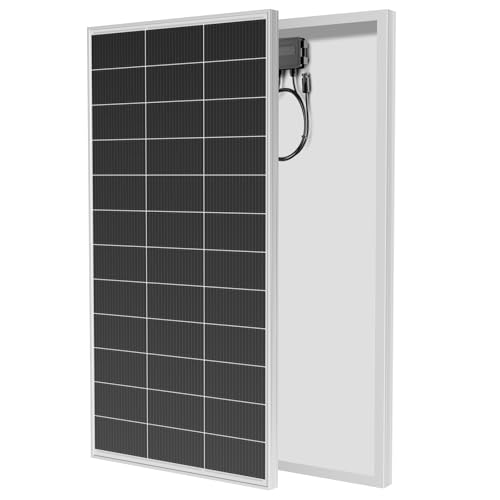
Best for: Roof-mounted or fixed-position setups where space is available and a higher efficiency panel is desired. This all-black, N-Type mono-crystalline design offers up to 25.3% efficiency with 18-busbar technology for stable performance and better temperature behavior.
Why selected: Higher efficiency and a compact footprint make it a strong choice for RVs, homes, boats, or off-grid cabins where permanent installation is feasible.
Caution: Pre-installed mounting holes and weight require secure attachment to avoid wind uplift; verify roof integrity before mounting.
WUZECK Flexible 300W Panel (2-Pack)

Best for: Off-grid setups on uneven or curved surfaces such as RV roofs and boats. The 240° flex makes it adaptable to curved surfaces, with ultra-thin, lightweight construction ideal for portable energy on the go.
Why selected: The flexible design can conform to irregular surfaces, expanding usable mounting areas where rigid panels won’t fit. Dual-layer fiberglass protection adds durability.
Caution: Flex panels can be more sensitive to micro-cracks from bending; handle carefully during installation.
Marhynchus 300W Solar Panel Kit with Controller

Best for: Outdoor enthusiasts needing all-weather charging with a robust, waterproof controller. The kit provides a 50A waterproof controller to manage voltage, current, and overcharge protection, suitable for RVs, campers, and off-grid setups.
Why selected: It emphasizes protection and stability across weather conditions, making it a reliable choice for remote adventures where power reliability matters.
Caution: Controller protection is essential; ensure proper venting and moisture protection in harsh environments to avoid controller overheating.
JJN 300W Solar Panel Kit with PWM Controller

Best for: Off-grid systems requiring a complete kit with easy installation and multiple mounting options. Includes 40A PWM charge controller, mounting hardware, and cables for straightforward setup.
Why selected: The half-cut cell technology and 22% efficiency offer solid performance, along with a kit that supports straightforward integration with existing 12V systems.
Caution: The kit’s performance depends on sun exposure and proper wiring; follow wiring diagrams closely to avoid charging faults.
Buying Guide: Key Considerations for 12V 300W Panels
What should you prioritize when choosing a 12V, 300W solar panel kit?
- Portability vs. fixed installation: Foldable or flexible panels maximize portability, while rigid fixed panels are better for rooftops with permanent mounting.
- Efficiency type: Mono-crystalline panels offer higher efficiency and better performance in limited space, while multi-crystalline panels may be more economical but bulkier.
- Controller integration: A built-in PWM or MPPT controller affects charging safety and compatibility with 12V batteries. Standalone controllers offer easy replacement and upgrades.
- Weight and dimensions: Lighter panels are easier to transport; ensure the panel fits your storage space and frame mounting constraints.
- Durability and weather resistance: Look for IP ratings, frame materials, and protective coatings for outdoor use on RVs, boats, or remote cabins.
Frequently Asked Questions
- What is the typical power output of a 300W solar panel in real-world conditions?
Real-world output depends on sun exposure, angle, and temperature. Under optimal sunlight, a 300W panel can approach its rated output, but often it fluctuates with weather and shading.
- Do foldable solar panels perform as well as rigid panels?
Foldable panels tend to have similar cell efficiency but may exhibit different wind resistance and mounting considerations. They are best for portable use and quick setup.
- Is a dedicated PWM controller enough for reliable charging?
For many 12V systems, a PWM controller provides adequate protection. MPPT controllers can improve efficiency, especially with longer cable runs or low-light conditions.
- How do bifacial panels differ from standard panels?
Bifacial panels capture light from both sides, potentially increasing energy harvest by up to 30% in suitable conditions, particularly with reflective surfaces nearby.
- Can flexible panels be used on curved surfaces?
Yes. Flexible panels are designed to conform to curved surfaces like RV roofs or boat hulls, provided they are mounted carefully to avoid damage during bending.
- What installation considerations matter for RV use?
Weight, fastening methods, vibration tolerance, mounting clearance, and cable routing are essential. Ensure panels are secured to withstand travel conditions and allow for ventilation near controllers and batteries.