Best 12V 200Ah Solar Battery for Off-Grid Power
Answering the question, these 12V 200Ah batteries deliver substantial energy storage for off-grid, RV, marine, or backup power setups. This guide highlights five top options and explains who each is best for. The featured batteries favor LiFePO4 where long cycle life and lightweight design matter, while the AGM option suits maintenance-free needs.
Buyer Quick View (selected products):
| Product | Type | Best For | Key Advantage |
|---|---|---|---|
| Renogy Deep Cycle AGM Battery 12V 200Ah | AGM | Off-grid cabins, RVs seeking maintenance-free无 | Low self-discharge |
| Rvpozwer 12V 200Ah LiFePO4 Battery | LiFePO4 | Long lifespan, expandable configurations | Up to 15000 cycles |
| WOXABHSL 12V 200Ah LiFePO4 Battery | LiFePO4 | Marine or outdoor use with high surge protection | Built-in 200A BMS |
| ECOBOSS 12V 200Ah LiFePO4 Battery | LiFePO4 | Cold-weather readiness, backup power | 200A BMS, wide temperature range |
| CyperOcean 12V 200Ah LiFePO4 Battery | LiFePO4 | High-load and long life in heavy-use systems | 2560W continuous output |
Renogy Deep Cycle AGM Battery 12V 200Ah

Best for: Off-grid cabins or RVs needing maintenance-free operation. This AGM battery uses thick absorbent glass mat separators and valve-regulated technology to prevent acid leaks and minimize upkeep. It supports high discharge currents, making it suitable for appliances that demand substantial surge power.
- Maintenance Free: AGM construction reduces leakage and maintenance.
- Excellent Discharge Performance: Low internal resistance enables high current bursts.
- Long Shelf Life: Self-discharge under 3% at 77°F, longer than many flooded models.
Caution: Not a lithium solution; performance can degrade faster under frequent deep cycling compared to LiFePO4 options.
Rvpozwer 12V 200Ah LiFePO4 Battery
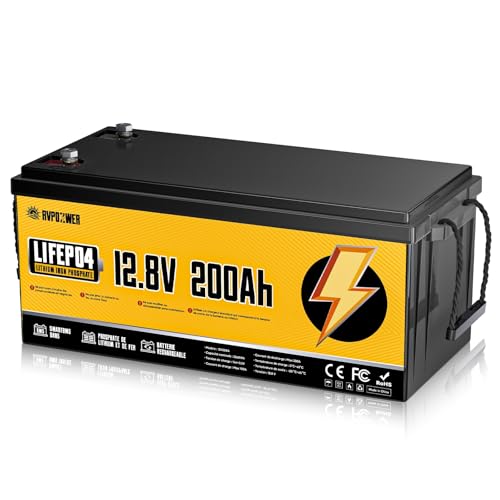
Best for: Long-term energy storage with many cycles for RVs, boats, or off-grid homes. The 200A smart BMS protects against overcharge, over-discharge, and short circuits while offering expandable configurations for larger systems.
- 15-Year Lifespan: Deep cycles keep energy storage running longer than lead-acid.
- Smart BMS: Guards against common electrical faults for stability.
- Compact and Expandable: Suitable for series/parallel setups to meet higher voltages or capacities.
Limitation: High initial cost relative to AGM, and full benefits depend on compatible BMS wiring and system design.
WOXABHSL 12V 200Ah Lithium LiFePO4 Battery
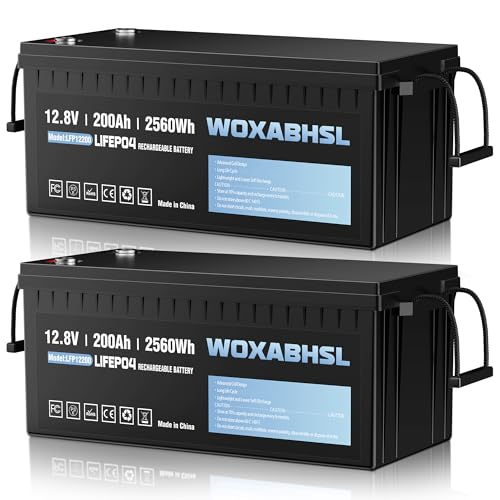
Best for: Outdoor enthusiasts and marine use where a smart BMS and surge protection matter. This battery emphasizes protection and durability with a TVS system and high energy density.
- 200A BMS: Strong protection for heavy-load conditions.
- 15000+ Deep Cycles: Long-lasting energy independence.
- Lightweight for its capacity: Easier installation and handling.
Caution: Some models may require setup for cold-weather charging to maximize lifespan.
ECOBOSS 12V 200Ah LiFePO4 Battery
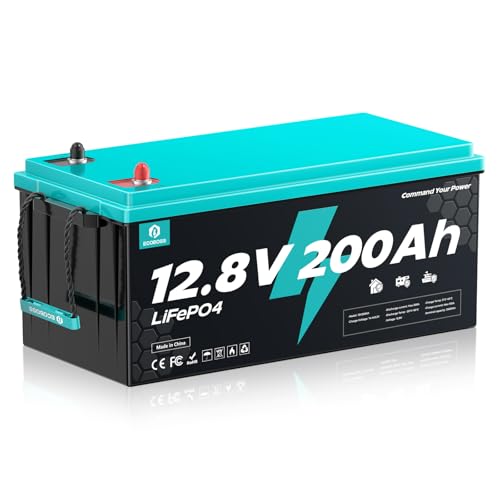
Best for: Cold climates and backup power applications where temperature tolerance is crucial. The 200A BMS and low-temperature protection help maintain performance in varying conditions.
- 15,000+ Cycle Life: Very long service for a LiFePO4 pack.
- 200A Smart BMS: Deep protection across charging and discharging.
- Low-Temp Protection: Prevents charging below 32°F to protect cells.
Limitation: Higher upfront cost than some lead-acid alternatives; ensure matching solar controller settings for optimal efficiency.
CyperOcean 12V 200Ah LiFePO4 Battery

Best for: High-load off-grid systems needing massive continuous output. Its 200A BMS supports a 2560W continuous load, making it suitable for appliances with large surges.
- 2560W Output: Handles strong simultaneous loads.
- Grade A Cells: Stable performance and thermal stability.
- Up to 6000+ cycles: Long lifespan with high DoD.
Limitation: Heavier than some competitors due to dense LiFePO4 chemistry; installation planning should account for weight.
Buying Guide
What should you consider when choosing a 12V 200Ah battery?
- Chemistry: LiFePO4 batteries offer longer lifespans and lighter weight than AGM; ideal for frequent cycling and mobile setups.
- Cycle Life: Look for 6000–15000+ cycles for long-term value, especially in solar storage or off-grid living.
- BMS Protection: A robust Battery Management System prevents overcharge, deep discharge, and thermal issues.
- Temperature Tolerance: Cold-weather protection and operating range influence performance in outdoor environments.
- Weight and Size: Consider mounting space and weight distribution, particularly for RVs and boats.
- Expandability: If you plan to scale, choose batteries that support series/parallel configurations.
- System Compatibility: Ensure compatibility with your solar controller, inverter, and wiring standards.
Frequently Asked Questions
- What is the difference between AGM and LiFePO4 12V 200Ah batteries?
LiFePO4 offers longer life and higher efficiency for deep cycling; AGM is maintenance-free but may have shorter cycle life. - Can I connect multiple 12V 200Ah batteries in parallel or series?
Yes, many LiFePO4 packs support parallel or series connections to increase capacity or voltage, per BMS limits. - Which battery is best for cold climates?
LiFePO4 with low-temperature protection is preferable; some models stop charging below 32°F to protect cells. - Do all 12V 200Ah batteries require maintenance?
LiFePO4 models are maintenance-free; AGM models require less frequent maintenance than flooded lead-acid but may need checks. - How many cycles do LiFePO4 batteries typically deliver?
Depending on DoD, many LiFePO4 batteries offer 6000–15000+ cycles. - Is a higher wattage output important for RV use?
Yes, for running high-surge appliances; choose a battery with a high continuous discharge rating (W) and a capable BMS.