Best 12V 105Ah Deep Cycle Battery for RVs and Marine Use
Choosing the right 12V 105Ah deep cycle battery can impact run-time, reliability, and overall power management for RVs, boats, and off-grid systems. This guide highlights five top options that balance capacity, durability, and maintenance needs. Each entry includes practical specs and use-case notes to help you select a dependable power source for electronics, trolling motors, lighting, and more.
| Product | Brand | Capacity | Chemistry | Typical Use |
|---|---|---|---|---|
| Group 31M Marine Battery | MARXON | 105Ah | AGM (lead-acid) | Starting & deep-cycle for RVs/boats |
| UPLUS Group 31M Dual Purpose | UPLUS NEW TECHNOLOGY BATTERY | 105Ah | AGM (lead-acid) | Starting engines and deep-cycle power |
| VEVOR 12V 105Ah LiFePO4 | VEVOR | 105Ah | LiFePO4 | Dual-purpose power with smart BMS |
| Interstate Marine Deep Cycle 100Ah | Interstate Batteries | 100Ah | AGM (lead-acid) | Hybrid deep-cycle and starting power |
| Eiiev 12V 100Ah LiFePO4 | Eiiev | 100Ah | LiFePO4 | Lightweight, long-life power for camping and boating |
MARXON Group 31M 105Ah AGM Deep Cycle Battery

The MARXON Group 31M battery delivers 12V at 105Ah with 825CCA and 200RC. Designed for dual-purpose use, it can power RV and marine electronics while also starting engines. The AGM construction provides maintenance-free operation and improved vibration resistance for harsh marine environments. It is built to withstand continuous cycles with thick plates to extend service life. This model is a practical choice for owners needing reliable deep-cycle support without frequent maintenance.
UPLUS Group 31M Dual Purpose 105Ah AGM Battery

This dual-purpose AGM battery combines starting power with deep-cycle capability in a 12V 105Ah package. It features a robust design intended to handle the vibrations and moisture common in RVs and boats. The 825CCA and 200RC ratings indicate solid cranking power, while the AGM format minimizes maintenance and electrolyte handling. A reliable option for users who need both lighting/electronics power and engine starts from a single battery bank.
VEVOR 12V 105Ah LiFePO4 Dual Purpose Battery

This LiFePO4 dual-purpose battery provides 1000CCA and 105Ah, backed by a built-in smart BMS for overcharge, over-discharge, overcurrent, short circuit protection, and temperature safeguards. It supports Bluetooth for real-time monitoring, which helps optimize charging cycles and runtime. The LiFePO4 chemistry offers faster charging, higher efficiency, and a longer lifecycle than traditional AGM options, with substantial weight savings and durable construction for marine and RV use.
Interstate Marine Deep Cycle 100Ah AGM Battery
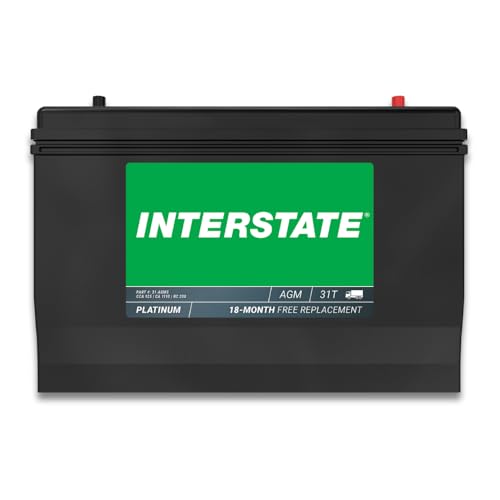
Interstate’s 100Ah AGM marine battery is designed for large deep-cycle or starting duties. It features thick plates to endure repeated discharges and recharges, with an emphasis on long life and consistent performance across motor, electronics, and accessory loads. While not 105Ah, its dual-purpose design makes it a solid option for boat-based or RV systems that balance endurance with reliable ignition power.
Eiiev 12V 100Ah LiFePO4 Battery

The Eiiev LiFePO4 unit offers 100Ah with a long-cycle life and a flat discharge curve that preserves most of its capacity well into the discharge cycle. With reduced weight and high efficiency, this battery is suitable for portable power setups, trolling motors, and RV systems where weight savings and longevity are critical. It lacks the 105Ah exact rating but remains a competitive option in the 100Ah LiFePO4 class.
Buying Guide: Key Purchase Considerations
- Chemistry choice: AGM vs LiFePO4. AGM batteries are robust, maintenance-free, and generally less expensive upfront, but have shorter lifecycles and heavier weights. LiFePO4 offers significantly longer lifecycles, lighter weight, and higher efficiency, but at a higher initial cost. Your climate, usage pattern, and desired lifecycle will guide this choice.
- Capacity and power needs: 105Ah is useful for longer run times between charges, but consider your total energy draw, including starting power (CCA) and deep-cycle draw. If you rely on accessories with high current, prioritize higher CCA alongside capacity.
- Size and weight: Group 31M and other large-format batteries require sufficient space and mounting. Ensure cabinet, tray, and terminals align with your boat or RV layout and that weight distribution is safe.
- Maintenance and sealing: AGM batteries are maintenance-free but sensitive to extreme temperatures. LiFePO4 batteries tolerate wide temperature ranges and provide better energy density, but require appropriate BMS and charging compatibility.
- Charging system compatibility: Check charger compatibility with your chosen chemistry. LiFePO4 often needs a charger designed for BMS-integrated packs; AGM typically shares charging profiles with other 12V lead-acid systems.
- Durability and environment: Marine and RV environments demand vibration resistance and moisture protection. Look for sealed enclosures, rugged terminals, and corrosion-resistant casings.
- Lifecycle and warranty: LiFePO4 often offers thousands of cycles, while AGM cycles are more limited. Compare warranty terms and replacement policies to minimize long-term risk.
- Installation and safety: Proper venting is essential for lead-acid chemistries to avoid gas buildup. Ensure secure mounting, correct polarity labeling, and compatible terminal configurations for easy wiring.
- Price vs. performance: Initial costs for LiFePO4 are higher but cost-per-cycle over time can be lower. For budget-minded setups, AGM 100–105Ah options remain practical and dependable.
These considerations help align a battery with your specific application—whether you need reliable engine starts, extended live power for electronics, or a balanced mix for dual-purpose use on a boat or RV.