Best 12V 100Ah Deep Cycle Battery Guide for RVs, Solar and Off-Grid Power
Finding a reliable 12V 100Ah deep cycle battery is essential for powering RV systems, solar setups, trolling motors, marine gear and off-grid lifestyles. This guide reviews five top-rated options, highlighting safety, cycle life, maintenance needs and charging compatibility. By comparing AGM, Gel and LiFePO4 designs, you can choose a battery that meets your energy needs and climate conditions without frequent replacements.
| Product | Brand | Chemistry | Key Advantage |
|---|---|---|---|
| Weize Deep Cycle AGM 12V 100Ah | WEIZE | AGM | Low self-discharge and maintenance-free operation |
| Renogy Deep Cycle AGM 12V 100Ah | Renogy | AGM | Trusted safety and flexible connections |
| UPLUS 12V 100Ah Deep Cycle AGM | UPLUS NEW TECHNOLOGY BATTERY | AGM | True maintenance-free design with solid warranty info |
| Interstate Batteries Marine Deep Cycle 12V 100Ah | Interstate Batteries | AGM | Extreme deep-cycle power for boats and off-grid needs |
| SUPER EMPOWER 12V 100Ah LiFePO4 | SUPER EMPOWER | LiFePO4 | Long lifespan and high cycle count |
Weize 12V 100Ah AGM Deep Cycle Battery
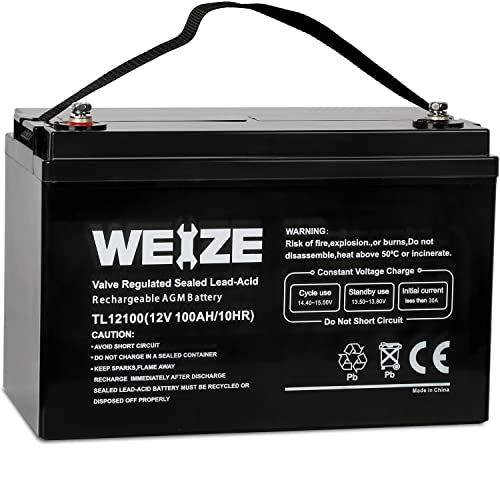
The Weize Deep Cycle AGM 12V 100Ah is a maintenance-free sealed lead-acid battery built with AGM technology to prevent acid leakage and minimize routine upkeep. Its compact dimensions (approximately 12.99×6.73×8.43 inches) make it suitable for RVs, solar arrays, trolling motors and small off-grid systems. A wide operating temperature range supports charging from near-freezing to hot conditions, with a recommended operating benchmark around 77°F (25°C). A notable feature is its low monthly self-discharge rate of 1-3%, which helps with longer storage between recharge cycles. The battery is designed for easy terminal access (positive on the left, negative on the right).
Key considerations: While AGM chemistry provides reliability and safety, this model remains a lead-acid solution that may require periodic electrolyte monitoring in extreme environments. It’s well-suited for users prioritizing maintenance-free operation and predictable performance in moderate climates.
Renogy Deep Cycle AGM 12V 100Ah Battery

Renogy’s Deep Cycle AGM 12V 100Ah is a widely trusted option with strong safety credentials and solid performance metrics. The AGM design minimizes maintenance and supports series or parallel configurations, enabling scalable systems for RVs, cabins, boats and off-grid installations. Renogy emphasizes a stable chemistry and sealed architecture that reduces the need for troubleshooting—an advantage over some other chemistries. The battery’s resilience in varied operating conditions makes it a frequent pick for DIY solar projects and marine use.
Considerations: Renogy’s 100Ah capacity makes it a good all-around fit for modest power draws, but potential buyers should plan for best-match charging strategies and appropriate charging equipment to maximize cycle life and safety in their specific climate.
UPLUS 12V 100Ah AGM Deep Cycle Battery

The UPLUS 12V 100Ah Deep Cycle Battery emphasizes maintenance-free operation with AGM technology and a robust safety profile. It lists a two-year warranty and emphasizes compatibility with standard 12V charging profiles, including use in solar or RV systems. The physical dimensions align with Group 27 sizes, and the weight is around 60 pounds, making it a practical choice for many mobile and off-grid setups. The product notes a true maintenance-free design with a strong emphasis on preventing acid leakage and eliminating water top-ups.
Prospective buyers should consider its discharge depth guidance and ensure their charger is compatible with AGM services to extend cycle life and reliability in both summer heat and winter cold snaps.
Interstate Batteries Marine Deep Cycle 12V 100Ah
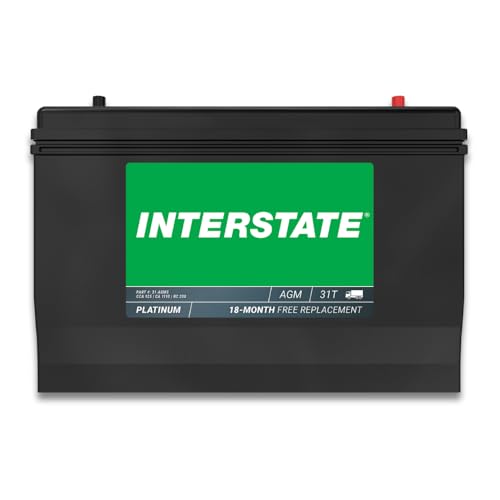
The Interstate Batteries Marine Deep Cycle 12V 100Ah is a two-in-one AGM battery designed for marine and heavy-duty off-grid use. It emphasizes deep cycle power with strong endurance for trolling motors, audio systems and auxiliary boat electronics. The design uses thick plates aimed at enduring repeated discharge and recharge cycles. Interstate positions itself as a durable, trusted option for demanding marine environments and auxiliary power needs, reinforcing the brand’s long-standing reputation in the field.
Important notes include ensuring you have a suitable charging setup that supports deep-cycle performance, and recognizing this battery as optimized for marine and high-demand applications rather than automotive starting power.
SUPER EMPOWER 12V 100Ah LiFePO4 Battery

This 12V 100Ah LiFePO4 option from SUPER EMPOWER marks a different chemistry path with potentially longer life cycles and higher energy density than traditional lead-acid types. It includes a built-in BMS and promises 5000+ cycles at 100% DoD (and up to 15000 cycles at lower DoD levels). The battery dimensions and weight are suitable for RV boxes, boats and solar cabins, and it is designed as a drop-in replacement for lead-acid setups in many cases. A significant advantage of LiFePO4 is steadier voltage, lighter weight, and far lower self-discharge over time when compared with AGM or flooded lead-acid.
Considerations: While LiFePO4 offers longevity and efficiency, it requires compatible BMS management and charging strategies. Ensure your system supports LiFePO4 charging profiles and temperature controls to optimize the lifecycle. Temperature sensitivity and BMS protection are critical for long-term reliability in extreme environments.
GrnOas.E 12V 100Ah LiFePO4 Battery

The GrnOas.E LiFePO4 12V 100Ah battery emphasizes safe operation with a built-in 100A BMS and high/low temperature cutoffs. It highlights a wide operating range from -4°F to 140°F, along with a scalable architecture designed to connect in parallel or series for greater capacity. The product markets itself as a versatile option for RVs, boats, off-grid homes, and solar systems, with an emphasis on safety features and operational stability. It offers a modern LiFePO4 approach with robust protection against common failures.
Use considerations include matching your charging regime to LiFePO4 requirements and ensuring your bank of cells can be configured to your desired voltage and capacity. The temperature cutoffs are valuable in very hot or very cold climates to prevent damage and optimize performance.
Buying Guide: Key Purchase Considerations
- Battery chemistry: AGM and LiFePO4 offer different trade-offs. AGM is rugged, maintenance-free and affordable, while LiFePO4 provides longer life, lighter weight and higher cycle counts but may require compatible charging hardware.
- Capacity and depth of discharge: 100Ah is common, but plan for the actual usable capacity. Some chemistries tolerate deeper discharges than others, influencing how long you can run devices between recharges.
- Cycle life: LiFePO4 typically delivers thousands of cycles; lead-acid AGM cycles are usually in the hundreds to low thousands depending on usage and temperature.
- Temperature range: Cold and heat impact performance and lifespan. Look for batteries with wide operating temperatures and appropriate thermal management for your climate.
- Charger compatibility: Ensure your charger is rated for the battery chemistry. AGM and LiFePO4 require different charging profiles and termination voltages to maximize life and safety.
- Size and weight: Group sizes (27, 31, etc.) and physical dimensions affect fit in existing boxes or compartments. LiFePO4 is typically lighter than AGM for the same capacity.
- Mounting and termination: Check terminal positions and accessibility. Some models place terminals on the left/right for easier wiring in tight spaces.
- Maintenance: AGM is largely maintenance-free, but LiFePO4 still requires basic system checks. Consider venting and enclosure requirements where applicable.
- Warranty and support: A solid warranty and accessible customer support help reduce risk, especially for remote installations in RVs or boats.
- System integration: For off-grid or solar installations, evaluate how the battery banks will be wired (series/parallel) to achieve the desired voltage and capacity quickly and safely.
What This Means In Practice
For RV enthusiasts, an AGM 100Ah battery is a dependable choice when weight and space are limited, and when a straightforward plug-and-play upgrade is preferred. Those prioritizing longevity, higher cycle life, and lighter weight may lean toward LiFePO4 options, recognizing the need for compatible charging gear and temperature-aware installations. Marine users should consider batteries with robust vibration resistance and reliable deep-cycle performance for trolling motors and onboard electronics. In solar-powered cabins or tiny homes, scalable configurations—especially with LiFePO4—allow for growing storage as energy needs increase.
Maintenance and System Planning Tips
- Match charger specs to battery chemistry to avoid accelerated wear or safety risks.
- In cold climates, ensure your charging method does not drop below safe levels; LiFePO4 often handles low temperatures better than some lead-acid options.
- For larger installations, plan parallel and series configurations with proper fusing and battery management systems (BMS) to protect all cells.
- Regularly inspect terminals for corrosion and ensure secure connections to prevent voltage drops.
- Balance your storage and use: avoid fully discharging lead-acid deeply; LiFePO4 tolerates deeper cycles but still benefits from moderated DoD for longer life.