Best 125,000 BTU Electric Pool Heater Alternatives for American Homes
Direct answer: there are few 125,000 BTU electric pool heaters available; the closest electric options are high-capacity heat pumps that reach up to around 110,000 BTU or more, or high-BTU gas heaters that outperform many electric models. This guide highlights five relevant heaters (four electric-style heat pumps and one high-BTU gas option) chosen for efficiency, ease of use, and suitability for different pool sizes. This selection is useful for buyers aiming to extend the swimming season, control operating costs, or heat large residential pools. Consider pool size, climate, and energy source when choosing.
Summary Table of Selected Products
| Product | Type | Approx. BTU | Best For |
|---|---|---|---|
| AQUASTRONG Inverter Pool Heat Pump (Large) | Electric Heat Pump | 75,000–110,000 | Large pools, app control, year-round heating |
| Aquastrong Top Discharge Inverter Heat Pump | Electric Heat Pump | 110,000 | Compact spaces, saltwater setups |
| MICOE 58,000 BTU Pool Heat Pump | Electric Heat Pump | 58,000 | Smaller to mid-size pools, budget-friendly |
| Raypak 105k BTU Above Ground Heater | Gas Heater (Propane) | 105,000 | Gas-ready installations, fast heating |
| Hayward H-Series 150,000 BTU (Gas) | Gas Heater (Natural Gas/Propane) | 150,000 | Very large pools, rapid heating |
Pentair EC462026 MasterTemp 125,000 BTU Heater

Product overview: A compact, energy-efficient propane heater designed for small to medium pools up to 15,000 gallons. Best for smaller aboveground and inground pools, or spas where propane is convenient. Not an electric heat pump, but included here as a high-BTU alternative. Benefit: high energy efficiency and strong performance for faster warm-ups. Limitation: propane availability and ongoing fuel costs may be higher than electricity in some regions.
AQUASTRONG Inverter Pool Heat Pump (21000 Gallons)
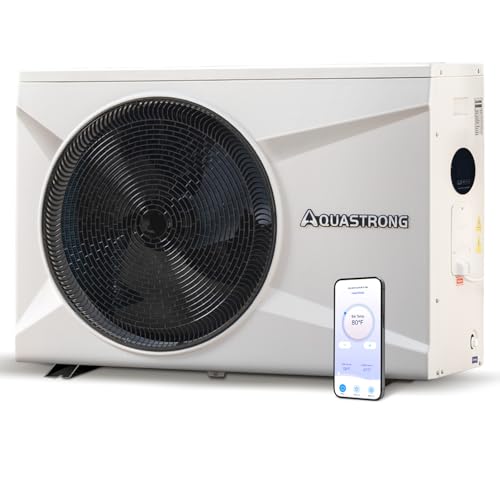
This electric heat pump is designed for large or semi-large pools with app control and a dual-mode heating/cooling system. Best for: swimmers who want year-round comfort with remote control and precise temperature management. Why chosen: energy-efficient inverter technology and broad temperature range support extended swimming seasons. Caution: performance depends on ambient temperatures; efficiency drops in cooler climates.
Aquastrong 110,000 BTU Top Discharge Inverter Pool Heat Pump
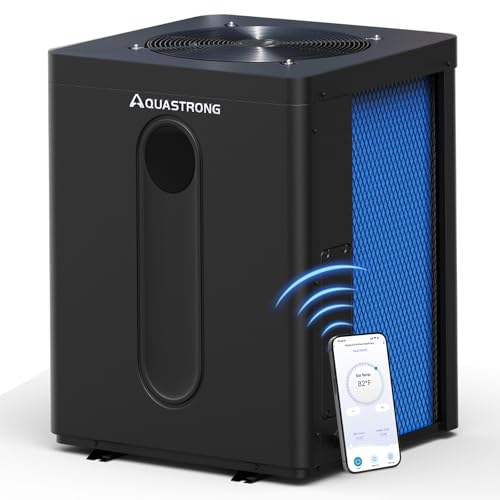
Best for: spaces with restricted side clearance where top-discharge design shines. This model uses inverter technology for energy savings and a high heating output. Why selected: 110,000 BTU capacity makes it suitable for many mid-to-large pools; top discharge helps with installation flexibility. Limitation: top discharge models may require specific outdoor layout to optimize airflow.
MICOE 58,000 BTU Pool Heat Pump
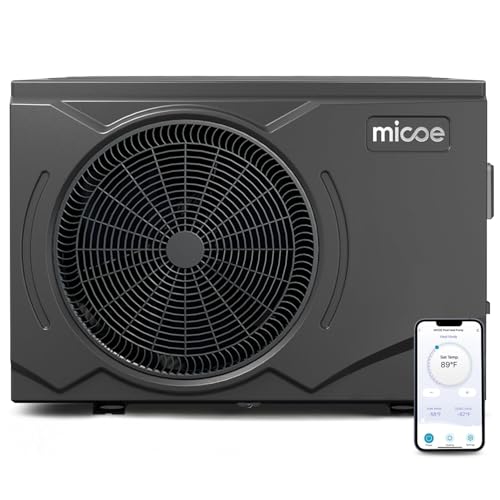
Best for: above-ground or smaller inground pools where space and budget are limited. Why selected: high efficiency for its size, titanium heat exchanger offers corrosion resistance, suitable for saltwater as well as freshwater. Caution: lower BTU rating means slower heating for larger volumes.
Raypak 105k BTU Above Ground Pool & Spa Heater

Best for: above-ground pools needing faster heating with propane gas. Why selected: 105,000 BTU provides robust heating for mid-sized pools; polymer header and copper tubing indicate durability. Limitation: relies on propane supply and ongoing fuel costs; not an electric option.
Hayward H-Series 150,000 BTU Inground Heater

Best for: large inground pools or spa installations requiring rapid heating and robust performance. Why selected: broad coverage options and strong heat output. Caution: higher BTU means greater fuel use or electricity demands; ensure system sizing matches pool requirements.
Buying Guide
Key considerations when choosing a heater for an American pool:
- Pool size and volume: Larger pools need higher BTU outputs or longer heating times. Electric heat pumps are efficient up to certain sizes, while gas heaters deliver rapid heating for big volumes.
- Energy source: Electric heat pumps are generally more energy-efficient than gas for moderate climates, but gas can heat faster in cold weather or when power is limited.
- Climate and ambient temperature: Heat pump efficiency declines in very cold outdoor temperatures; consider a gas backup for shoulder seasons.
- Installation space and airflow: Some models use top discharge or compact footprints; verify outdoor space and clearance requirements.
- Corrosion resistance: Saltwater pools benefit from heat exchangers and materials designed to resist corrosion.
- Controls and integration: Apps and digital controls offer remote monitoring and scheduling; verify compatibility with pool automation systems.
- Maintenance and service: Look for models with readily available parts and service networks in your area.
Frequently Asked Questions
- Are electric pool heaters better than gas heaters?
– Electric heat pumps are typically more energy-efficient for moderate climates and smaller-to-medium pools, while gas heaters heat quickly and are effective in colder climates or when rapid heating is needed. - What size BTU should I choose for a 15,000 gallon pool?
– For 15,000 gallons, consider high-efficiency heat pumps around 75,000–110,000 BTU, depending on climate and desired heating speed. Gas options of 105,000–150,000 BTU provide fast warming. - Do I need a special vent or clearance for these heaters?
– Most gas heaters require outdoor venting and adequate clearance. Electric heat pumps have different space needs, mainly for airflow around the unit. - Can I mix heating methods?
– Some homes use a heat pump for regular heating and a gas heater as a backup for peak demand or very cold days. Check compatibility with your pool equipment. - Which is more cost-effective long term: electric vs gas?
– Electric heat pumps typically offer lower operating costs over time due to higher efficiency, especially in moderate climates, while gas may be cheaper upfront in some regions but costs can add up with fuel. - Do these products support saltwater pools?
– Several models use corrosion-resistant heat exchangers and are designed for saltwater or chlorinated pools. Verify the specific model’s compatibility in its features.