Best 120Ah Deep Cycle Batteries for Reliable Power on the Go
Finding the right 120Ah deep cycle battery depends on how you plan to use it. This guide covers reliable 120Ah options across AGM and LiFePO4 chemistries, focusing on trolling motors, RV systems, solar setups, and off-grid needs. AGM models tend to be maintenance-free and robust for marine use, while LiFePO4 options offer longer life and better depth of discharge. The top picks below are selected for consistent performance, wide availability, and straightforward installation. Ideal buyers include boaters, RV campers, solar enthusiasts, and off-grid hobbyists seeking dependable power storage.
| Product | Type | Best For | Key Benefit |
|---|---|---|---|
| VMAX MR137-120 AGM Deep Cycle | AGM | Marine trolling motors, heavy-duty use | Maintenance-free, high reliability in float or cyclic service |
| Weize 12V 100Ah Deep Cycle AGM | AGM | Budget RVs, small solar setups | Low self-discharge, sealed design |
| GOKWH 12V 120Ah LiFePO4 | LiFePO4 | Off-grid RVs, long-life power | Smart app monitoring, expandable up to 51.2V |
| WannaPow 12V 120Ah LiFePO4 | LiFePO4 | Marine, camping, solar | Built-in 100A BMS, high cycle life |
| KUNLUN 12V 120Ah LiFePO4 | LiFePO4 | RV and solar upgrades | Built-in 100A BMS, 10-year lifespan |
Note: Each option has its strengths. The following sections provide concise buying guidance and practical considerations to help you pick the best 120Ah deep cycle battery for your setup.
VMAX MR137-120 AGM Deep Cycle Battery
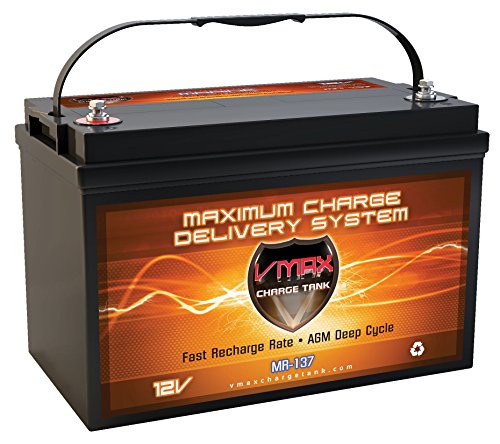
Best for marine trolling motors and heavy-duty float or cyclic use. This 12V 120Ah AGM battery uses an electrolyte suspension system and heavy-duty grids to maximize lifespan in demanding marine applications. It is maintenance-free, so there’s no need to check electrolyte or water levels during float service life. Consider this option if you need a rugged, maintenance-free AGM battery for a trolling motor setup, especially in salt or freshwater environments. Limitation: AGM chemistry can be heavier than some LiFePO4 options and may be less efficient in very deep cycling compared to LiFePO4.
Weize 12V 100Ah Deep Cycle AGM

Better for budget-conscious RVs and small solar arrays. Although this is a 100Ah model, its AGM design offers maintenance-free operation and low self-discharge, making it a practical stepping stone for compact systems or limited space. Best for users who want a sealed, maintenance-free option without the higher cost of LiFePO4. Caution: It’s not a true 120Ah battery, so expect lower total capacity for deep-cycle needs.
GOKWH 12V 120Ah LiFePO4 Battery

Best for long-life, high-cycle demand off-grid or marine use. This LiFePO4 battery includes Bluetooth 5.0 real-time monitoring and a built-in BMS with multiple safeguards. It is expandable to higher voltages in certain configurations, making it suitable for larger solar arrays or multi-battery systems. Limitations: Bluetooth app reliance may require pairing and may not replace a physical multimeter for every check. Choose this if you want long cycle life and smart management.
WannaPow 12V 120Ah LiFePO4 Battery

Best for marine and off-grid solar with high cycle life. It includes a built-in 100A BMS that provides overcharge, over-discharge, overcurrent, short-circuit protection, and more. The battery is lightweight for its capacity and designed for long, steady power delivery. Limitation: While 8000+ deep cycle life is advertised, actual performance depends on usage patterns and depth of discharge. Use this when you need a robust LiFePO4 option with strong protection features.
KUNLUN 12V 120Ah LiFePO4 Battery

Best for RV upgrades and solar-powered setups needing reliable Group 31 compatibility. It features a built-in 100A BMS and claims a long cycle life, making it a solid choice for longer trips or off-grid living. Limitation: As with many LiFePO4 options, performance depends on proper BMS operation and avoiding deep discharges. Choose this if you want a compact, high-capacity LiFePO4 solution with solid protection.
Buying Guide
How to choose a 120Ah deep cycle battery:
- Chemistry: AGM vs LiFePO4. AGM is maintenance-free and rugged for marine use; LiFePO4 offers longer cycle life, lighter weight, and deeper discharge tolerance.
- Cycle Life: LiFePO4 batteries typically deliver far more cycles than AGM. Consider the total cost of ownership over time.
- Weight and size: Group 31 fitment is common for marine and RV compartments; verify dimensions and mounting options before purchase.
- Battery Management System (BMS): A robust BMS protects against overcharge, over-discharge, short circuits, and cell imbalance.
- Monitoring and ports: Bluetooth or app-based monitoring can simplify management, especially for off-grid setups.
- Temperature tolerance: Some LiFePO4 models include low-temperature protections; consider climate if you operate in cold environments.
FAQ
- What does 120Ah mean for a deep cycle battery?
Answer: It indicates the battery can deliver 120 amp-hours of capacity under rated conditions, affecting runtime for devices drawing current over time. - Are LiFePO4 batteries safer or more durable than AGM?
Answer: LiFePO4 generally offers longer life and lighter weight, with strong safety profiles when paired with a good BMS; AGM is typically more budget-friendly and robust for marine uses.
Additional questions: For best results, match battery chemistry to your primary application, ensure proper storage, and follow manufacturer guidance on charging and cycling. This helps maximize lifespan and performance across trolling motors, RV systems, and solar arrays.