Best 12,000 Watt Solar System Solutions for Home or Off-Grid Power
When planning a large-scale solar setup, a 12,000-watt system is a common benchmark for homes, RVs, and small businesses. This article highlights top 12,000-watt solar inverters and solar-hybrid solutions that pair efficiently with high-capacity PV arrays. Each product is evaluated for reliability, MPPT performance, protection features, and expansion potential. The selections include both grid-tied and hybrid options to support battery-free or battery-backed configurations, plus a high-capacity power station for backup scenarios. Explore practical options to maximize solar harvest and ensure steady power delivery.
| Product | Brand | Type | Key Strength |
|---|---|---|---|
| POWLAND 12000W Solar Hybrid Inverter | POWLAND | Hybrid Inverter | High MPPT performance; 6-unit parallel support |
| EcoSolLi 12000W Hybrid Solar Charge Inverter | EcoSolLi | Hybrid Inverter | Dual MPPT controllers; grid-backup options |
| Lbxlhr 12000W Wind-Solar Hybrid Inverter Kit | Lbxlhr | Hybrid Inverter | Hybrid wind-solar with MPPT and wide voltage support |
| Anjfylque 12000W Hybrid Inverter | Anjfylque | Hybrid Inverter | Dual MPPT; flexible parallel operation |
| EF ECOFLOW Delta Pro Ultra X | ECOFLOW | Solar Generator / Power Station | Expandable capacity; seamless solar-to-grid operation |
POWLAND 12000W Solar Hybrid Inverter

POWLAND’s 12,000W Solar Hybrid Inverter offers a robust 120V ±5% pure sine wave output with a built-in 200A MPPT charge controller and wide solar input range. It supports 90–500VDC and 200A, enabling large PV arrays to feed critical loads directly or to backfeed the grid. The system is designed for heavy residential use and RV installations, featuring a split-phase output option and high parallel scalability. Practical for users seeking battery-free operation with an emphasis on minimizing battery costs while preserving versatility for future expansion.
Key features include a 12,000W pure sine wave output, MPPT optimization for up to 99.9% efficiency, and phase synchronization for multi-unit stacking (up to 72 kW when six units are paralleled). The inverter is pre-wired for common PV configurations and includes anti-reverse protection to prevent backfeed. It’s aimed at homes with substantial cooling needs or large appliances that require reliable, consistent power.
EcoSolLi 12000W Hybrid Solar Charge Inverter

EcoSolLi’s 12000W Hybrid Solar Charge Inverter combines dual MPPT controllers and a broad PV input range, making it suitable for large, high-output solar installations. It supports 48V split-phase operation and offers battery-ready features with intelligent power distribution for simultaneous charging and loads. The inverter emphasizes energy efficiency, remote monitoring over WIFI/GPRS, and a modular design that supports future expansion. This makes it a practical option for distributed solar systems or homes expanding their energy independence over time.
The device emphasizes protection and longevity, including 360° protection against overcurrent and short circuits. It can scale up to substantial capacity by stacking multiple units, making it a flexible choice for both new builds and retrofits where large loads are anticipated.
Anjfylque 12000W Hybrid Inverter

The Anjfylque 12000W Hybrid Inverter provides a dual MPPT setup with a maximum array input of 18,000W (9,000W + 9,000W) and a wide MPPT voltage range. It supports parallel operation for higher power and offers flexible output modes suitable for American households. The unit is designed to manage high electrical demand while maintaining efficient solar harvesting, making it a strong contender for large homes, workshops, or small businesses seeking reliable hybrid power with room to grow.
Key specifications include two MPPT channels, a high open-circuit voltage tolerance, and multi-unit parallel capability. The product targets users who value precise MPPT control, scalable capacity, and an adaptable platform that can adapt from single-phase to multi-phase configurations as the system evolves.
EF ECOFLOW Delta Pro Ultra X
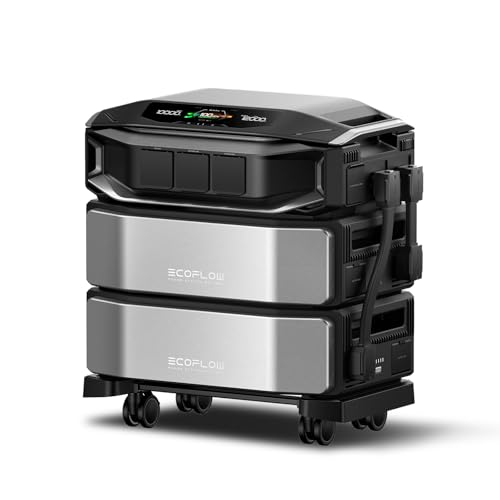
EcoFlow’s Delta Pro Ultra X is a high-capacity solar generator system designed for whole-home backup and expansion. With configurable output ranges from 12 kW to 36 kW and expandable storage from 12 kWh up to 180 kWh, it serves as a scalable energy backbone for modern residences or remote properties. Its solar-first approach prioritizes self-sufficiency, and the Current Sense Transformer helps ensure surplus solar energy powers the home efficiently. The Delta Pro Ultra X is particularly suitable for users seeking a turnkey, expandable energy solution with fast response during outages.
Highlights include fast response during grid outages (under 20 milliseconds), smart load balancing, and storm-ready configurations. The system integrates seamlessly with solar panels and can be paired with battery banks for extended autonomy, making it a premium option for reliability-focused households and off-grid setups.
Buying Guide: Key Purchase Considerations
When evaluating 12,000-watt solar solutions, consider these purchase factors to ensure the system meets your needs:
- System Type and Goal: Decide between grid-tied, hybrid, or battery-backed configurations based on your power reliability goals, local grid rules, and backup needs.
- MPPT Capacity and Efficiency: Dual MPPT controllers enable better shading tolerance and higher harvest, especially in mixed array layouts. Look for efficiency near 99% in real-world conditions.
- Expansion Potential: For growing energy needs, verify that the inverter supports parallel stacking and compatible batteries or power stations.
- Voltage and Phase Options: Ensure the unit matches your home’s electrical design (single-phase vs. split-phase, 120/240V) and future three-phase expansion possibilities if needed.
- Protection and Safety: Seek models with overcurrent, short-circuit, reverse polarity protection, and environmental ratings for your installation location (IP ratings, temperature ranges).
- Monitoring and Remote Access: WIFI/GPRS or LAN monitoring helps optimize performance and troubleshoot issues quickly.
- Cost of Ownership: Consider long-term savings from efficient harvesting, reduced grid dependence, and potential battery or generator options for backup.
Additional Perspectives: System Design Considerations
For a balanced 12,000-watt system, balance between solar input, storage, and load profiles is essential. Battery-free or grid-tied configurations reduce upfront costs but rely on grid access or supplemental energy sources. Battery-backed or hybrid designs increase resilience during outages and may qualify for incentive programs in some regions. When planning, map out critical loads (refrigeration, heating/cooling, medical equipment) and design the inverter configuration to prioritize these loads during low-generation periods. Also factor in climate, shading, and panel orientation to maximize annual energy production.
Additional Perspectives: Practical Implementation Tips
Start with a detailed site assessment to identify shading patterns and roof or ground mounting constraints. Choose an inverter with sufficient headroom and a clear upgrade path, such as multi-unit parallel support. Plan for future PV capacity as solar modules improve or as electricity demand changes. For hybrid systems, select a compatible energy storage strategy that aligns with usage patterns and utility policies. Finally, ensure professional installation to meet electrical codes and safety standards, and schedule regular maintenance to sustain performance over the system’s lifetime.