Best 1200 Watt Solar Panel Kits for Off-Grid Power and Camping
Choosing a 1200-watt solar panel setup can power RVs, boats, cabins, and remote campsites with reliable, renewable energy. This guide reviews five capable kits and their key features, helping you compare flexibility, efficiency, and installation options for off-grid living. Each entry highlights practical use cases, installation notes, and performance considerations to support an objective purchase decision.
| Product | Brand | Type | Key Feature |
|---|---|---|---|
| GCUSSZ 1200W Kit (40A Controller) | GCUSSZ | Flexible Kit 2×600W | Flexible on curved surfaces, monocrystalline, off-grid compatibility |
| Rvpozwer 18BB 1200W (6×200W) | Rvpozwer | 6×200W N-Type Panels | 25% efficiency, N-Type cells, easy mounting |
| GCUSSZ 1200W Kit (40A Controller) | GCUSSZ | Flexible Kit 2×600W | ETFE protection, flexible surface use, off-grid reliability |
| GCUSSZ 1200W Flexible Kit (30° Bend) | GCUSSZ | Flexible Panel Kit | 30° bend tolerance, high efficiency cells |
| GCUSSZ 1200W Flexible Kit (40A Controller) | GCUSSZ | Flexible Panel Kit | Heavy-duty, 30° bend, robust weather sealing |
GCUSSZ 1200W Kit With 40A Controller

The GCUSSZ 1200W kit features two 600W flexible panels designed for curved or irregular surfaces. It uses high-quality monocrystalline silicon cells to maintain performance in low-light conditions and includes a 40A solar charge controller and compatible inverter. Ideal for camping, RVs, boats, and off-grid locations where space or shape limits rigid panels. The flexible design allows mounting on hulls, roofs with contours, or exterior surfaces where traditional rigid panels won’t fit.
Rvpozwer 1200W 18BB Nano-Module System

The Rvpozwer 18BB 1200W solar array uses advanced 18BB technology for improved efficiency and longer life. With 6×200W N-Type panels, it aims to deliver around 1000 watt-hours per day under typical sun conditions. The system emphasizes easy installation with pre-drilled holes for brackets and broad compatibility with common mounting brackets, suitable for 12V/24V battery setups in homes, trailers, boats, and camp applications. N-Type cells provide better performance in shade and temperature variations compared to some legacy cell designs.
GCUSSZ 1200W Kit With 40A Controller (Second Listing)

This listing mirrors the 1200W flexible kit with two 600W panels and a 40A controller, targeting off-grid users who need reliable power on irregular surfaces. The same high-efficiency monocrystalline cells are cited for strong performance in low light, with flexibility suited to RV surfaces, boats, or any uneven area. It presents a practical solution for temporary or semi-permanent off-grid installations where weight and surface shape are critical.
GCUSSZ 1200W Flexible Panel Kit (30° Bend)
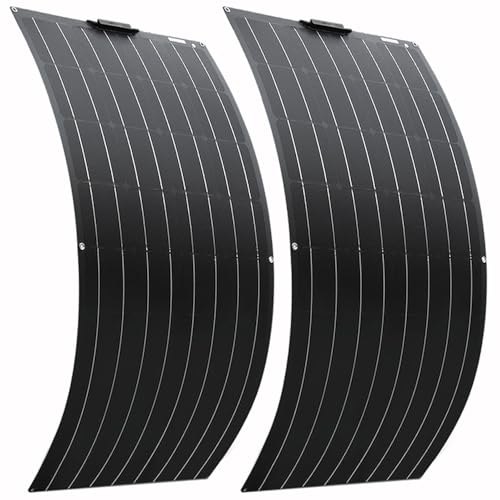
This kit highlights a 30-degree bending capability, enabling installation on curved surfaces such as RV roofs or boat decks. It uses high-efficiency monocrystalline cells and an ETFE protective layer to boost light capture and durability. The system is designed to deliver sustained output when sun exposure is available, supporting 12V configurations for RVs, boats, campers, and similar off-grid uses, while remaining adaptable to flexible mounting requirements.
GCUSSZ 1200W Flexible Kit With 40A Controller (Latest Listing)

This listing reinforces the 1200W flexible solar panel setup with two 600W modules and a 40A controller. It emphasizes high-efficiency monocrystalline cells and ETFE protection for long-term durability in challenging environments. Like other flexible kits, it is well-suited for curved surfaces on RVs, campers, boats, and other off-grid platforms where rigid panels are impractical.
Buying Guide: Key Purchase Considerations
- Panel technology and efficiency: Look for monocrystalline cells for higher efficiency, especially in partial shade. N-Type cells can offer better performance in extreme conditions.
- Flexibility vs. rigidity: Flexible panels are ideal for curved surfaces but may have different durability and mounting needs compared with rigid glass panels. Choose based on installation surface and mounting hardware compatibility.
- System components: Confirm included charge controller wattage (e.g., 40A) and compatibility with your battery bank (12V, 24V, or higher). An MPPT controller typically provides better efficiency, especially in variable sun.
- Durability and weather resistance: ETFE protection, IP ratings, and robust frames support longer life in outdoor environments. Wind and snow load ratings matter for exposed locations.
- Ease of installation: Pre-drilled mounting holes, brackets, and universal mounting options reduce setup time. Ensure compatibility with your existing brackets and hardware.
- Electrical expansion: If you plan to scale, verify that the system supports adding panels and that your charge controller can handle increased amperage.
- Weight and space: Heavier rigid panels require sturdy mounting; lightweight flexible panels reduce weight but may necessitate careful adhesive or bracket installation.
- Warranty and support: Check product warranty terms and the vendor’s after-sales service, especially for off-grid reliability where repairs can be challenging.