Best 120 Volt Solar Panels for Reliable Off-Grid Power
Looking for 120 volt solar panels that pair well with portable power stations or grid-tied setups? This guide highlights five solid options that deliver practical off-grid power for camping, RVing, or emergency backup. Each pick is suitable for users who want to run small to mid-sized electronics and appliances with a standard 120V AC output when paired with a compatible inverter or power station. The list emphasizes portability, weather resistance, and versatile connectivity to help you choose the best match for your needs.
Summary table of selected products
| Product | Best For | Key Benefit | Limitations |
|---|---|---|---|
| Baldr 120W Portable Solar Panel | RV/ tent campers needing USB and PD charging | Adjustable brackets, USB-C PD60W | Requires compatible power station for 120V output |
| ECO-WORTHY 200W Panel Kit | Off-grid cabins and larger power needs | High efficiency up to 21.5% and PWM kit | Bulkier than smaller panels |
| Renogy 200W Portable Panel | Compact, high-efficiency power boosts | 25% efficiency, lightweight folding design | Requires compatible inverter/charge controller |
| TWELSEAVAN 200W Panel | Versatile charge options for power stations | 8-in-1 MC4 compatibility, fast ports | Depends on suitable connection to power system |
| SOLPERK 20W Panel Kit | Battery maintenance and trickle charging | Smart charge controller, waterproof | Low output; not ideal for running 120V loads |
BALDR 120W Portable Solar Panel

Features: 120W monocrystalline solar panel with adjustable brackets and a USB-C PD60W output plus USB-A 24W. It is designed for compatibility with most solar generators and can connect via multiple adapter cables. It includes a removable solar charge controller for easier integration with portable power stations. Best for: RV or tent campers who need a compact solar panel with strong USB charging options. Avoid this if you need high wattage for running appliances directly through an inverter; this panel shines as a charging companion for mobile devices and power banks.
Caution: The panel works best with a compatible solar generator or inverter system; direct 120V AC output requires the right setup and safety precautions.
ECO-WORTHY 200 Watts Solar Panel Kit

Features: 200W, 12V/24V compatibility, monocrystalline cells, and a PWM charge controller included. The panel is rated for rugged outdoor use with a corrosion-resistant frame and weather tolerance (IP65). Best for: off-grid cabins or larger power needs where a single panel can drive a power station or battery bank. Better for: users who want a complete kit with a built-in controller for straightforward setup. Caution: Performance depends on sun exposure and mounting angle; ensure secure mounting in wind-prone areas.
Why selected: This kit provides high efficiency and a complete charging solution, making it a practical upgrade for users building a portable or stationary solar setup that can deliver sustained 120V-ready power through an inverter or compatible station.
Renogy 200W Portable Solar Panel

Features: Industry-leading 25% efficiency with 16BB N-Type cells, foldable design, and magnetic closure. It charges multiple devices via USB-C PD up to 45W and two USB-A ports, with MC4 output for power stations. Best for: users needing high efficiency in a compact form, ideal for RVs or vans with limited space. Better for: those who want fast USB-C charging alongside a robust MC4 connection. Caution: The panel’s performance improves with direct sun; shade or angle changes can reduce output.
Why selected: The high-efficiency cells and portable foldable design make it a strong option for maximizing energy pickup in limited spaces while still offering versatile charging options for 120V setups through compatible gear.
TWELSEAVAN 200W Portable Solar Panel

Features: 200W panel with 24% efficiency, ETFE laminated surface, 9.8ft MC4 connector cable, and 5-in-1 MC4 converter with multiple DC adapters. Includes ports for Type-C PD60W, USB-C, and USB-A outputs to charge devices while providing optional MC4 connections for power stations. Best for: users who want broad compatibility with many power stations and flexible solar charging options. Better for: those who value long cable reach and fast charging while off-grid. Caution: The QC and PD speeds depend on the connected device, and inverter compatibility remains essential for 120V loads.
Why selected: This panel’s broad compatibility and robust build suit travelers who pair solar with various generators or inverters, helping maintain 120V-capable power when conditions allow.
SOLPERK Solar Panel Kit 20W
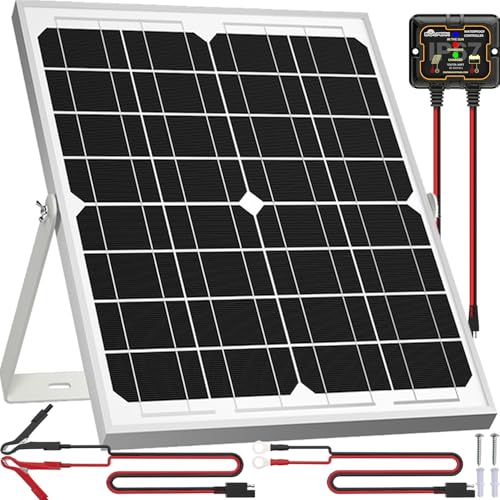
Features: 20W monocrystalline panel with a smart MPPT controller, adjustable mount, and all-weather construction. It’s designed to maintain 12V batteries for trailers, boats, and other off-grid devices. Best for: battery maintenance and trickle charging scenarios where only small loads are present. Better for: users who need a low-cost, simple maintenance panel rather than high-power output. Caution: Not suitable as a primary charging source for 120V loads; it’s best viewed as a charging aid for smaller systems.
Buying Guide: How to Choose 120 Volt Solar Panels
What matters most when pairing solar panels with 120V capable systems?
- Power output vs. load needs: Match panel wattage to your anticipated 120V load plus inverter efficiency. For heavy loads, choose higher-wattage panels and a compatible MPPT controller.
- Portability and space: If you travel, prioritize lighter, foldable panels with robust connectors and simple setup.
- Compatibility: Look for MC4 connectors, USB-C PD, and adapters that fit your power stations and inverters. A panel alone won’t output 120V without the right inverter or charge controller.
- Durability: Weather resistance (IP ratings), aluminum frames, and ETFE laminates extend panel life in outdoor use.
- Charging strategy: Combine direct panel charging with a banked battery or power station to smooth output and ensure 120V readiness when needed.
Frequently Asked Questions
- Can a 120V inverter work directly with a solar panel?
No. You typically need a battery or power station with an inverter to convert stored or solar-generated DC to 120V AC. Panels provide DC power, which inverter-equipped devices convert to 120V AC output. - What is the advantage of higher panel efficiency?
Higher efficiency means more power from the same sunlight, which is beneficial in limited spaces or shaded conditions, helping you reach 120V readiness faster. - Is ETFE better than traditional panel material?
ETFE laminates increase light transmission and durability, potentially boosting performance and longevity in outdoor use. - Should I buy a panel kit with a built-in controller?
A kit with a PWM or MPPT controller simplifies setup and helps optimize charging, especially for beginners or mixed-device systems. - How do I know if a panel will integrate with my power station?
Check MC4 compatibility, connector types, and the power station’s input requirements. Ensure the bank or inverter can handle the panel’s output and the system’s voltage.