Best 120 Volt Motion Sensor Switches for Home and Office
Discover reliable 120-volt motion sensor switches designed to automate lighting, improve energy efficiency, and simplify everyday tasks. This guide highlights five top options, including popular single-pole and ceiling-mount models, with essential features like manual override, adjustable time delays, and occupancy/vacancy modes. Use this overview to compare installation requirements, compatibility, and sensor performance for bathrooms, garages, hallways, and more.
| Product | |||
|---|---|---|---|
| Lutron Maestro MS-OPS2-WH | Lutron | Single-Pole | Automatic turn-on/off, occupancy/vacancy mode, energy saving |
| RAYZEEK Ceiling Sensor | RAYZEEK | Ceiling Mount | 360° detection, adjustable delay, dual mode |
| Sensky BS033C | Sensky | Wall Switch | Neutral wire required, 180° detection, adjustable delay |
| ECOELER No Neutral | ECOELER | Single Pole | No neutral required, OCC/VAC selectable |
| Westek Plug-in | Westek | Plug-in | Motion sensing, multiple auto-off timings, simple setup |
Lutron Maestro Motion Sensor Switch Review

The Lutron Maestro MS-OPS2-WH is a single-pole motion sensor switch designed for indoor spaces like bathrooms, garages, laundry rooms, and closets. Its primary function is to automatically turn lights on when motion is detected and off after a preset period, helping reduce energy usage. It supports occupancy and vacancy modes, making it adaptable for entryways and task areas. The device is easy to install in standard wall boxes and emphasizes reliable off-times to prevent lights from remaining on accidentally after exit. It’s suitable for any bulb type and aligns with traditional wiring in most homes.
Key considerations
- Single-pole compatibility for standard wall switches
- Occupancy and vacancy modes for flexible control
- Neutral wire requirements vary by installation
- Auto-on and auto-off behavior helps with energy savings
RAYZEEK 360° Ceiling Motion Sensor

The RAYZEEK ceiling sensor delivers 360-degree occupancy detection with a 10A, 120V capacity suitable for commercial or industrial use. It features an easy one-touch setup and adjustable parameters for time delay and light sensitivity. The dual-mode option supports either light-sensing plus occupancy or occupancy-only operation, enabling energy-efficient use across hallways, storage rooms, and larger spaces. A neutral wire is required for installation, so verify existing wiring before purchase.
Key considerations
- Neutral wire required for installation
- Adjustable time delay and light sensitivity
- Two operation modes (light+sensing or occupancy only)
- 360-degree detection coverage for broad spaces
Sensky BS033C 110V Motion Sensor Switch

This wall sensor switch from Sensky uses a 180-degree view to detect room occupancy and automatically control lights. It requires a neutral wire and offers a straightforward installation process designed for single-pole circuits. Adjust the time delay to fit the space, from short to longer intervals, ensuring that lights stay on just long enough after activity ends. The device detects motion and ambient brightness to optimize when lights turn on or off.
Key considerations
- Neutral wire required
- 180-degree detection angle for typical rooms
- adjustable delay time
- Suitable for standard single-pole configurations
ECOELER No-Neutral Motion Switch

The ECOELER No-Neutral motion switch offers occupancy and vacancy modes without requiring a neutral wire, making it suitable for older wiring setups. It supports motion-triggered lighting with an adjustable sensitivity and can be configured for quick upgrades in homes and offices. Note that it requires a proper grounding wire to function reliably and works best in standard 120V circuits. This option is ideal for renovations where neutral wires are unavailable.
Key considerations
- No neutral wire required
- OCC/VAC selectable modes
- Grounding requirement for reliable operation
- Suitable for quick upgrades in various rooms
Westek Plug-in Motion Activated Control
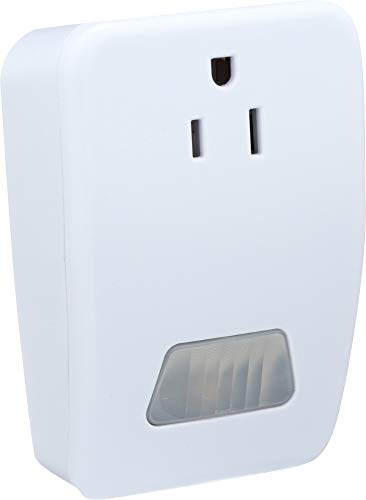
The Westek plug-in motion sensor control provides a convenient, fixted-to-wall experience with a 100-degree detection range and up to 25 feet, depending on installation. It offers selectable auto-off intervals of 1, 2, 5, 10, or 20 minutes and a modern white finish that blends with most decor. This compact unit is ideal for lamps, small appliances, and plug-in lighting in living rooms, bedrooms, or home offices where wired switches are impractical.
Key considerations
- Plug-in design for easy retrofitting
- Selectable auto-off durations
- Wide, but focused detection range
- Works well with lamps and plug-in fixtures
Buying Guide: Key Purchase Considerations
- Wiring type and neutral requirement: Determine if your space uses neutral wiring, or if a no-neutral model is needed. Some higher-accuracy sensors require a neutral wire for reliable operation.
- Installation location: Wall switches vs. ceiling-mounted sensors vary in installation complexity. Ceiling sensors may need a professional for wiring and mounting in some spaces.
- Detect range and angle: For hallways and large rooms, look for wide-angle or 360° sensors to maximize coverage and minimize missed triggers.
- Mode selection: Occupancy mode turns on lights when motion is detected and off after leaving; vacancy mode requires manual activation. Choose based on energy goals and occupancy patterns.
- Time delay and sensitivity: Adjustable delay times prevent rapid cycling, while sensitivity settings help tailor performance to room size and ambient brightness.
- Ambient light sensing: Some models auto-activate lights only when it’s dark, improving energy efficiency in daylit spaces.
- Compatibility with bulbs and fixtures: Ensure the device supports your bulb type (LED, incandescent) and your existing switch configuration (single-pole, multiway if applicable).
- Safety and certifications: Look for UL or FCC listings for electrical safety and compliance in residential use.
- Physical form factor and aesthetics: Consider whether a plug-in module, wall switch, or ceiling sensor best fits your room’s design and accessibility needs.
- Maintenance and reliability: Choose brands with a history of consistent performance and responsive support in the U.S. market.
Across spaces like bathrooms, closets, garages, and hallways, the right 120-volt motion sensor switch can reduce energy use and simplify daily routines. When selecting a model, balance wiring needs, mounting location, and sensor characteristics to match your environment and usage patterns.