Best 12 Volt Voltage Reducer: Top 5 DC-DC Converters for Golf Carts and RVs
Finding a reliable 12V voltage reducer is essential for powering headlights, radios, solar panels, and other 12V accessories from higher-voltage golf cart or RV batteries. The products below are designed for harsh environments while delivering stable 12V outputs. This guide details the best options, their protections, and how to choose the right one for your setup.
| Product | Brand | Key Feature |
|---|---|---|
| dkplnt 20A 240W | dkplnt | 36/48V to 12V, 97% efficiency, built-in protections |
| Pro Chaser 20A 240W | Pro Chaser | Designed for golf carts and RVs, includes harness and connectors |
| DROK 12V to 6V | DROK | Low-voltage step-down with up to 90% efficiency |
| KInuoxj 20A 240W | KInuoxj | Waterproof aluminum shell, rugged for harsh environments |
| HOMELYLIFE 600W | HOMELYLIFE | High-power 48/60/72V to 12V, up to 95% efficiency |
These options balance efficiency, protection, and ease of installation. Each product is suitable for converting standard golf cart or RV battery packs to a stable 12V supply for lights, radios, and other 12V devices. Read on for detailed product sections with key specs and practical considerations for selecting the best fit.
dkplnt 20A 240W 12V Converter
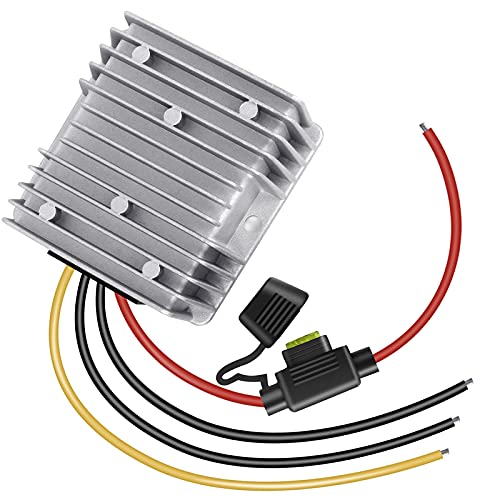
The dkplnt 12V converter is designed for high-demand applications from 36V or 48V battery packs. It provides a fixed 12V output at up to 20A (240W), making it suitable for powering headlights, radios, or small electronics in golf carts and RVs. The device boasts a high conversion efficiency—up to 97%—minimizing heat generation and battery drain during operation. Protection features include built-in safeguards against overload, over-current, over-temperature, and short circuits, helping protect both the converter and connected devices in demanding environments.
Key considerations: Ensure your input voltage stays within the 30–60V DC range, and verify that the 12V 20A output meets your total load. Installation requires secure wiring and correct polarity. The included protections help prevent damage when lights or accessories draw current spikes. Typical use cases include headlights, taillights, radios, and small avionics in off-road or recreational vehicles.
Installation tips: Use appropriately rated fuses near the input and consider adding weatherproof enclosures if mounting outdoors. For best results, route cables away from heat sources and sharp edges, and keep connectors clean and dry to maintain reliable performance in varying weather conditions.
Pro Chaser 20A 240W Voltage Reducer

Designed specifically for golf carts and RVs, the Pro Chaser 20A 240W reducer converts 36V (six 6V packs) or 48V (six 8V packs) down to 12V. This makes it a practical choice for powering headlights, taillights, radios, and even solar panel connections. The package often includes a matching harness and fitted butt connectors, enabling straightforward installation and easy disconnects when maintenance or relocation is required.
Key considerations: Verify compatibility with your battery configuration (36V or 48V) and ensure your total 12V load remains within 20A. The included harness helps streamline wiring, but users should still plan for proper strain relief and weatherproof routing if exposed to the elements. This solution emphasizes ease of use and dependable 12V output for everyday accessories on the road or at the campsite.
DROK 12V to 6V Waterproof Buck Converter

The DROK 12V to 6V reducer is a waterproof DC-DC buck converter designed to drop higher input voltages down to 6V with a fixed output. It is a synchronous, non-isolated buck module that requires the input voltage to be at least 3V higher than the 6V output. Efficiency can reach up to 90%, making it suitable for compact 6V-powered devices, though it is best for modest loads rather than high-current requirements. With waterproofing in its build, it suits outdoor installations where moisture exposure is a concern.
Practical notes: This converter supports a range of input voltages well above 6V, but ensure the output current stays within the 3A maximum to avoid overheating. It is a good choice for small fans, LED strips, or sensors that require a stable 6V supply in a golf cart or RV environment, especially in damp or outdoor conditions.
KInuoxj 20A 240W Waterproof 12V Converter

The KInuoxj 20A 240W converter is built to handle 12V output from 20V–60V input, compatible with 24V, 36V, and 48V systems. It delivers a solid 12V output with up to 20A current, producing up to 240W. A standout feature is the 100% waterproof aluminum shell with silicone sealing, providing rugged reliability in harsh environments—ideal for open-air golf cart use, marine rigs, or outdoor RV setups where moisture and dust are concerns.
What to check: Confirm input voltage compatibility and ensure your 12V load does not exceed 20A. The rugged enclosure helps guard against vibration and shock while maintaining steady voltage, which is important for sensitive electronics like radios and navigation devices. Proper sealing and mounting will extend the unit’s lifespan in challenging outdoor conditions.
Pro Chaser 25A 300W Voltage Reducer

This higher-current Pro Chaser model provides 25A at 12V from either 36V or 48V input configurations. It powers a broader set of 12V devices, including headlights, taillights, radios, and solar system components. Like the 20A version, it typically includes a harness and connectors for convenient installation and quick service in field settings. The product focuses on reliable performance for golf carts and RVs with larger electrical demands.
Key points: Ensure your total 12V load remains under 25A. Consider the environmental conditions where the unit will operate; this model is designed to handle outdoor use, but you should still implement proper protection and enclosure. A higher current rating can reduce the risk of voltage drop when accessories turn on simultaneously, improving overall performance of your 12V system.
HOMELYLIFE 600W 50A Buck Converter

The HOMELYLIFE converter stands out for high power, converting from 48/60/72V down to 12V at up to 50A (600W). It leverages synchronous rectification to boost efficiency (maximum around 95%), with low ripple and a quick starting delay. Protection features include over-current, overload, short-circuit, and over-heat safeguards, contributing to robust performance in demanding environments such as larger golf carts or utility vehicles that require a strong 12V supply for multiple devices.
Considerations: This unit suits high-demand 12V applications like heavier lighting, multiple accessories, or power-hungry radios. Proper heat dissipation and secure mounting are essential due to the higher power level. Ensure input voltage remains within the 40–80V range to prevent regulator damage and ensure safety in rugged deployments.
Buying Guide: How to Choose The Right 12V Voltage Reducer
- Input voltage compatibility: Confirm your system (36V, 48V, or higher) and ensure the reducer supports that range with a comfortable margin.
- Output current needs: List all 12V devices and sum their current requirements. Choose a converter with an ample current rating (20A, 25A, or higher) to prevent voltage drop and overheating.
- Efficiency and heat: Higher efficiency reduces battery drain and heat generation. Synchronous buck designs tend to be more efficient but may be heavier or costlier.
- Protection features: Look for built-in protections (overload, over-current, short-circuit, over-temperature, undervoltage) to safeguard both the converter and connected devices.
- Environmental resilience: Waterproof or weatherproof enclosures and rugged housings are important for outdoor installations on carts or RVs.
- Installation considerations: Check for included harnesses, connectors, or mounting accessories. Ensure you have appropriate wiring gauges and fusing at the input side.
- Size and mounting: Consider the space available and mounting orientation. Some units are compact but require careful heat management.
- Future-proofing: If you anticipate higher 12V loads later, selecting a unit with extra headroom can save upgrades and downtime.
Choosing the right 12V reducer involves balancing voltage input range, desired 12V output, current capacity, and environmental conditions. For hobbyists and professionals alike, the best options provide reliable output with protective features and robust construction. When in doubt, choose a model rated for a higher current than your current needs to accommodate future accessories or expansions.