Best 12 Volt Solar Kit for Off-Grid Power
Answer: A 12 volt solar kit is ideal for powering small to moderate off-grid loads, RVs, boats, cabins, and maintenance-free charging. The top picks below emphasize reliability, expandability, and ease of installation. These kits are best for campers, boaters, and homeowners seeking steady 12V power with straightforward setup. The list includes kits with different wattages to fit various sun conditions and budgets.
| Product | Typical Use | Key Advantage |
|---|---|---|
| Renogy 100W 12V Solar Panel Starter Kit | RVs, Campers, Off-Grid Small Systems | Solid beginner kit with PWM controller and mounting hardware |
| ECO-WORTHY 200W 12V Kit | Medium off-grid setups, cabins, vehicles | Higher wattage for more daily output with durable frame |
| SOLPERK 20W 12V Kit | Trickle charging, battery maintenance | Compact, waterproof, with an efficient smart controller |
| Renogy 200W 12V Starter Kit | RV, Boat, Trailers, Off-Grid | Two 100W panels with PWM controller for scalable power |
| ECO-WORTHY 400W 12V Premium Kit | High-demand off-grid or larger installations | High total output with MPPT-style performance in a kit |
Renogy 100W 12V Solar Panel Starter Kit

Features: Efficient Performance with a 22.5% cell efficiency; UL 61730 and CSA certifications; IP65 J-box and IP67 connectors; 500Wh daily estimate under good sun; 10-year panel material/workmanship plan and 2-year controller coverage, plus a 25-year power output service plan.
Best for: Buyers new to solar who want a compact, reliable kit to run small loads on an RV, camper, or tiny off-grid setup. This kit is chosen for its balance of efficiency, safety certifications, and a strong service plan that supports long-term use.
Caution: Limited to smaller solar needs; expansion beyond a single panel may require additional components not included in the kit.
ECO-WORTHY 200W 12V Kit

Features: 200W of solar power with high-efficiency monocrystalline cells; standard 30A PWM controller; corrosion-resistant aluminum frame; IP65 junction box; broad daily output estimates under favorable sun conditions; weather-ready construction for decades of use.
Best for: Mid-sized off-grid systems in RVs, campers, or backcountry sheds where more daily energy is needed than a single panel can provide. Selected for sturdy framing and strong weather resistance.
Caution: PWM controller is less efficient than MPPT in high-difference conditions; consider MPPT if your system grows or shading is a factor.
SOLPERK Solar Panel Kit 20W 12V
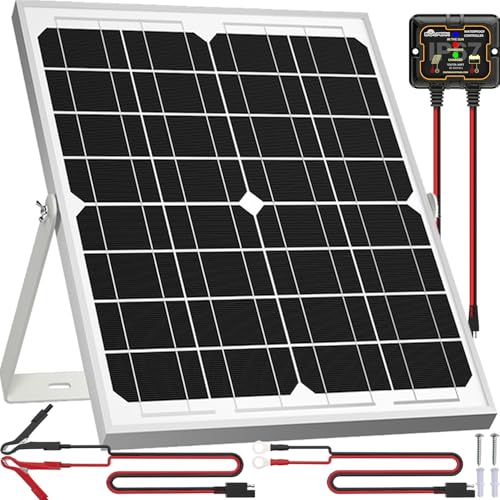
Features: 21%-30% cell efficiency with monocrystalline A+ cells; waterproof, rustproof, and weatherproof panel with a robust aluminum frame; intelligent three-stage charging in the controller; indicator lights show charging status; designed to maintain or top off 12V batteries.
Best for: Battery maintenance and trickle charging for boats, cars, RVs, and trailering that require a compact, reliable charger with simple setup.
Caution: Only 20W; not suitable for powering higher-demand devices or larger loads without adding more panels.
Renogy 200W Starter Kit (Two 100W Panels)

Features: 22% cell efficiency, PWM controller with compatibility for Sealed, Gel, Flooded, and Lithium batteries; fast output with high-efficiency diodes; robust wiring and mounting options for RVs and boats.
Best for: Users who want to scale up from 100W to 200W with a straightforward upgrade path, particularly for RVs, trailers, and small off-grid systems.
Caution: PWM controller is less efficient than MPPT under variable conditions; plan for potential future MPPT upgrades if your system grows or shading is present.
ECO-WORTHY 400W Premium Kit

Features: Four 100W monocrystalline panels; IP-65 junction box; 35mm aluminum frame; by-pass diodes; MPPT-style performance claims with a peak conversion efficiency around 98% in the data; includes mounting brackets and wiring for quick install; protect against overcharge and overdischarge.
Best for: Larger off-grid installations, cabins, or RV setups needing substantial daily energy and future expansion potential, especially when space allows multiple panels.
Caution: Higher upfront footprint and cost; ensure mounting space and wiring are appropriate for your installation.
Buying Guide: Key Purchase Considerations
How much power do you need? Start by estimating daily energy usage and desired electrical loads. A 100–200W kit fits small to moderate off-grid needs, while 400W or more is better for higher daily consumption.
What type of charge controller? PWM controllers are simple and affordable; MPPT controllers extract more power, especially in partial shade or high temperatures. Consider future expansion when choosing controller type.
System expandability: Look for kits that support adding panels or upgrading controllers in the future. Pre-drilled holes, compatible wiring, and mounting hardware simplify upgrades.
Durability and weather resistance: If you’ll use panels outdoors, choose frames built from corrosion-resistant aluminum, tempered glass, and IP-rated junction boxes. Verify wind and snow load ratings compatible with your climate.
Certifications and warranties: Long-term service plans and warranties help protect your investment. Check UL/CSA certifications and the terms of the panel and controller warranties.
Installation context: Consider space constraints on roofs or sheds, weight limits, and cable run lengths. Use properly rated cables and fuses to protect your system from faults.
FAQ
- What is the difference between PWM and MPPT in a 12V solar kit?
PWM controllers are simpler and cheaper but less efficient in high-voltage or shaded conditions. MPPT controllers convert panel voltage to battery voltage more efficiently, maximizing energy harvest in varied sunlight. - Can I mix panels from different kits on the same system?
Combination is possible but not ideal. Mismatched voltages or currents can reduce overall performance and complicate protection and wiring. Use matched sets when possible. - Is 12V the right system voltage for off-grid use?
12V systems are common for small to mid-sized applications. Larger off-grid needs may benefit from higher-voltage configurations (24V/48V) for efficiency and reduced wire losses. - How many panels do I need for RV or boat use?
It depends on daily energy demand and sun exposure. Start with a baseline (e.g., 100–200W for light use) and scale up if you need more autonomy. - Do I need a battery to use a solar kit?
Yes. A 12V battery bank stores energy for continuous power when the sun isn’t shining and helps stabilize load demands. - What maintenance is required?
Keep panels clean, inspect wiring and connectors for corrosion, and monitor charge controller indicators. Replace aging components as needed.