Best 12 Volt Emergency Light Battery Options for Your Power Backup
If you need reliable 12-volt power for emergency lighting, these batteries are designed to keep essential areas illuminated during outages. This guide highlights five solid options across sealed lead acid and lithium chemistries, with notes on suitability, pros, and limitations. Ideal buyers include home and small business users, facility managers, and anyone replacing an existing 12V battery in emergency lighting systems.
Summary of selected products:
| Product | Type / Chemistry | Capacity | Best For |
|---|---|---|---|
| ExpertPower 12V 7Ah SLA | Sealed Lead Acid (SLA) | 7Ah | Home alarms, small UPS, ride-on toys, exit signs |
| Mighty Max ML7-12 | Sealed Lead Acid (SLA) | 7.2Ah | Security devices, garage systems, small standby power |
| SEFEPODER 12V 7Ah SLA | Sealed Lead Acid (SLA) | 7Ah | Two-pack backups for emergency lighting |
| Eiiev 12V 8Ah LiFePO4 | Lithium Iron Phosphate (LiFePO4) | 8Ah | Long-life emergency power with multiple wiring options |
| AJC Battery for 12V 75Ah Emergency Light | Sealed Lead Acid (SLA) | 75Ah | High-capacity emergency lighting systems |
ExpertPower 12V 7Ah SLA Rechargeable Battery
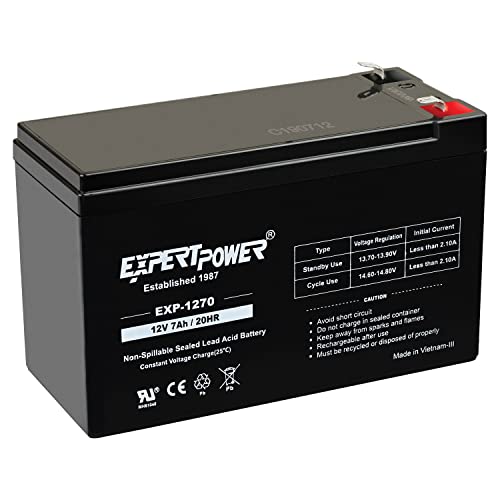
The ExpertPower 12V 7Ah is a maintenance-free sealed lead acid battery designed for alarm systems, UPS devices, and small exit signs. It is compatible with standard F1 terminals and is a common replacement for 12V 7Ah 20HR cells. Best for users needing a straightforward, plug-and-play upgrade for existing 12V 7Ah systems. A potential limitation is that SLA batteries require periodic replacement and can be less efficient in extreme temperatures.
- Best for: Home security systems, small UPS, kids’ ride-on car replacements, and exit signs.
- Why chosen: Widely compatible, easy replacement, maintenance-free.
- Caution: Ensure terminal compatibility and correct orientation during installation.
Mighty Max ML7-12, 12V 7.2Ah SLA Battery
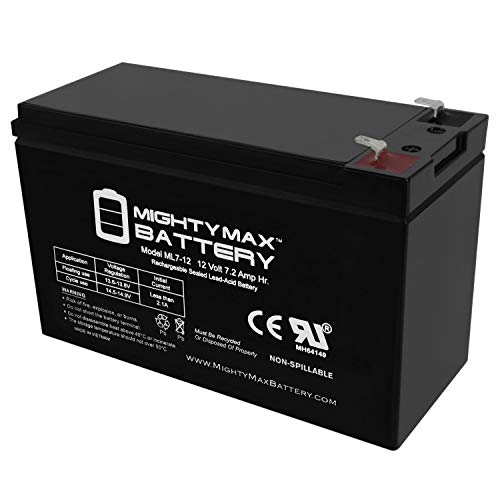
The Mighty Max ML7-12 is a 12V 7.2Ah sealed lead acid battery designed for standby power in alarm or security systems and small devices. Its F1 terminal format makes it straightforward to swap in for similar 12V packs. Best for: users needing a reliable SLA backup with compact dimensions. Limitation: packaging notes indicate battery only; no wires or mounting hardware included.
- Best for: Security panels, small backup power for lighting, and alarm devices.
- Why chosen: Standard size and terminal type simplify replacement.
- Caution: Factor in mounting and wire connection needs for your enclosure.
SEFEPODER 12V 7Ah SLA Battery (2 Pack)

SEFEPODER offers a 12V 7Ah SLA battery in a two-pack, ideal for multiple-backup setups such as two emergency lighting units or paired security devices. It features F1 terminals and a maintenance-free, anti-spill design. Best for: facilities needing extra capacity or replacements in pairs. Limitation: two-pack is beneficial only when multiple units are in use.
- Best for: Redundant emergency lighting in small to medium spaces.
- Why chosen: Value in a two-pack for broader coverage.
- Caution: Verify that your device supports dual replacements if purchasing as a set.
AJC Battery 12V 75Ah for Emergency Light
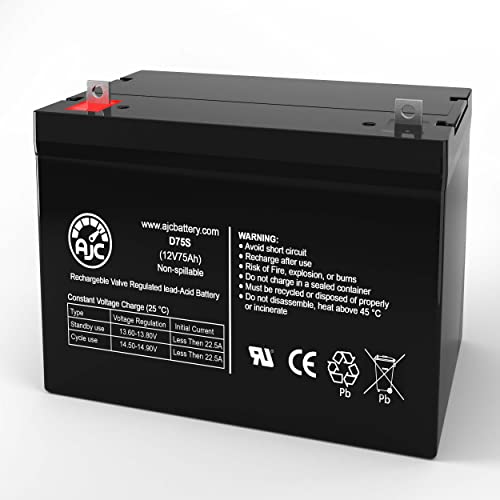
The AJC 75Ah emergency light battery is a high-capacity SLA option designed for larger lighting systems or longer-duration outages. It’s suitable for facilities requiring extended backup power, such as commercial spaces or hallways with heavy use. Best for: High-demand emergency lighting installations. Limitation: Larger size and weight may require more robust mounting and enclosure compatibility.
- Best for: Larger emergency lighting setups or long-duration outages.
- Why chosen: High capacity to support more lighting during outages.
- Caution: Check enclosure dimensions and mount clearance before installation.
Buying Guide: 12V Emergency Light Battery Essentials
What capacity do I need?
Choose a battery with adequate Ah rating to cover your lighting run-time needs. Larger spaces or longer outages require higher capacity or multiple batteries in parallel.
Which chemistry should I choose?
Lead-acid (SLA) batteries are common, affordable, and compatible with many emergency lights. Lithium iron phosphate (LiFePO4) offers longer life, deeper discharge, and lighter weight, but at a higher upfront cost.
What about size and terminals?
Confirm that the physical dimensions fit your battery compartment and that terminal type (such as F1) matches your device for a straightforward replacement.
Maintenance and safety considerations
SLA batteries are maintenance-free but require proper disposal and recycling. LiFePO4 cells offer improved safety and cycle life but require compatible charging electronics and proper handling.
Installation tips
- Disconnect power before replacing a battery in any emergency system.
- Ensure correct polarity and secure mounting to prevent vibration.
- Use appropriate charging equipment rated for the chosen chemistry.
FAQ
- Q: Are SLA batteries suitable for all emergency lights? A: They are a common standard and widely compatible with many emergency lighting systems.
- Q: Can I mix battery chemistries in a single system? A: It is generally not recommended due to differing charging and discharging characteristics.
- Q: How long do these batteries typically last in standby mode? A: Lifespan depends on chemistry; SLA often lasts several years with proper maintenance, while LiFePO4 can exceed many years with high cycle life.
- Q: Do these batteries require special tools for installation? A: Most use standard terminals (such as F1) and simple replacement, but verify terminal type and enclosure requirements.
- Q: Can I use these batteries for other 12V devices beyond lighting? A: Yes, many are suitable for alarm systems, UPS, and other 12V applications.
- Q: Is a higher Ah rating always better? A: Higher Ah provides longer runtime but also larger size and weight; choose based on runtime needs and space constraints.