Best 12 Volt RV Power Converters for Reliable Onboard Charging
Choosing a reliable 12-volt power converter is essential for keeping RV batteries charged and electronics running while you travel. The following selected models offer multi-stage charging, adjustable output, and compatibility with various battery chemistries, including lead-acid and lithium. This guide highlights practical options for American RV setups, focusing on safety, efficiency, and ease of installation.
| Product | Brand | Notable Feature |
|---|---|---|
| WAVLINK 55 Amp RV Power Converter | WAVLINK | 3/4 charging modes; 13.0–16.5V adjustable |
| PowerMax PM3-55 RV Power Converter | PowerMax | 55A, wide 13.6–14.4V range, safety certifications |
| Yaheeda New Version Converter | Yaheeda | Adjustable voltage/current; 50A peak; safety protections |
| RecPro RV Power Converter 55 Amp | RecPro | 4-stage charging; 120VAC to 12VDC |
| PowerMax 60 Amp RV Converter | PowerMax | 60A, 13–16.5V output, four-stage charging |
WAVLINK 55 Amp RV Power Converter

The WAVLINK 55 Amp RV Power Converter converts 120V AC into a stable 12V DC supply, designed for battery charging and powering essential devices on the go. It supports multiple battery chemistries, including lead-acid and lithium, and offers tailored charging modes for peak performance. With an adjustable operating range from 13.0V to 16.5V, it accommodates different charging profiles and battery configurations. A robust 55A output ensures onboard electronics, lights, and small appliances receive reliable power, making it suitable for mid-size RV setups and weekend explorers. The unit aims to balance efficiency with battery longevity through its multi-mode design.
PowerMax PM3-55 RV Power Converter
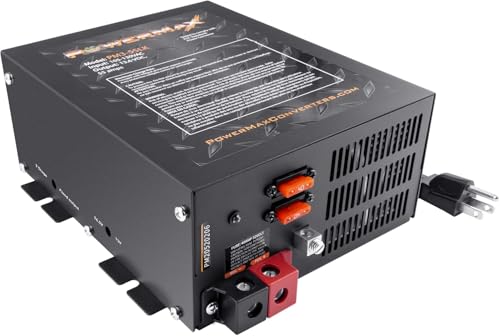
The PowerMax PM3-55 provides a quiet, cool operation with a focus on safety and reliability. It features a wide voltage range (13.6Vdc to 14.4Vdc) to match various electrical systems, making it compatible with RVs, boats, and other 12V setups. The unit carries UL and CUL certifications, reinforcing its safety standards. It includes status indicators to monitor performance, and its design aims to deliver consistent power while minimizing heat and noise. This makes it a practical choice for RV users seeking steady 55A charging capability with solid protection.
Yaheeda New Version Converter

The Yaheeda converter offers adjustable voltage and current with an input range supporting 110V or 220V, and a peak current up to 50A (600W peak). It provides programmable output options for 12V loads and includes a one-key on/off function for safe operation. Built with an aluminum shell and integrated wiring, it emphasizes reliability and thermal protection, including overload, over-voltage, and short-circuit safeguards. Its design targets efficient power delivery for devices like pumps, LEDs, and monitors in RV environments, while prioritizing safety and durability.
RecPro RV Power Converter 55 Amp

The RecPro 55 Amp converter converts 120VAC shore power into usable 12VDC, with four-stage charging to optimize battery health. It is available in multiple current capacities to suit different RV configurations and power demands. This model emphasizes efficient charging and reliable performance for RV batteries, lights, and low-voltage devices, providing a practical balance between power availability and battery care in a typical camping setup.
PowerMax 60 Amp RV Converter
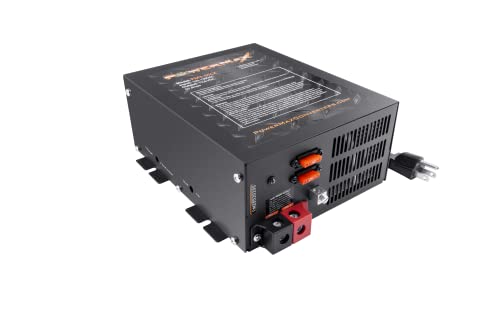
The PowerMax PM4 60A converter delivers 60 amps of continuous power with an adjustable output between 13V and 16.5V. It features a four-stage charging system to support lead-acid and lithium batteries, helping extend battery life and maintain performance. A quiet cooling fan contributes to a stable operating environment, making it suitable for RVs, campers, and marine installations where reliable, clean DC power is essential for on-the-road comfort and off-grid living.
Buying Guide: Key Purchase Considerations For RV 12V Converters
When selecting a 12V RV converter, consider these factors to ensure a fit with your setup and goals:
- Amperage and battery type compatibility: Choose a unit with sufficient output for your largest load and compatible with your battery chemistry (lead-acid, AGM, or lithium). Higher amperage helps with faster charging but may require a larger installation footprint.
- Output voltage range: An adjustable 13.0–16.5V range supports lithium and various lead-acid configurations, preventing undercharging or overcharging depending on your battery bank.
- Charging stages: Multi-stage charging (bulk, absorption, float, etc.) extends battery life and maintains health. A four-stage charger is common and reliable for RV use.
- Safety certifications and protections: UL/CUL certifications, short-circuit protection, overload protection, and thermal management are important for everyday use and safety on the road.
- Noise and heat management: Quiet operation and effective cooling reduce nuisance inside the RV and improve component longevity.
- Installation and compatibility: Ensure the unit fits your space, has appropriate mounting options, and is compatible with your power system’s voltage and shore power configuration.
- Longevity and warranty: Look for units with solid build quality and a reasonable warranty to cover years of RV use.
- Remote monitoring: Some models offer indicators or displays to monitor voltage, battery health, and charging status, which can simplify maintenance.
- Price vs. value: Compare features, protections, and output against cost to determine the best value for your RV’s electrical needs.