Best 12 Volt Boat Heaters for Safe Winter Trips and Cold Mornings
When selecting a 12-volt boat heater, you want compact, reliable heat that keeps cabins clear of frost, engines warm, and crew comfortable without draining your battery. This guide highlights five 12V options that balance power, safety, and ease of installation for boats, campers, and other small spaces. The top picks suit boat owners who need quick heat, defrosting capability, or portable warmth in tight spaces. Below, compare heat output, installation notes, and best-use scenarios to help you choose confidently.
| Product | Type | Best For |
|---|---|---|
| RoadPro 12v RPSL-681 | Ceramic heater/fan | Small boat cabins needing quick, direct heat |
| Xtreme Heaters Boat, Cabin & RV Heater | Portable space heater | Quiet, safe warmth in tight spaces with tip-over protection |
| Hydronic heater with 3-speed fan | Compact boats and vehicles requiring distributed heat | |
| JEGS Auxiliary UTV Heater | Compact 12V cab heater | Small cabs; boats with tight quarters |
| Aubingmotor Heater 4 Ports | 4-port car/truck/boat heater | Multi-duct warmth for boats with multiple rooms |
RoadPro 12v RPSL-681 12-volt Ceramic Heater/fan

Features: Direct hook-up to your vehicle battery with 15-foot 12-gauge terminals (included), 300 watts of supplemental heat, and a heat or fan option with a simple switch. Best for boaters who want immediate, localized warmth near the helm or a small cabin. The unit is purpose-built for direct battery connection and portability. A limitation is that it provides modest heat output relative to larger cabin heaters, so it’s best for compact spaces or supplementary warmth.
Car Heater 12V 200W 2-in-1 Defroster & Defogger
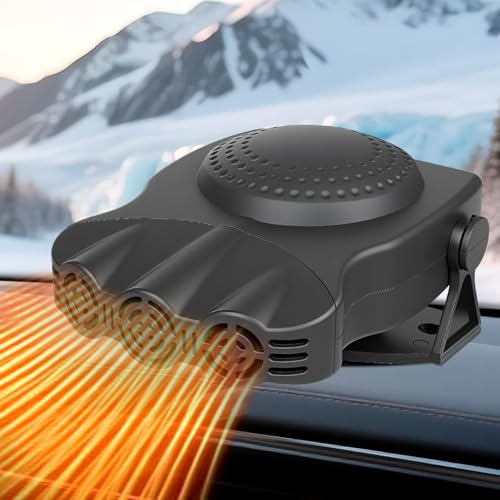
Features: High-efficiency fast heating, defroster and defogger functions, durable ABS build, and easy cigarette-lighter plug-in. Best for boats and vehicles where rapid windshield clarity is essential in frosty mornings. Choose this if you need quick defogging/defrosting and general cabin warmth in a compact, energy-conscious unit. Limitation: not designed for continuous heat in large spaces; best as a supplement rather than a sole heat source.
Xtreme Heaters Boat, Cabin & RV Heater

Features: Portable, designed for boats, cabins, or RVs; quiet operation with a top-air intake design to allow placement near walls; includes a tip-over switch for safety. Best for small spaces requiring unobtrusive heat with a low-profile footprint. Better for spaces where you want heat without loud operation. Limitation: portable design may limit continuous power in some larger cabins; not a heavy-duty fixed installation.
Aubingmotor Heater 4 Ports 8500 BTU 3 Speed Fan

Features: 8500 BTU output with 3-speed fan; compact installation with multiple outlets for distributing warm air. Best for boats needing distributed heat across multiple compartments or cabins. Choose this if you want more even warmth across a boat space. Caution: installation requires compatible hoses (not included) and may need space for ducting; ensure your boat’s electrical system can support 12V draw and mounting clearance.
JEGS Auxiliary UTV Heater 12 Volt Assembly

Features: 28,000 BTU of heat and 260 CFM airflow; compact design suitable for tight spaces; 12V heater designed for UTVs, trucks, and boats. Best for owners needing robust warmth in small cabs or confined areas. This unit is picked for higher heat capacity in a compact footprint, though it may be overkill for very small spaces. Limitation: installation complexity may be higher due to ducting and mounting requirements.
XuSha Hydronic Heater 12V 4 Front Vents
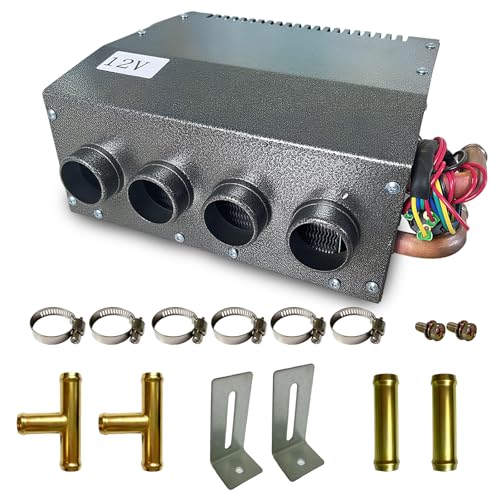
Features: 8500 BTU output with 4 front vents; compact design; suitable for mounting in car, truck, boat, or RV with three-speed fan. Best for distributed warmth in compact boats where several vent locations are beneficial. Not included: water hoses must be sourced separately, which is an installation consideration. This hydronic approach can spread heat more evenly than single-point heaters.
Buying Guide: Key Considerations For Your 12V Boat Heater
- Heat output vs. space: For small cabins, 300–8500 BTU options can suffice. Larger boats may need multiple outlets or higher BTU units.
- Power source and battery load: Check how many amps the heater draws and ensure your boat’s battery and wiring can handle sustained use without compromising essential systems.
- Installation type: Portable versus fixed; ducted heat distribution versus localized warmth. Hydronic and multi-port units provide more even warmth in larger spaces.
- Safety features: Look for tip-over switches, automatic shutoff, and corrosion-resistant materials suitable for marine environments.
- Ventilation and exhaust: Ensure proper venting, especially for combustion-based or diesel-like heaters. Some units are electric and don’t require exhaust.
- Maintenance and seals: Inspect seals and hoses for exposure to saltwater and moisture. Durable construction helps delay corrosion and wear.
- Defrost and defog utility: In boats, keeping windshield and cabin windows clear improves safety and visibility during cold weather.
- Noise level and footprint: Quiet operation is beneficial in cabins or sleeping quarters. Low-profile designs save space near walls or bunks.
Frequently Asked Questions
- What is a 12V boat heater best used for?
Best used for supplemental warmth in small cabins, defrosting or defogging windscreens, and rapid heat in tight spaces on boats.
- Can I run a 12V heater directly off a boat battery?
Yes, many models are designed for direct battery connections, but verify amperage draw and battery capacity to avoid depleting essential systems.
- Is a hydronic 12V heater more effective than a ceramic electric heater?
Hydronic systems can distribute heat more evenly across multiple vents, which is helpful in larger or multi-room spaces; ceramic fans provide quick localized warmth.
- What safety features should I look for?
Auto shutoff on tip-over, overheat protection, corrosion resistance, and stable mounting to prevent movement in rough seas.
- Are portable heaters suitable for boats?
Yes, but ensure proper mounting, ventilation, and the ability to operate safely in marine conditions.
- Do these devices require maintenance?
Yes, periodic checks for loose connections, hose integrity, and vent cleanliness help maintain performance and safety.