Best 12 Kw Portable Generators for Home Backup and On‑Site Power
Answering the question “which 12 kW portable generator fits my needs?” this guide highlights top 12 kW-class options and clarifies who benefits most from each. These units offer substantial power for home backup, RVing, or job sites, with dual/tri-fuel options and remote start. The selections prioritize reliability, fuel flexibility, and ease of use for different buyers, from homeowners to contractors. Below is a quick comparison table of the five featured models.
| Model | Fuel Options | Key Strength | Best For |
|---|---|---|---|
| Westinghouse 12500 Dual Fuel | Gas/Propane | High running/peak watts, remote start | Home backup with transfer switch |
| Generac 12,500 Tri-Fuel | Gas/Propane/Natural Gas | Fuel flexibility, CO safety | Emergency power with CO protection |
| DuroStar DS13000MX | Gas/Propane | Dual fuel, large 13k watt output | Mid- to large-size homes or sites |
| Westinghouse 14500 Peak Tri-Fuel | Gas/Propane/Natural Gas | Highest peak watt among list | Large homes or heavy load scenarios |
| DuroMax XP11000iHT | Gas/Propane/Natural Gas | Inverter technology with tri-fuel | Electronics-friendly backup |
Note: All units listed are dual- or tri-fuel capable and designed for transfer switch readiness or emergency power. Each product section below explains who benefits most and why it was selected, plus a practical caveat for consideration.
Westinghouse 12500 Watt Dual Fuel Generator

Best for: Homeowners seeking robust, on-site backup power with transfer switch readiness. This unit delivers 9500 running watts and 12500 peak watts on gasoline, and 8500 running with 11200 peak on propane. It includes remote start via key fob, plus both standard and transfer switch outlets for whole-home scenarios. The 6.6-gallon tank supports lengthy runtimes, and the digital hour meter helps planning. Caution: Heavy weight and sizable footprint require sturdy flooring and proper ventilation.
Generac 12,500 Starting Watt Tri-Fuel Generator

Best for: Buyers who want maximum fuel flexibility with added CO safety. This unit runs on gasoline, propane, or natural gas with a simple fuel selector dial, delivering 9500 running watts and 12500 starting watts. It features an electric start with a rechargeable battery for quick power restoration. Runtime reaches up to 9.5 hours at 50% load on gasoline, with propane/natural gas extensions. Caution: CO sensors are critical; ensure proper installation and venting in occupied spaces.
DuroStar DS13000MX 13,000-Watt Dual Fuel Generator

Best for: Users needing strong dual-fuel power with remote electric start and transfer switch readiness. The DS13000MX provides 13,000 watts of power and supports gasoline or propane use. It also emphasizes safety with a CO alert system that shuts down on dangerous fumes. Caution: Data notes emphasize high consumption; ensure adequate fuel storage and ventilation for indoor usage is avoided.
Westinghouse 14500 Peak Watt Tri-Fuel Generator

Best for: Large homes or heavy load scenarios where peak watts matter. With 14,500 peak watts (11,500 running on gasoline) and tri-fuel capability, it supports long runtimes on a 9.5-gallon tank and substantial propane/natural gas reserves. The heavy-duty 550cc engine and long run times make it suitable for extended outages. Caution: Heavier unit—consider mounting and stable surface needs for safe operation.
DuroMax XP11000iHT 11,000-Watt Tri-Fuel Inverter
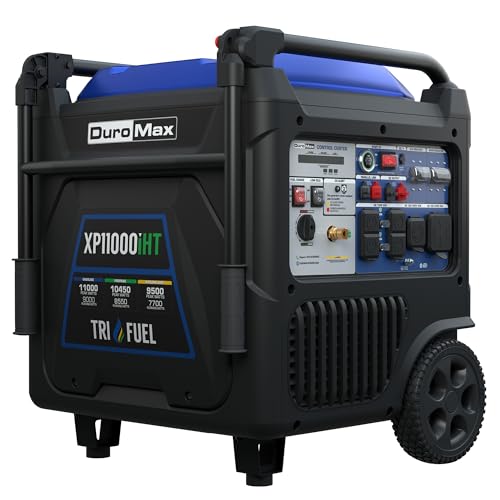
Best for: Buyers prioritizing inverter power with clean sine wave output for sensitive electronics. The XP11000iHT delivers 11,000 peak watts and 9,000 running watts across gasoline, propane, and natural gas options. It uses remote electric start and is suitable for RVs, homes, and job sites needing stable voltage. Caution: Lower peak output than some competitors; plan loads accordingly during outages.
Buying Guide
Fuel flexibility: Tri- and dual-fuel options provide resilience when one fuel source is scarce. Consider availability in your area and the long-term cost per hour of operation.
Power needs: Estimate peak and running watts for essential appliances. Transfer-switch readiness matters for safe, whole-house operation during outages.
Starting method: Remote electric start is convenient in severe weather; ensure battery health and access to the key fob or starting switch.
Runtime and tank size: Larger tanks extend runtimes; keep fuel stored safely and follow ventilation guidelines for indoor-outdoor use.
Safety features: CO sensors, automatic shutdown, and rubber outlet covers improve safety in occupied spaces. Ensure proper ventilation and clearances around the unit.
Portability and installation: Weighs and dimensions affect where you can place the unit. A transfer switch, wheels, and a stable level surface help long-term reliability.
Maintenance: Look for models with user-friendly maintenance indicators (hour meters) and accessible oil changes, as well as availability of service centers nearby.
FAQ
- What is the difference between running watts and peak watts? Running watts represent continuous power output, while peak watts indicate the starting surge the generator can deliver.
- Is a tri-fuel generator worth it for home backup? Tri-fuel offers flexibility if your fuel supply changes and can extend runtime; consider fuel storage and plumbing requirements.
- Do these generators require transfer switches? Transfer switches are recommended for safe, code-compliant connection to home electrical systems; some units are transfer switch ready.
- Can I run a generator indoors? No. Generators produce carbon monoxide and must be operated outdoors with proper ventilation.
- What maintenance is essential for long-term reliability? Regular oil changes, air filter checks, spark plugs, and battery health for electric starts are key.
- How do I choose the right wattage? List essential appliances, estimate their wattage, and add a margin for surge loads; aim for a unit with comfortable headroom.