Best 12,500 Watt Home Backup Generators for Power Security
When selecting a 12,500 watt generator, shoppers typically seek reliable backup power for homes, jobsites, or RVs during outages. This guide highlights five top choices that balance power, fuel flexibility, and safety features. Each option is best for specific needs: whole-home support, extended runtime, or easy remote operation. Use the quick reference table to compare core specs at a glance, then dive into detailed sections to see who benefits most from each model.
| Product | Fuel Type | Best For |
|---|---|---|
| Westinghouse 12500 Watt Dual Fuel | Gas/Propane | Homes needing both gasoline and propane flexibility |
| DuroStar DS13000MX | Gas/Propane | Long run times with dual fuel, heavy-duty use |
| Generac 12,500 Starting Watt Tri-Fuel | Gas/Propane/Natural Gas | Multi-fuel versatility and quiet operation |
| Champion 12,500-Watt Tri Fuel | Gas/Propane/Natural Gas | Tri-fuel convenience with electronic start |
| Westinghouse 13500 Peak Watt Dual Fuel | Gas/Propane | Higher peak output for larger loads |
Westinghouse 12500 Watt Dual Fuel Home Backup Portable Generator

Best for: Homeowners who want fuel flexibility and transfer-switch readiness. This model runs on gasoline or propane and includes a 457cc Westinghouse engine with automatic low-oil shutdown and a digital hour meter. It offers 9500 running watts and 12500 peak watts on gasoline, or 8500 running watts and 11200 peak watts on propane. Features include remote start, a transfer switch-ready 120V option, RV-ready outlets, and durable weatherproof outlets. A caution: large fuel needs mean heavier initial weight and storage considerations.
DuroStar DS13000MX 13,000-Watt Dual Fuel

Best for: Home or jobsite power with fuel flexibility and safety. The DS13000MX delivers 13,000 watts (gas) and ample runtime with dual-fuel capability. It supports remote electric start and includes CO safety features to detect carbon monoxide. Best for users who want robust output with multi-fuel ease of use and a safety-minded design. Caution: data notes emphasize safety features; always ensure clearance and ventilation when operating indoors or in enclosed spaces.
Generac 12,500 Starting Watt Tri-Fuel
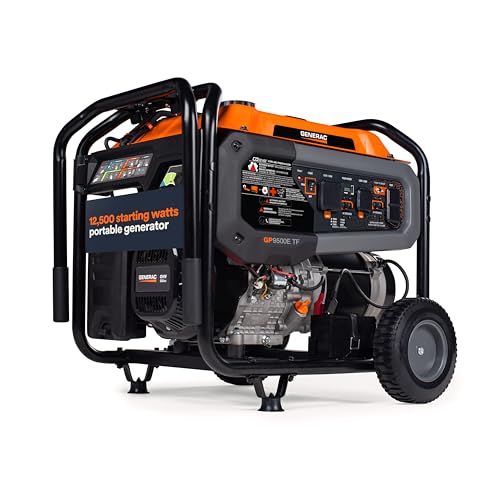
Best for: Users needing reliable electric start and multiple fuel options. Generac GP9500 provides tri-fuel capability, allowing operation on gasoline, propane, or natural gas. It includes an electric start with battery, and features an Intelligauge to monitor output and maintenance needs. Caution: the data highlights durability with protected outlets; however, proper storage and ventilation remain essential for safe operation.
Champion Power Equipment 12,500-Watt Tri Fuel

Best for: Those who want versatile fuel options with an easy electric start. The Champion unit runs on natural gas, propane, or gasoline, and includes hoses to connect to propane and natural gas out of the box. It tracks voltage, frequency, and run times with its Intelligauge, and features a CO Shield auto shutoff for added safety. Limitation: higher fuel consumption under load is typical; plan fuel supply accordingly.
Westinghouse 13500 Peak Watt Dual Fuel

Best for: Those needing higher peak output for larger or power-dense loads. This model provides 10500 running watts on gasoline and 9500 running watts on propane, with up to 19 hours of runtime on a 9.5-gallon tank. It includes a transfer switch-ready outlet and CO safety features. Caution: higher peak watts do not always translate to continuous power; assess load profiles to avoid overload.
Westinghouse 14500 Peak Watt Tri-Fuel

Best for: Larger homes or frequent heavy-load use. With tri-fuel capability and high peak output, this unit covers more simultaneous loads. It runs at up to 11,500 running watts on gasoline and 10,500 on propane, and uses a 550cc engine for robust performance. Caution: expect higher noise and weight; plan for outdoor use and proper storage.
DuroMax XP13000EH 13,000-Watt Dual Fuel

Best for: Home emergency power with heavy-load demands and dual fuel flexibility. The XP13000EH handles 13,000 watts with dual fuel technology and electric start. It is positioned for whole-home backup and RV use. Caution: ensure fuel type availability and proper exhaust clearance in use scenarios.
Buying Guide
Key considerations when selecting a 12,500-watt generator include fuel flexibility, startup method, and run-time expectations. Compare peak watts to your essential loads to avoid underpowered outages. Look for transfer switch readiness, safety features like CO sensors, and durable construction for long-term use.
- Fuel flexibility: Dual-fuel or tri-fuel options offer backup options beyond gasoline when supply is disrupted.
- Starting method: Remote electric start provides quick power with minimal effort; recoil or manual starts are more basic.
- Run-time and fuel tank size: Larger tanks extend operation during outages; check runtime at half or full load to estimate needs.
- Safety features: CO sensors, automatic shutdown, and grounded outlets help prevent hazardous conditions.
- Outlets and transfer readiness: Ensure the model has the needed 120V/240V outlets and that a compatible transfer switch is available.
Frequently Asked Questions
- What does “12,500 starting watts” mean versus running watts?
– Starting watts are the surge power a generator can supply to start devices; running watts are the steady-state power during operation. - Do I need a transfer switch?
– A transfer switch allows safe connection of a generator to home circuits; it is highly recommended for whole-home backup. - Is dual-fuel better than single-fuel?
– Dual-fuel offers flexibility if one fuel type becomes scarce; it may come with added weight and cost. - How important is CO safety?
– CO safety auto-shutoff protects against dangerous carbon monoxide exposure in enclosed spaces. - Can I run these indoors?
– Generators should always be used outdoors with proper ventilation to avoid hazardous fumes and heat buildup.