Best 10KW 3-Phase Inverter for Off-Grid Power
This guide highlights five 10kW class inverters capable of delivering three-phase output, suitable for off-grid or hybrid energy setups. Each product is evaluated on performance, compatibility, and ease of use to help users compare robust options for industrial, home, or remote installations. The selections cover true three-phase inverters, single-to-three-phase VFDs, and systems with integrated energy storage or battery-less operation to accommodate diverse energy needs.
| Product | Brand | Max Output | Type |
|---|---|---|---|
| PXNQMTJM Three-Phase Off-Grid Inverter | PXNQMTJM | 10 kW | Off-grid/Three-phase |
| THKFMSRC Three-Phase Off-Grid Inverter | THKFMSRC | 10 kW | Off-grid/Three-phase |
| ATO 10hp VFD Single to 3 Phase | ATO | ~7.5–10 kW | VFD Converter/Single to Three-Phase |
| Y&H 10KW 48V Solar Inverter | Y&H | 10 kW | Hybrid/Solar, Parallel capable |
| LGIB Single Phase to 3 Phase Converter | LGIB | 10 HP (~7.5 kW) | Phase Converter |
PXNQMTJM Three-Phase Off-Grid Inverter
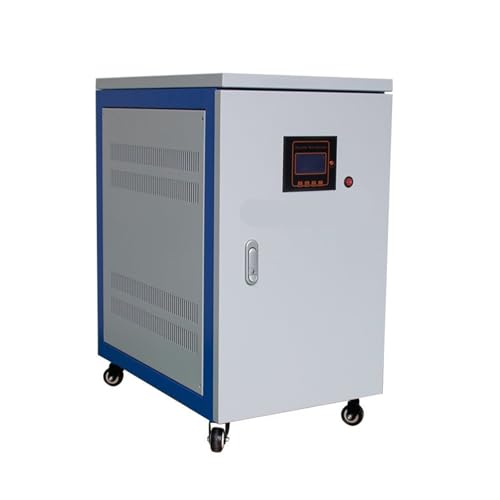
The PXNQMTJM model provides three-phase AC output from a photovoltaic energy storage setup. Marketed as a versatile off-grid inverter with scalable power, it targets systems requiring robust three-phase operation for critical loads, with compatibility for renewable energy inputs. Features emphasize solar and wind power support, making it suitable for remote or backup power installations where three-phase power is needed.
THKFMSRC Three-Phase Off-Grid Inverter
The THKFMSRC three-phase off-grid inverter is designed for photovoltaic energy storage with options for 10 kW, 20 kW, and 30 kW configurations. It targets reliable, distributed energy storage and three-phase delivery for homes or small commercial sites. The system emphasizes solar and wind power compatibility, enabling steady three-phase output for critical equipment.
ATO 10hp VFD Single to 3 Phase

The ATO VFD converts single-phase input (220V-240V) to three-phase output, rated for up to 10 hp motors. It features a 34A output, RS485 communication, and a wide frequency range for precise motor speed control. This model is suited for driving AC motors that require stable, adjustable three-phase power from a single-phase supply.
Y&H 10KW 48V Solar Inverter

The Y&H 10KW parallel and split-phase solar inverter supports batteryless operation and hybrid UPS, with dual MPPT and CAN/RS485 interfaces. It accommodates 48V battery systems and up to 11000W PV input. This model suits households or small businesses seeking high solar integration and flexible phase configuration, including parallel operation for higher reliability.
LGIB 10HP 3-Phase Converter

The LGIB converter converts single-phase input to three-phase output for 10HP motors. It emphasizes easy installation with plug-and-play operation, safety and efficiency features, and broad compatibility for equipment like air compressors, pumps, and grinders, making it a practical choice for residential and light commercial uses requiring 220–240V three-phase performance.
Buying Guide: Key Purchase Considerations
- Output type and compatibility: Confirm whether the inverter provides true three-phase power and matches your motor or load requirements. Some devices are single-to-three-phase VFDs, which may be suitable for smaller motors but behave differently under heavy loads.
- Voltage and phase configuration: Ensure the input/output voltage range aligns with your grid, battery bank, or generator. Split-phase options may be suitable for certain homes but not for all three-phase machinery.
- Storage integration: For off-grid or hybrid setups, assess whether the inverter supports energy storage, MPPT charging, and compatibility with your battery chemistry and voltage (e.g., 48V systems).
- Control and communications: Look for RS485, CAN, or USB interfaces for monitoring and integration with building management systems. Parallel operation capabilities can boost reliability and capacity.
- Protection and efficiency: Check for overload protection, automatic restart, flame-retardant housing, and efficiency ratings. Higher efficiency reduces heat and energy losses in continuous operation.
- Physical footprint and installation: Consider dimensions, weight, and mounting requirements. Some units include an electronic screen for easy setup and monitoring, while others emphasize compact form factors.
- Maintainability and support: Evaluate availability of spare parts, service networks, and warranty terms, especially for commercial or remote installations where downtime is costly.
- Cost vs. performance: Compare peak vs. continuous power ratings, startup surges, and the total system design to balance upfront costs with long-term reliability and energy savings.