Best 1000W Pure Sine Wave Inverter Charger for Reliable Off-Grid Power
If you need clean, grid-like power from a vehicle, RV, or off-grid setup, a 1000W pure sine wave inverter charger is a strong fit. These units combine inverter power with battery charging and UPS features to keep sensitive electronics protected during outages. They’re best for mid-sized appliances, essential devices, and campers who require seamless transitions between grid and battery. The top picks below focus on 12V systems, compatibility with common battery chemistries, and robust protection. For quick decision-making, a summary table of the five standout options is provided after this introduction.
Summary table of selected products
- ECO-WORTHY 1000W Pure Sine Wave Inverter Charger
- Jlouneo 1000W Pure Sine Wave Inverter
- BELTTT 1000W Pure Sine Wave Inverter
- Renogy 1000W Pure Sine Wave Inverter
- LiTime 1000W Pure Sine Wave Inverter (new/upgraded)
ECO-WORTHY 1000W Pure Sine Wave Inverter Charger

Best for RV users who need a combined inverter and charger with UPS functionality. This ECO-WORTHY model delivers 1000W continuous and up to 2000W peak, with a 55A LiFePO4 battery charging capability. It switches to battery power within 20 milliseconds during grid loss, providing uninterrupted power to critical devices. It also features full protection for voltage, current, temperature, and short circuits, ensuring safe operation with LiFePO4 or similar batteries. Use this when you want a compact all-in-one solution for constant power and reliable backup. Caution: verify battery compatibility to avoid charging conflicts.
Who it’s best for and why
- Best for campers and emergency backup in small homes or RVs where a quick swap to battery is essential.
Jlouneo 1000W Pure Sine Wave Inverter

This model emphasizes easy setup and off-grid reliability. It provides 1000W continuous and 2000W peak, suitable for basic RV use, car trips, and short-term backups. The inverter converts 12V DC to 110V/120V AC and includes a low standby current, making it safer for extended uses. It is designed for simple operation with a clear 12V-to-110/120V workflow. Best for travelers who want a compact, straightforward solution that can run everyday devices with minimal setup. Limitation: confirm battery system to avoid voltage mismatches.
Who it’s best for and why
- Best for light-duty vehicle power backup and weekend road trips.
BELTTT 1000W Pure Sine Wave Inverter

This inverter emphasizes a pure sine output with built-in smart LCD display and multiple protections. It delivers 1000W continuous and up to 2000W peak, suitable for televisions, home theaters, and other sensitive equipment. The intelligent LCD shows input/output voltages, battery status, and load conditions, aiding troubleshooting. Choose this if you value real-time monitoring and robust protection. Caution: check the battery type compatibility since some features target specific system configurations.
Who it’s best for and why
- Best for users who want live monitoring and a compact, safe inverter for home backup or RV use.
Renogy 1000W Pure Sine Wave Inverter

Renogy’s 1000W inverter delivers 1000W continuous power and 2000W peak, with a pure sine wave output to protect electronics. It emphasizes safety with LED indicators for under- and over-voltage, over-temperature, overload, and short circuits. The unit is suitable for RVs, trucks, or home backup that requires grid-like AC power. Best for detailed protection and reliable operation in fluctuating conditions. Limitation: cooling considerations or ambient temperature can influence performance in extreme environments.
Who it’s best for and why
- Best for users prioritizing clear protection indicators and durable performance for long-term use.
LiTime 1000W Pure Sine Wave Inverter
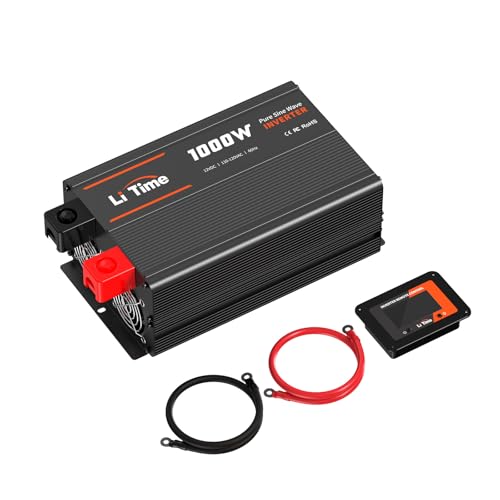
LiTime’s upgrade focuses on efficiency and monitoring. It provides 1000W continuous, 2000W peak, and includes USB-C and USB-A outputs with an LCD for real-time monitoring. It’s ideal for RVs, trucks, and off-grid setups that require multiple charging options and clear status displays. Best for users who want modern USB connectivity and a compact, quiet inverter. Caution: confirm compatibility with certain battery chemistries and charging needs before purchase.
Who it’s best for and why
- Best for those who need USB-C ports and a user-friendly display for real-time system status.
Buying Guide: Key Considerations When Choosing a 1000W Pure Sine Wave Inverter Charger
- Power needs: Compare continuous (1000W) vs peak (2000W) ratings to match your appliance load starts and running requirements.
- Battery compatibility: Confirm support for 12V systems and battery chemistries (AGM, GEL, LiFePO4, Li-ion) to avoid charging conflicts.
- UPS and transfer speed: Look for fast automatic transfer (often under 20 ms) to maintain uninterrupted power during outages.
- Protection features: Prioritize over/under voltage, overcurrent, overtemperature, short-circuit, and GFCI where applicable.
- Monitoring and controls: LCD displays and USB ports add convenience for monitoring and device charging on the go.
- Form factor and cooling: Consider heat dissipation and enclosure size for mounting in a vehicle, shed, or cabinet.
- Connector availability: Ensure the unit provides the right outlets (AC sockets, USB-C, USB-A) for your devices.
- Price vs value: Weigh the balance of protection, efficiency, and features against cost for long-term reliability.
Frequently Asked Questions
- What is a pure sine wave inverter and why choose it over modified sine wave?
– Pure sine wave inverters provide a clean, grid-like AC waveform that is safe for sensitive electronics and compatible with most appliances. - Can I use these with LiFePO4 batteries?
– Yes, many models support LiFePO4 and other common 12V battery chemistries, but verify the charger’s compatibility to avoid mismatched charging. - Do these units include an UPS feature?
– Some models include automatic transfer to battery within a few milliseconds to maintain power during outages. - What should I consider when choosing between 1000W continuous vs 2000W peak?
– Choose based on your startup surge needs; heavy inductive loads may require the higher peak rating. - Are USB outputs common on 1000W inverters?
– Many models include USB-A and USB-C ports, which is convenient for charging devices directly from the inverter.