Best 10000 Running Watt Generators for Backup Power
For dependable home backup and jobsite power, a 10000 running watt generator offers a balance of enduring output and versatility. This guide highlights five strong options, covering dual-fuel and inverter models, so you can choose based on fuel availability, transfer-switch readiness, and runtime needs. Each entry includes key features to help compare performance, safety, and convenience during outages or remote work.
| Product | Brand | Running Watts | Fuel Type | Key Feature |
|---|---|---|---|---|
| WEN 11,000-Watt DF1100T | WEN | 8,300 | Gasoline / Propane | Dual fuel with electric start |
| Westinghouse 13500 Peak / 10500 Running | Westinghouse | 10,500 | Gasoline | Tri-fuel option on some lines; remote start |
| DuroStar DS13000MX | DuroStar | 13,000 | Gasoline / Propane | Remote electric start; transfer switch ready |
| Westinghouse 10000 Peak / Inverter | Westinghouse | 7,600 | Gasoline | Inverter with low THD and CO sensor |
| Generac GP8000E | Generac | ~8,000 | Gasoline | Electric start; extended runtime |
WEN 11,000-Watt Dual Fuel Generator
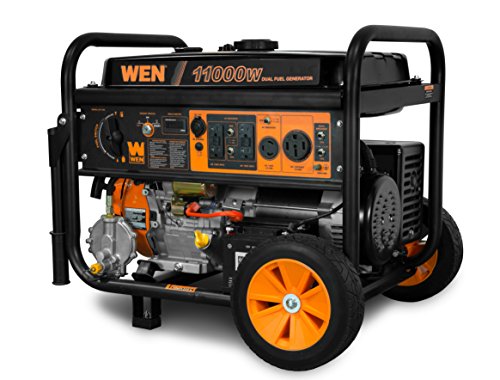
The WEN DF1100T combines high startup capacity with flexible fuel options. It can switch between gasoline delivering 11,000 surge watts and 8,300 running watts, and propane delivering 9,500 surge and 7,500 running watts. A simple dial selects fuel, while 120V and 240V outputs support transfer switches and whole-house loads. The 457cc OHV engine powers a reliable electric start, enabling quick restoration of power with a single key turn. This model is designed for home backup and jobsite tasks where both power and versatility matter.
Westinghouse 13500 Peak / 10500 Running

This Westinghouse model offers strong peak and running watts with tri-fuel capability on select configurations, and includes a remote electric start. It provides 19 hours of runtime on a large 9.5-gallon tank and includes transfers-ready outlets and RV-capable 120/240V options. Safety features include rubber outlet covers and a CO-sensitive shutdown system. Its heavy-duty engine and digital hour meter enable long-term reliability for larger homes or work sites needing consistent power.
DuroStar DS13000MX 13,000-Watt

The DuroStar DS13000MX provides dual-fuel capability with a 13,000-watt rating for maximum home backup power. The propane option extends run times during extended outages and helps with fuel flexibility. A remote electric start adds convenience for quick power restoration. The unit is described as transfer switch ready, making it suitable for permanent home backup installations and larger loads requiring consistent electricity during storms or outages. CO safety features protect occupants in case of hazardous conditions.
Westinghouse 12500 Peak / 9500 Running

This tri-fuel generator balances high peak output with steady running watts across gasoline, propane, and natural gas. It offers a robust 457cc engine, a large fuel tank with a fuel gauge, and multiple outlets including a 50A transfer-switch-ready receptacle and RV-ready 14–50R. Remote electric start and a digital hour meter simplify maintenance and operation, while safety features keep power delivery reliable in emergencies.
Westinghouse 12500 Peak / EFI Dual Fuel
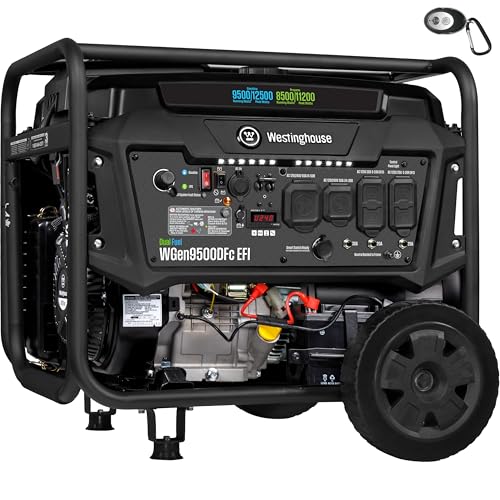
This EFI dual-fuel option targets home backup and jobsite reliability with 12,500 peak watts and 9,500 running watts on gasoline, plus 11,200 peak and 8,500 running watts on propane. It includes a 6.6-gallon tank with a fuel gauge, a key fob for remote start, and multiple outlets that are transfer-switch ready. The CO sensor and digital hour meter add layers of safety and maintenance visibility, while a robust Westinghouse engine provides durable performance for extended outages.
Buying Guide: Key Purchase Considerations for 10000 Running Watt Generators
- Running watts vs peak watts: Running watts reflect continuous power delivery; peak watts show the startup surge. For sensitive electronics, prioritize models with clean, stable output and adequate running watts.
- Fuel type and availability: Gasoline often offers broad compatibility, while propane and dual-fuel options provide longer run times and flexibility during supply shortages. Tri-fuel variants add adaptability for fixed installations.
- Transfer switch readiness: If you plan to power a home panel, ensure the generator has a transfer-switch-ready design or compatible outlets (L14-30R, 14–50R). This simplifies safe whole-house operation.
- Start system and automation: Electric start is convenient, especially after outages. Look for models with recoil backup and included batteries that ensure reliable startup in cold conditions.
- Safety features: CO sensors, auto shutdown on low oil, rubber outlet covers, and proper enclosure design reduce risk and improve long-term reliability in homes and work sites.
- Run time and tank capacity: Larger tanks extend operation between refills. Consider your typical outage duration and the load you expect to run to estimate runtime needs.
- Outlets and versatility: Multiple 120V outlets, RV-ready connections, and 240V options enhance compatibility with appliances, tools, and generators used for home backup or contractors’ sites.
- Portability and footprint: Wheel kits and handle designs affect maneuverability, especially for outdoor use or frequent relocation during storms.
- Maintenance and service support: Check warranty terms, service networks, and readily available replacement parts to minimize downtime after weather events or heavy use.
- Noise levels: Some models balance power with lower sound output, which is important for residential neighborhoods or urban job sites.