Best 1000 Watt Grid Tie Inverter Reviews for 2026
Choosing a 1000 watt grid tie inverter requires balancing MPPT accuracy, input voltage range, efficiency, and compatibility with solar panels and batteries. This guide highlights top 1000W grid tie inverters suitable for American homes, outlining key features, input ranges, and safety considerations. Read on to compare models, understand MPPT behavior, and identify which unit best fits a 24V or 36V PV setup.
| Product | Brand | MPPT Range / Input | Output | Notes |
|---|---|---|---|---|
| Y&H 1000W Grid Tie Inverter Stackable MPPT Pure Sine Wave DC15-28V Solar Input AC90-140V Output | Y&H | MPPT 15.5-23V | AC 90-140V | Stackable design; ensure correct DC polarity |
| Y&H 1000W Grid Tie Inverter Stackable MPPT Pure Sine Wave DC30-45V Solar Input AC90-140V | Y&H | MPPT 26-36V | AC 90-140V | Supports 24V/30V/36V PV panels |
| Y&H 1000W Grid Tie Inverter Power Limiter DC25-60V Solar Input AC110V/240V | Y&H | DC input 22-60V (startup 26V) | AC 110/240V | Battery discharge mode for load management |
| EEYBLAEEY Solar Inverter Max 1000W, Grid Tie MPPT Pure Sine Wave DC10.8-32V | EEYBLAEEY | MPPT within DC 10.8-32V | AC 90-140V | Aluminum construction; suitable for 18V panels |
| TINGEN 1000W Grid Tie Inverter with LCD Display DC 26-45V | TINGEN | MPPT 26-45V | AC 90-140V | LCD shows parameters; four operating modes |
These units emphasize pure sine wave output, MPPT optimization, and safe integration with grid systems. When selecting a model, prioritize input voltage compatibility with your PV array, the availability of a stable MPPT lock, and the inverter’s ability to ride through grid fluctuations without tripping.
Y&H 1000W Grid Tie Inverter (DC15-28V)
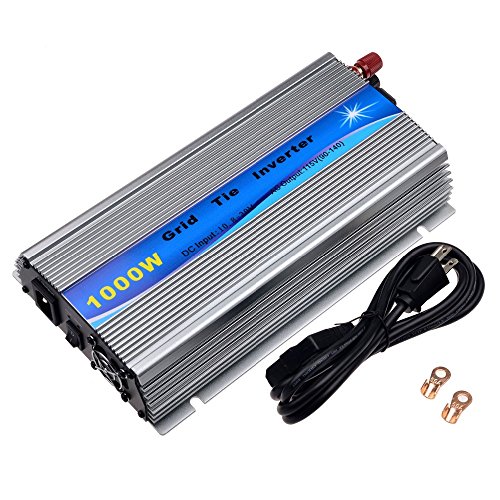
The Y&H model with DC input 15-28V targets smaller or lower-voltage PV arrays. It uses a stackable MPPT approach to optimize power within a narrow input window. An on-grid connection means the AC output must be tied to the electrical grid. It requires correct DC polarity and careful attention to MPPT range alignment with the panel’s Vmp to avoid reduced performance. Users should verify that their panel Voc remains within the recommended 20-24V open-circuit window, and avoid inputs outside the specified range to prevent inverter misoperation.
Y&H 1000W Grid Tie Inverter (DC30-45V)
This model targets higher input voltages in the 26-36V MPPT band, suitable for mid-range PV strings. It emphasizes MPPT-driven efficiency, with an on-grid AC output. As with all grid-tie devices, do not substitute input voltages outside the recommended MPPT window. If the MPPT range is not matched to the PV array, output efficiency may drop and the inverter may fail to operate correctly. Note care around the “grid-tie” requirement—this unit needs to be connected to the utility grid.
Y&H 1000W Grid Tie Inverter Power Limiter (DC25-60V)
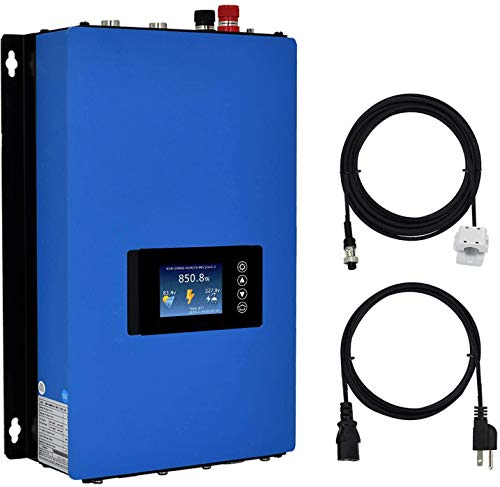
This inverter includes a battery power-supply option and a built-in limiter sensor to manage load and depth of discharge. The DC input range supports 22-60V with startup around 26V, matching a variety of PV arrays and battery configurations. Efficiency claims exceed 99% with MPPT for maximizing harvest. When integrating with batteries, install proper overcurrent protection and follow safe wiring practices to prevent backfeed into the grid or battery bank issues.
EEYBLAEEY 1000W Grid Tie Inverter MPPT Pure Sine Wave

EEYBLAEEY’s unit emphasizes a robust aluminum-alloy enclosure and a pure sine wave output for sensitive electronics. It is designed for 18V solar panels, with a DC input that allows a range within 10.8-32V and an AC output of 90-140V. The configuration supports a clean power transfer to the grid, which helps protect appliances from harmonic distortion. As with all grid-tie products, ensure the PV voltage stays within the MPPT window to maximize efficiency and avoid poor performance or inverter faults.
TINGEN 1000W Grid Tie Inverter with LCD
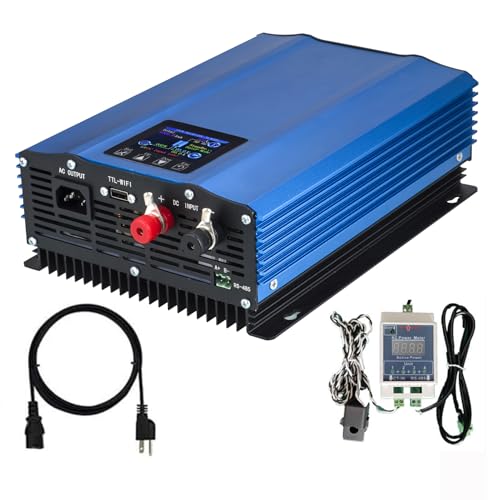
TINGEN’s offering includes an LCD that displays input and output parameters, aiding installation verification. The MPPT range covers 26-45V, suitable for 24V and 36V PV configurations. Four working modes, including PV limiter and battery limiter, provide flexibility for various setups. The device concludes with a robust aluminum body and a single-phase AC output, intended for grid-tied operation. Properly sizing the PV array to stay within the MPPT window is essential for peak performance.
Buying Guide: Key Purchase Considerations
When evaluating 1000W grid tie inverters, consider these factors to ensure reliable, efficient operation with your solar system:
- MPPT Voltage Range: Confirm the MPPT window matches your PV array’s Vmp and Voc. A mismatch reduces harvest and may prevent grid connection.
- Input Voltage and Panel Compatibility: Most units target 18–36V panels, but some span 10.8–32V. Ensure your panels’ Vmp sits comfortably within the listed MPPT range.
- Output Compatibility: Single-phase AC output commonly ranges 90–140V or dual-voltage options (110/220V). Verify your local grid standard and safety interlock requirements.
- Efficiency: Look for MPPT efficiency above 99% and a solid thermal design. High efficiency minimizes heat and maximizes energy return.
- Battery Integration: If planning to use batteries, check startup voltage, discharge limits, and safety features like fuses and breakers to protect the battery bank and inverter.
- Protection Features: Over-voltage, short-circuit, and anti-backfeed protections reduce risk to the grid and home wiring.
- Physical Construction: Aluminum enclosures provide durability and heat resistance for indoor and outdoor use. Ensure enclosure is suitable for your climate.
- Display and Monitoring: An LCD or digital readout helps you monitor MPPT, voltage, current, and system status during setup and operation.
- Safety and Certification: Confirm compliance with local electrical codes and utility interconnection requirements. Proper grounding and professional installation are recommended.
To maximize performance, align the chosen inverter with a PV array that sits well within the MPPT window, install proper overcurrent protection, and follow the grid-tie interconnection guidelines of your utility. Real-world results depend on irradiance, temperature, wiring losses, and correct panel orientation.