Best 1000W Wind Turbine Options for Home Power
Answering common buyer questions: these 1000W wind turbines are a solid choice for small off-grid setups, backup power, or garden lighting. They’re best for homes, cabins, boats, and remote locations where steady winds are available but space is limited. This guide compares five top 1000W models, detailing who they’re best for, what to expect, and practical buying tips to help you choose wisely.
| Product | Best For | Key Benefit | Limitations |
|---|---|---|---|
| FLTXNY POWER Wind Turbine 1000W | Small homes with easy installation | Low startup speed and 3-blade design for higher energy capture | Concrete support may be needed for tall pole mounting |
| Generic 1000W Wind Turbine Generator Kit (12V/24V/48V) | Residential or small off-grid projects | Compact 3-blade kit with MPPT charge controller options | Noise and stability depend on mounting and wind conditions |
| Lbxlhr 10000W Upgraded Vertical Axis Turbine | Vertical-axis setups with space constraints | Low yaw Requirements and long service life | Higher upfront cost and heavier unit |
| funrautz 1000W Vertical Wind Turbine | Low-wind environments and quiet operation | Nylon fiber blades and intelligent control for efficiency | Vertical designs may require specialized mounting |
| VEVOR 24V 1000W Solar Wind Power Kit | Hybrid solar-wind off-grid systems | Integrated with panels and MPPT controller for stable output | System complexity increases with more components |
Intro Content
To help you compare quickly, here are five top 1000W wind turbine options, each chosen for distinct use cases. The list includes horizontal and vertical axis models, with varying degrees of integration, control electronics, and mounting considerations. Use the buying guide below to match features to your site wind profile and power goals.
FLTXNY POWER 1000W Wind Turbine Kit

The FLTXNY POWER 1000W Wind Turbine uses three nylon blades and a low startup speed to maximize wind energy capture in modest wind conditions. It supports easy installation with optional tube or flange connections. Best for: beginner-to-mid-level setups where quick, straightforward installation matters and the user expects dependable daily output. Caution: performance hinges on steady wind and proper tower mounting; misalignment can reduce efficiency.
Generic 1000W Wind Turbine Kit (12V/24V/48V)

This 1000W kit offers versatility with multiple voltage configurations (12V/24V/48V) and a compact footprint. It’s well-suited for property owners seeking a modest off-grid system, home lighting, or small power needs. Best for: DIY installers who want MPPT-ready charging and flexible system design. Caution: expect seasonal fluctuations; MPPT controller performance depends on wind consistency and battery health.
Lbxlhr 10000W Vertical Axis Turbine Kit

The Lbxlhr vertical-axis turbine uses FRP blades and a maglev generator for lower start torque and extended life. With 360-degree wind capture, it reduces yaw alignment needs and is robust in varied wind directions. Best for: off-grid homes or cabins where wind direction changes and installation height is a challenge. Caution: heavier and larger than small horizontal units; ensure structural support and permitting align with local rules.
funrautz 1000W Vertical Wind Turbine

The funrautz vertical wind turbine uses nylon fiber blades and a permanent magnet rotor to achieve efficient energy conversion at relatively low wind speeds. Best for: residential installations where noise, footprint, and ease of maintenance matter. Caution: vertical designs may require specialized mounting hardware and careful position planning to optimize wind capture.
VEVOR 24V 1000W Solar Wind Power Kit
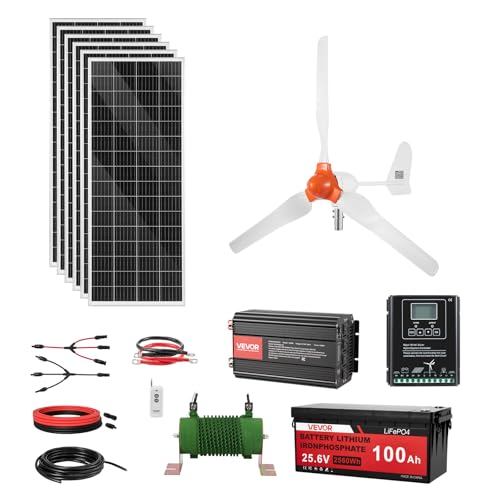
The VEVOR kit combines a 400W wind turbine with six 100W solar panels and a MPPT controller for hybrid off-grid power. Best for: mixed-sun and wind environments where a combined solar-wind strategy improves reliability and daily kilowatt-hours. Caution: system complexity increases; ensure you have space for solar panels and proper wiring for the controller and battery bank.
Buying Guide: 1000W Wind Turbine Purchase Considerations
What wind conditions suit these turbines?
Look for models with low startup wind speeds (around 2 m/s to 3 m/s) for better early energy capture. Vertical-axis designs may perform better in turbulent or multi-direction winds, while horizontal-axis units often achieve higher peak output in strong, steady winds with proper yaw control.
How to choose between horizontal and vertical designs?
Horizontal-axis turbines typically offer higher efficiency at consistent wind speeds and require yaw alignment. Vertical-axis units are less sensitive to wind direction, easier to mount in tight spaces, and can be quieter, but may deliver less peak power. Choose based on site layout, noise tolerance, and maintenance priorities.
What about controllers and batteries?
MPPT charge controllers maximize energy harvest by adjusting to wind variability. If you plan battery storage, ensure the system voltage matches battery chemistry and that the controller supports the intended battery type. For grid-tied or backup-only configurations, consider systems with simple, reliable regulation and protection features.
Installation and safety considerations
Mounting height, tower strength, and guying are critical for both performance and safety. Ensure components are rated for outdoor use, connections are weatherproof, and local regulations or permitting are followed. Heavy turbines require proper foundations and, in some cases, professional installation.
Maintenance and lifespan
Materials like nylon blades and FRP components contribute to durability, but ongoing checks for blade wear, bearing lubrication, and wiring integrity are essential. A 10–15 year service life is typical for some vertical-axis designs, while horizontal units often require component-level maintenance to sustain performance.
Energy goals and budgeting
Estimate daily energy needs and wind resource to determine whether a 1 kW turbine plus a controller can meet your load. Hybrid configurations with solar can improve reliability and reduce battery strain. Consider total system cost, maintenance, and potential expansion when planning.
FAQ
- Q: Which turbine is easiest to install? A: The FLTXNY POWER 1000W kit offers straightforward mounting options and clear integration paths for beginners and small installations.
- Q: Do vertical-axis turbines work well in low wind? A: They can start at lower wind speeds and are more tolerant of wind direction changes, but may deliver less peak output than horizontal designs in strong winds.
- Q: Is a hybrid solar-wind kit worth it? A: For off-grid homes with variable sun and wind, a hybrid kit can improve daily reliability and reduce battery cycling demand.
- Q: What maintenance is typical? A: Regular checks on blades, bearings, and electrical connections; clean blades, inspect mounting hardware, and ensure MPPT or controller settings are correct.
- Q: Will wind speed alone determine energy production? A: Wind speed greatly influences output, but turbine efficiency, blade design, and system electronics also shape actual energy delivered to the load or battery.
- Q: Do these units require professional installation? A: Some installations benefit from professional assistance, especially for tall towers, electrical connections, and safety-compliant mounting.