Best 10 Psi Water Pump Options for Home, RV and Marine Use
When shopping for a 10 psi water pump, you want a model that delivers steady pressure for small-to-medium flow needs while remaining reliable and easy to install. This guide highlights five pumps that fit typical 10 psi or close-range pressure scenarios, ideal for RVs, off-grid cabins, small irrigation, aquariums, or Marine applications. Each product section explains who it’s best for and why it’s a good fit, with practical cautions to consider before buying.
| Product | Best For | ||
|---|---|---|---|
| bayite 12V DC Water Transfer Pump | Small boats, ATVs, herbicide sprayers | Up to 80-85 PSI | Self-priming; low current draw |
| Lyhubmh 12V DC Water Pressure Diaphragm Pump | Shower and garden use on compact systems | Up to ~80 PSI | Sealed design; dry-vent installation recommended |
| ECO-WORTHY 33-Series 110V | RV and small irrigation systems | 50 PSI cut-off | Smart pressure switch; no battery needed |
| Gidrox 12V RV Water Pump | RVs, boats, off-grid setups | 45 PSI typical with 10 ft lift | Noise-reduction features |
| SEAFLO 21-Series 12V | Compact RV or marine use | 35 PSI shut-off | Quiet operation; 4-year warranty |
Bayite 12V DC Water Transfer Pump

- Brand: bayite
- Type: 12V DC diaphragm pump, self-priming
- Flow: 4.5 L/min (1.2 GPM); Peak pressure around 80 PSI
- Inlets/Outlets: 3/8-inch hose barb ports
- Protection: Sealed body guards against moisture and dust
Best for compact, portable transfer tasks such as weed sprayers on ATVs, small boats, or marine use. Choose this if you need a compact unit with a relatively high head for a 12V system. Caution: continuous operation beyond 6 hours is not recommended; ensure a 12V supply capable of handling momentary surges.
Lyhubmh 12V DC Water Pressure Diaphragm Pump

- Brand: Lyhubmh
- Type: 12V DC, self-priming, diaphragm pump
- Flow/Pressure: 6 L/min (0.9 MPA / ~130 PSI potential in setup); typical operation near 80 PSI
- Sealed design and coated casing protect against vapor and contaminants
- Best for: shower setups or garden connections in compact installations
Best for small water systems where compact size and sealed construction matter. Better for dry, ventilated installations to prolong life. Caution: some water inside the pump during initial fill is normal; avoid extended continuous operation beyond suggested idle limits.
ECO-WORTHY 33-Series 110V Diaphragm Pump
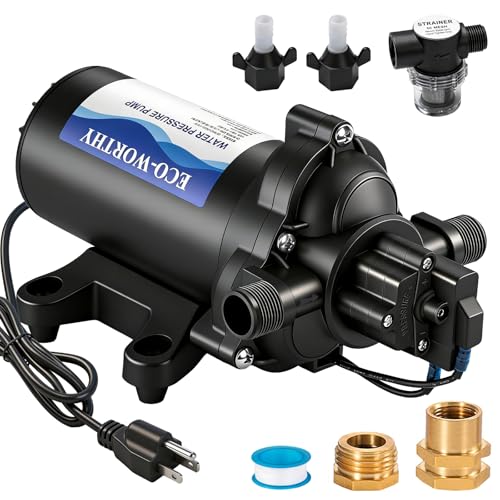
- Brand: ECO-WORTHY
- Type: 110V AC diaphragm pump
- Flow/Pressure: 4.0 GPM; 50 PSI shut-off; adjustable range 45-70 PSI
- Features: Smart pressure switch, self-priming, and thermal protection
- Best for: RV fresh water systems, small irrigation, or marine apps where AC power is available
Choose this when you have reliable AC power and want a pump that starts/stops with demand, reducing energy waste. Limitation: heavier and requires a power outlet; watch for heat protection during long runs.
Gidrox 12V RV Water Pump

- Brand: Gidrox
- Type: 12V DC diaphragm pump
- Flow/Pressure: 4.0 GPM; 45 PSI typical; self-priming to 10 ft
- Features: Dual safeguards including overheating protection; noise reduction design
- Best for: RVs, boats, off-grid travel where quiet operation matters
Best for off-grid travel where a quiet pump is preferred. Better for RVs with space-conscious layouts. Caution: ensure adequate ventilation and avoid prolonged operation in high-heat conditions to prevent heat buildup.
SEAFLO 21-Series 12V Diaphragm Pump

- Brand: SEAFLO
- Type: 12V DC diaphragm pump
- Flow/Pressure: 1.2 GPM; 35 PSI; self-priming to 4 ft
- Durability: 4-year warranty; intermittent duty; NSF/UL style compliance
- Best for: RV, marine, or off-grid water delivery where space is tight
Choose this for compact installations needing dependable, low-noise performance. Good for mobile setups where minimal power consumption and a modest pressure target are acceptable. Avoid high-flow needs or continuous heavy use beyond the listed duty cycle.
Buying Guide: Key Purchase Considerations
- Pressure vs. flow: 10 psi is a common target for small cabins or portable setups, but many compact pumps operate in higher ranges. Match your system’s required head (lift) and flow rate to the pump’s capabilities.
- Power requirements: 12V models run on vehicle or battery power; AC models require a power outlet. Ensure your power source can handle startup surges.
- Self-priming and lift height: If your pump sits above the water source, confirm the vertical lift and self-priming ability to avoid airlocks.
- Durability and protection: Look for sealed housings, moisture protection, and thermal safeguards if the pump runs in humid or hot environments.
- Warranty and certifications: A longer warranty and compliance with potable water standards are beneficial for RV and marine use.
- Installation considerations: Hose barb sizes (3/8″ in several models) and mounting options influence compatibility with existing plumbing.
- Noise and vibration: Vibration-damping features reduce noise in living or sleeping areas and minimize wear over time.
FAQ
- What is a typical use case for a 10 psi water pump?
- Do 12V pumps require a battery or power source?
- Is a higher PSI always better?
- What maintenance is needed for diaphragm pumps?
- Can these pumps run continuously?
- Are there compatibility concerns with different fluids?
They are ideal for small RV water systems, garden or irrigation lines, compact marine setups, or domestic transfers that don’t require high-pressure pumping.
Yes. They run on 12V DC power from a vehicle battery or auxiliary power source. Ensure the supply can provide sufficient current during startup.
No. For small systems, too high a pressure can stress fittings and cause leaks. Use a pump with a pressure switch aligned to your target range.
Keep fittings tight, replace seals as recommended by the manufacturer, and ensure the unit is kept dry when not in use to prevent corrosion.
Many are designed for intermittent duty. Continuous operation should follow the manufacturer’s guidelines to avoid overheating or premature wear.
Pump materials should be compatible with potable water or the intended liquid. Check the diaphragm and seal materials for chemical compatibility.