Best 1/2 Hp Submersible Sewage Pumps for Basement and Basements
If you’re selecting a 1/2 HP submersible sewage pump, you’re likely aiming for reliable basement drainage, effluent transfer, or wastewater handling with solid debris. The best options balance solid-whandling capability, automatic operation, and durability in cast iron or stainless steel housings. This guide highlights five strong picks and explains who each is best for, based on design and features. The top picks work well for homeowners, small businesses, and basements with frequent water challenges.
| Product | Brand | Discharge | Best For |
|---|---|---|---|
| Liberty Pumps LE51A | Liberty Pumps | 2 inch | Heavy-duty, long-term use with cast iron and oil-filled motor |
| Wassermann 1/2 HP | Wassermann | 2 inch | Basement drainage with automatic/ manual control |
| LANCHEZ 1/2 HP 5200 GPH | LANCHEZ | 1-1/2 inch | Integrated vertical float for automatic operation |
| Acquaer 1/2 HP | Acquaer | 2 inch | Harsh environments; high-flow residential sewage |
| Zoeller Waste-Mate 267-0001 | Zoeller | 2 inch | Residential and commercial dewatering with 2″ solids |
Liberty Pumps LE51A 1/2 HP Submersible Sewage Pump
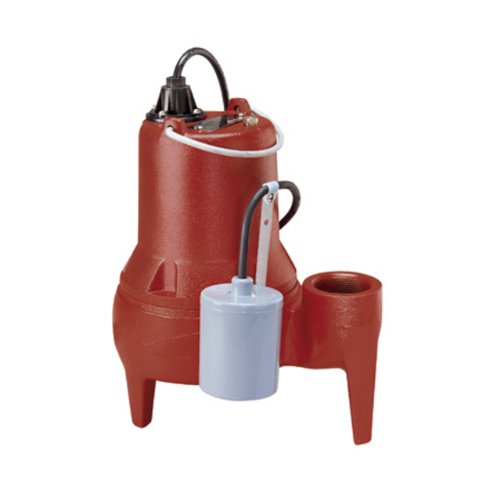
The Liberty LE50-series unit features heavy cast iron construction and an oil-filled, thermally protected motor with permanently lubricated ball bearings. It’s designed for robust, long-term use in residential or small commercial settings where solids handling is required. Best for: homeowners needing a durable, highly reliable sump or sewage pump in basements or crawlspaces. Caution: ensure 2″ discharge piping and installation clearances are met to maintain optimal flow and cooling.
WASSERMANN 1/2 HP Sewage Pump With Auto Float Switch

This model combines automatic and manual control with an oil-filled motor and a rugged cast iron casing. It’s rated for up to 5300 GPH and a 23 ft head, making it well-suited for basements, sump basins, or below-grade wells. Best for: homes needing strong flow with straightforward auto operation via a float switch. Limitation: the 10 ft power cord may require extension depending on installation, so plan wiring accordingly.
LANCHEZ 1/2 HP 5200 GPH Submersible Sump Pump
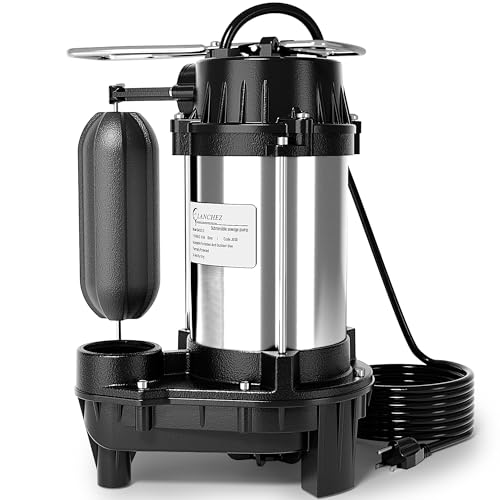
Built with cast iron and stainless steel, this pump emphasizes corrosion resistance and durability. It includes an integrated vertical float switch with clear on/off points and a 26 ft lift capacity. Best for: basements or crawl spaces where a compact, robust, automatic pump is preferred. Caution: the model notes not to lift by the power cord or float assembly to avoid damage.
Acquaer 1/2 HP Submersible Sewage/Effluent Pump

Acquaer’s unit emphasizes a high flow up to 6000 GPH with the versatility of auto/manual operation via a standard 10 ft cord and piggy-back plug. The heavy-duty cast iron casing and non-clogging vortex impeller support reliable solids handling. Best for: homes needing strong performance with a robust, long-living motor. Limitation: not recommended for septic tank use per product notes; ensure compatibility with your system.
LEO 1/2 HP Sewage/Effluent Pump

LEO’s model offers 6000 GPH with a 29 ft head, ideal for deeper pumping needs in basements. It includes automatic/manual controls with a float switch and a silicon carbide seal, ensuring durability in demanding environments. Best for: projects requiring deeper pumping and strong head pressure. Caution: strictly follow the automatic vs manual plug use to avoid running the pump when not needed.
Zoeller Waste-Mate 267-0001
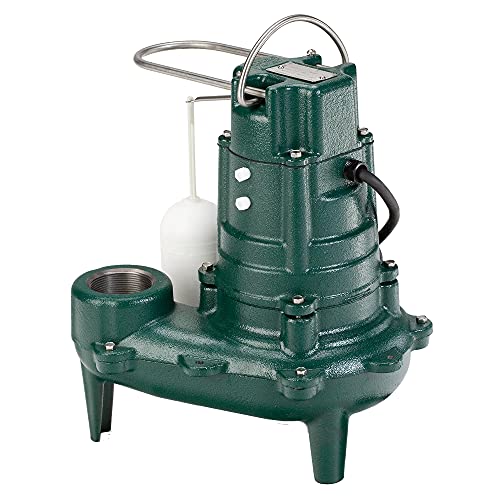
Zoeller’s Waste-Mate 267-0001 is a heavy-duty automatic pump designed for residential and light commercial use. It passes 2″ spherical solids and uses a 2-pole mechanical switch with a non-clogging vortex impeller. Best for: settings requiring reliable automatic operation and clear solids handling. Limitation: some installations may require additional float switch adjustments to optimize on/off cycling.
Buying Guide: Key Purchase Considerations
What should you check before buying a 1/2 HP submersible sewage pump?
- Flow Rate and Head: Ensure the pump can move the expected volume and lift water to the required height. Higher GPH and head are better for basements or lower drainage pits.
- Solid Handling: Look for the maximum solids size (often 2 inches) the impeller can pass. This reduces clogging in wastewater lines.
- Material and Durability: Cast iron housings are common and durable; stainless steel variants provide corrosion resistance in harsh environments.
- Automatic vs Manual: Automatic floats improve convenience but confirm switch sensitivity and the installation’s reach to the float.
- Power Cord and Setup: Check cord length, plug type, and whether the unit requires venting or additional protection in damp spaces.
- Installation Space: Consider the sump’s size, the discharge pipe, and any need for a check valve to prevent backflow.
- Warranty and Support: Look for models with accessible service options and replacement parts near your location.
How to Choose Between Models?
- Best for Long-Term Durability: Liberty Pumps LE51A or Zoeller Waste-Mate for robust construction and reliable auto operation.
- Best for Automatic Basements: Wassermann or LANCHEZ with integrated floats for easier, hands-off control.
- Best for Deep Lifts: LEO and Acquaer models with higher head ratings are preferable when pumping to higher discharge points.
Installation and Maintenance Tips
- Keep the pump fully submerged during operation to prevent overheating.
- Inspect the intake area for debris weekly and remove blockages promptly.
- Test the auto-switch periodically to ensure the pump starts and stops appropriately.
- Use a vented lid or cover in damp basements to minimize moisture exposure to electrical components.
Frequently Asked Questions
- What does 1/2 HP mean for a sewage pump? Answer: It indicates the motor’s power, influencing flow rate and head pressure for lifting wastewater.
- Why is a 2″ discharge common? Answer: It accommodates typical solids sizes and provides adequate flow for residential sewage needs.
- Can I run a 1/2 HP pump in a septic tank? Answer: Some models are not designed for septic tanks; review product notes before use.
- How often should I replace a check valve? Answer: Check valves wear with time; inspect during maintenance and replace if backflow issues occur.
- Is automatic operation safer in basements? Answer: Yes, as float switches prevent pumping when water is low, reducing energy use and wear.
- What’s the best way to prevent clogs? Answer: Choose a non-clogging impeller and ensure solids size is compatible with the discharge size.
This selection emphasizes solid handling, reliable automatic operation, and durable housings suitable for typical American basements and crawlspace setups. Each model offers distinct advantages depending on your space, elevation, and desired maintenance profile. Use the Buying Guide to refine your choice based on your specific drainage needs and structure.