Best 1/0-1/0-1/0 Aluminum URD Cable for Outdoor Power Distribution
Direct burial and conduit-ready aluminum URD cables are built for underground power distribution, outdoor lighting, and transformer-to-meter runs. This guide highlights five top options that balance reliability, flexibility, and installation ease for residential, commercial, and industrial projects. Each pick is evaluated for who it’s best for, why it stands out, and any practical limitations to consider.
| Product | Best For | Why It Stands Out |
|---|---|---|
| BreezeHug 150Ft 1/0-1/0-1/0 | Direct burial and conduit use; medium-length runs | 19-strand aluminum for better flexibility; dual burial and conduit installation |
| Nassau Electrical Supply 120′ 1/0-1/0-1/0-2 | Compact, roofed or service entry runs | Quadruplex conductor with clear 19-strand construction |
| BreezeHug 125Ft 1/0-1/0-1/0 | Smaller installations needing reliable direct burial | Same 19-strand design; flexible installation |
| BreezeHug 100Ft 1/0-1/0-1/0 | Short runs with direct burial or conduit | Compact 100 ft option with strong flexibility |
| Nassau Electrical Supply 170′ Bergen 1/0-1/0-1/0 | Longer residential or light commercial runs | Triplex style with clear construction details |
What’s common across these options is a focus on 19-strand aluminum conductors, XLPE insulation, and the ability to perform in both direct burial and conduit installations. When selecting, buyers should consider run length, amperage requirements, temperature ratings, and the presence of multiple conductors for feeders versus secondary distribution. The right pick balances installation practicality with electrical capacity for the intended application.
BreezeHug 150Ft 1/0-1/0-1/0 Aluminum URD Cable

This 150-foot roll is designed for direct burial or conduit installation. It uses 19 precision aluminum strands for enhanced flexibility, reducing installation effort. It is suitable for power transmission lines from transformers to user meters and for various outdoor power distribution projects. The construction supports dual burial and conduit installation, with ratings near 65-75A depending on temperature. Best for projects needing a longer single run without splicing and where outdoor underground installation is essential. A potential limitation is the absence of explicit short-circuit or fault current data in the listing.
Who this is best for: medium-length outdoor power runs and contractors who need flexible installation in both buried and conduit configurations. Choose this if you value high flexibility and direct burial capability in a single, continuous length.
Caution: Verify local code requirements for direct burial depth and protective conduit when routing near moisture-prone areas.
Nassau Electrical Supply 120′ 1/0-1/0-1/0-2 Quadruplex URD Cable
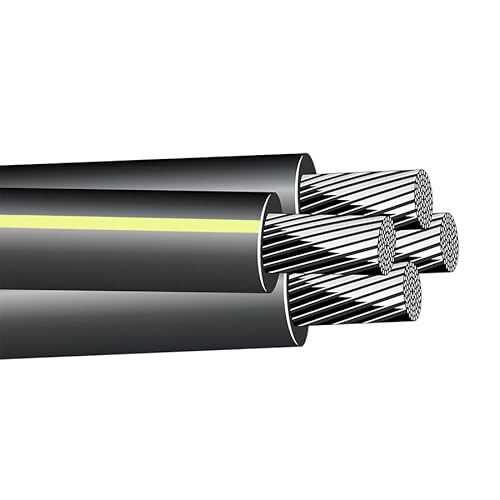
This 120-foot quadruplex aluminum URD cable is designed for 600V direct burial. It features 19-strand construction and a substantial insulation thickness (80 mils), aimed at durable outdoor performance. This option is effectively suited for users needing a single, moderately long underground feeder with straightforward installation in residential or light commercial contexts. Limitations include a lack of detailed temperature rating in the listing, so confirm temperature and ampacity for your exact application.
Who this is best for: homeowners or small contractors wiring overhead feeders or secondary distribution with clear burial routes. Choose this if you want a ready-to-bury, multi-conductor URD solution in a compact 120-foot length.
Caution: Ensure compatibility with local trench depth rules and conduit sizing for 600V circuits.
BreezeHug 125Ft 1/0-1/0-1/0 Aluminum URD Cable

The 125-foot BreezeHug option follows the same 19-strand aluminum design for improved flexibility and lower resistance losses. It is positioned as a versatile solution for both direct burial and conduit installations, suitable for interconnecting transformers to meters or supporting outdoor lighting circuits. A practical consideration is similar to other BreezeHug cables: verify exact ampacity in your environment and ensure burial depth compliance. This length suits projects that require a mid-range run without multiple splices.
Who this is best for: mid-length direct burial runs where easy handling and universal installation are priorities. Better for customers needing a balance between length, flexibility, and straightforward burial or conduit use.
Caution: Check local code conformance for burying near water table areas or highly damp locations.
Nassau Electrical Supply 170′ Bergen 1/0-1/0-1/0 Aluminum URD Triplex Cable
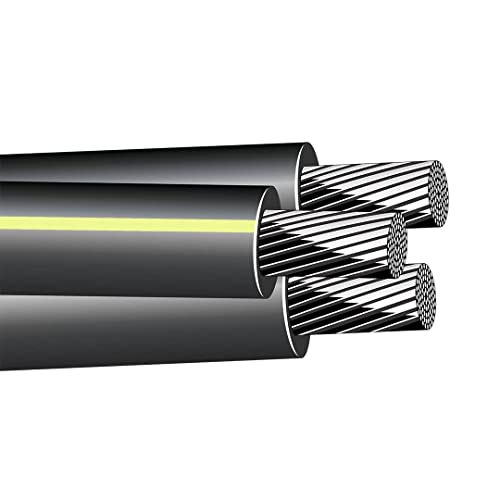
This 170-foot Bergen triplex URD cable is designed for direct burial and longer residential or light commercial feeders. It highlights a neutral size of 1/0 with triplex construction to help reduce inductive effects and simplify routing. The listing emphasizes 1/0 conductor sizing and a generally robust build for underground service. The main limitation is the absence of explicit ampacity values across temperature ratings, so confirm the operating current for your installation context.
Who this is best for: users planning longer underground feeders or multi-conductor runs that require a triplex arrangement to simplify trenching and routing. Choose this if you need a longer, all-in-one URD option with a neutral conductor.
Relaxweex 75′ 1/0-1/0-1/0-2 SER Aluminum Service Entrance Cable

This SER cable uses three 1/0 conductors plus a 2 AWG neutral/ground, making it suitable for above-ground feeder and panel connections. The conduction is based on AA-8000 series aluminum alloy, offering flexibility and easier handling compared with copper. The insulation is rated up to 90°C, with a sun-resistant PVC sheath for weather resistance. It is ideal for high-load main feeders at 100-120 amps depending on temperature rating. A potential limitation is that SER-rated installations are typically used above ground; verify project requirements if underground burial is being considered.
Who this is best for: higher-current feeders for above-ground service entry or where SER cable is specified. Choose this if you need a compact, easily installed SER option for panels or meters located above ground.
Nassau Electrical Supply 100′ 1/0-1/0-1/0-2 SER Aluminum Service Entrance Cable

This 100-foot SER cable uses three 1/0 conductors and a 2 AWG neutral/ground for robust service entrance performance. The aluminum conductors are often used to reduce weight and installation effort, while maintaining adequate current capacity for residential feeders. The listing mentions aluminum as the conductor material, aligning with typical service entrance needs. A practical note: confirm the exact ampacity and regional code compliance for service panels and meter boxes where this will be installed.
BreezeHug 175 Ft 2/0 2/0 1 URD Cable

This higher-capacity URD cable uses a 2/0-2/0-1 conductor layout and is designed for very high current scenarios, with direct burial ampacity up to 245 amps and conduit capacity around 180 amps. XLPE insulation provides water resistance and heat protection, with a 90°C rating. It is positioned as a reliable option for large residential, community, or commercial feeder needs. A limitation is that the detailed environmental ratings beyond temperature and ampacity are not listed, so verify bury depth and conduit fit for your installation.
Who this is best for: large-scale feeders, mobile home parks, or commercial properties needing high amperage in a single direct-burial run. Choose this if you require the maximum possible current capacity in a URD cable.
Buying Guide: Key Considerations For 1/0-1/0-1/0 Aluminum URD Cables
- 1/0-1/0-1/0 typically means three parallel conductors for feeder applications. Ensure the exact arrangement matches your panel or transformer input requirements.
- Look for amps at 75°C or 90°C and verify real-world conditions (underground moisture, ambient temperature) to avoid overloading. XLPE insulation commonly supports higher temperatures and better moisture resistance.
- Some cables are dual-purpose, allowing burial directly in soil or pre-installation in conduits. For outdoor installations, direct burial is often preferred for fewer components, but conduit routing can simplify future repairs.
- Choose lengths that minimize splices and joints. Rolls in 75-175 ft ranges offer practical options for typical residential and small commercial runs.
- 19-strand aluminum provides greater flexibility than standard 7-strand wires, aiding installation in tight trenches and curved conduits, but verify bending radius requirements in your project specs.
- XLPE insulation improves moisture resistance, heat tolerance, and flame resistance. This is important for underground installations exposed to soils and moisture.
- Confirm alignment with local electrical codes, burial depth rules, and service entry or meter requirements before purchasing.
Frequently Asked Questions
- What does URD stand for? URD stands for Underground Residential Distribution, a type of cable designed for underground power distribution networks.
- Can URD cables be buried directly in soil? Yes, many URD cables are designed for direct burial, but always verify the product specifications and local code requirements.
- What is the advantage of 19-strand aluminum conductors? More strands provide greater flexibility, easier bending, and reduced resistance, which helps minimize power loss during transmission.
- Is XLPE insulation necessary? XLPE insulation offers enhanced moisture resistance, high-temperature tolerance, and flame retardance, improving long-term reliability in outdoor conditions.
- How do I choose the right ampacity? Match the cable’s rated ampacity at the operating temperature (75°C or 90°C) to the expected load, length, and installation method (burial or conduit).
- Do these cables require special connectors? Conduit installations may use standard electrical connectors, but verify compatibility with the specific URD model and local codes.