Best Solar Panels for Small Cabin: Compact Power on the Go
Choosing solar panels for a small cabin requires balancing efficiency, portability, and weather resilience. The selected units below are tailored for tight spaces, off-grid use, and easy setup, ensuring reliable power for lighting, charging, and essential appliances. The table above previews each option, with quick highlights to help compare performance at a glance.
| Product | Brand | Key Benefit |
|---|---|---|
| EF EcoFlow 220W Portable Solar Panel | EF ECOFLOW | Highest efficiency at 25% with adjustable kickstand |
| Renogy 200W Portable Solar Panel | Renogy | 25% N-Type cell tech, compact foldable design |
| EF ECOFLOW 110W Portable Solar Panel | EF ECOFLOW | Foldable, IP68, solid efficiency for outdoor use |
| Renogy 200W N-Type Solar Panel (24V) | Renogy | High efficiency, compact for vans and small cabins |
| ECO-WORTHY 200W Complete Starter Kit | ECO-WORTHY | All-in-one kit with battery and inverter included |
EF ECOFLOW 220W Portable Solar Panel

The EF ECOFLOW 220W panel utilizes N-Type solar technology, delivering a 25% conversion rate for faster charging in limited space. It’s designed with a 30-60 degree adjustable angle bracket and an integrated solar angle guide to optimize sun exposure throughout the day. Built with an ETFE coating for durability and weather resistance, this panel is well-suited for off-grid cabin setups, camping, or RV use where robust performance matters.
Renogy 200W Portable Solar Panel

Renogy’s 200W foldable panel uses 16BB N-Type cells for 25% efficiency, providing more energy from the same sunlight. It weighs about 13.89 lbs and folds to a compact size with a magnetic closure, simplifying storage in tight cabin spaces. The panel includes USB-C PD and USB-A outputs, enabling simultaneous charging of devices, while MC4 outlets support charging power stations or 12V batteries for off-grid use.
EF ECOFLOW 110W Portable Solar Panel

This 110W foldable option from EcoFlow emphasizes portability and reliability, boasting a 23% efficiency rate. It’s IP68 rated for water and dust resistance, making it suitable for outdoor cabins, RVs, or backyard setups. The panel folds for compact carry and can connect to most solar generators via standard connectors, supporting quick deployment when space is limited.
Aocoray Mini 5V 6W USB Solar Panel
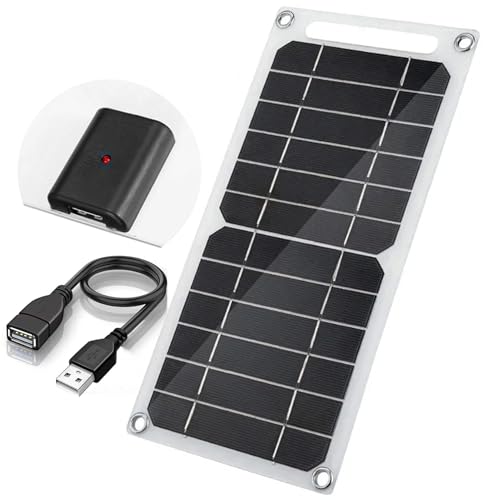
While smaller, the Aocoray 5V 6W panel offers a compact charging option for low-power devices in cabins with minimal energy needs. It includes a lengthy 55-inch cable and is compatible with USB-powered gadgets like phones, small fans, or lanterns. Its modest size suits as an auxiliary charging source or backup for off-grid situations, though it’s not a primary power panel for larger energy needs.
Renogy 200W N-Type 24V Panel

Renogy’s 200W N-Type 24V panel is designed for vans, cabins, and other compact off-grid builds. It weighs less than previous models and offers 25% cell efficiency via advanced 16BB technology. The 24V configuration minimizes current losses and improves system efficiency, with flexible compatibility for 12V or 24V batteries, helping optimize energy use in small spaces or limited sun.
Renogy 400W N-Type Solar Panel (Two-Pack)

This two-panel Renogy 400W configuration uses 25% efficient cells and compact dimensions to fit tight cabins or small homes. The 400W setup enhances total energy potential for cabins with more demanding power needs, while retaining the benefits of N-Type cells for better performance in heat and partial shade. Installation flexibility remains a strong point for off-grid layouts.
ECO-WORTHY 200W Starter Kit
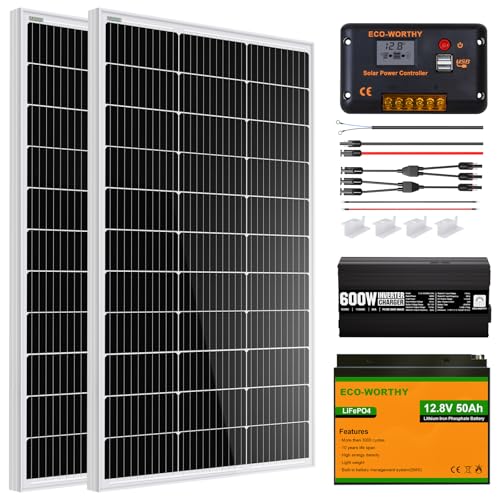
This starter kit from ECO-WORTHY includes a 200W panel, a 30A charge controller, a 50Ah LiFePO4 battery, and a 600W inverter. It targets cabins and RVs needing an all-in-one power solution. The kit emphasizes durability, a solid weight-to-power ratio, and a complete off-grid system that’s ready to install for basic cabin applications.
Buying Guide: Key Purchase Considerations For Small Cabins
- Power needs and space: Assess daily energy usage (lighting, small appliances, charging). Choose panels that maximize watts within the footprint available for mounting or storage.
- Efficiency and climate: Higher efficiency cells (25%) perform better in limited sun or cloudy conditions. N-Type cells typically handle heat better, improving real-world output in cabin roofs exposed to direct sun.
- Portability vs. permanence: Foldable panels are ideal for seasonal cabins or frequent relocation, while rigid panels suit fixed installations with long-term use.
- Durability and weather resistance: IP ratings (IP68, IP65) and protective coatings (ETFE, tempered glass) extend life in outdoor environments and varying weather conditions.
- System compatibility: Ensure compatibility with your battery type (LiFePO4, AGM), inverter size, and charge controller. 12V vs 24V configurations impact wiring and efficiency.
- All-in-one vs. modular: Starter kits simplify setup for beginners, while modular panels offer scalability as energy demands grow.
- Warranty and support: Consider product and solar kit warranties, plus access to replacement parts and customer service for off-grid use.
- Installation considerations: Roof mounting space, tilt angle, and shade patterns affect performance. An adjustable stand or tilt mechanism helps capture sun efficiently.
For cabins, combining a high-efficiency panel with a modest energy storage solution often yields the best balance of reliability and cost. If space is extremely limited, prioritize panels with higher wattage-per-area and robust mounting options. For larger off-grid needs, an all-in-one starter kit can expedite setup while providing a scalable path as energy requirements grow.